
Theopolis Logo

Writing

Explore our collection of theological essays, biblical studies, and reflections on faith and culture.

See all
giammarco-zeh-ljawhtg-unsplash
Biblical Horizons

OPEN BOOK: Views and Reviews

Isaac E. Mozeson, The Word: The Dictionary that Reveals the Hebrew Sources of English (Northvale, NJ: Jacob Aaronson Inc., 1995), 310 pp. Reviewed by James B. Jordan. Once there was only one language in the world, the language God spoke to Adam. At the Tower of Babel, there came to…

by James B. JordanJune 28, 1996
tim-wildsmith-j6jv-mkdzqs-unsplash
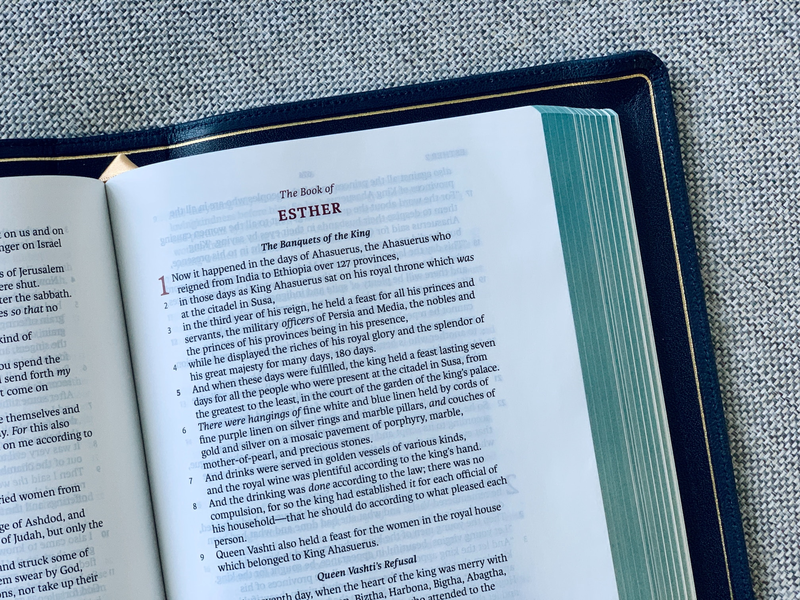
Esther

Esther: Historical & Chronological Comments (IV)

2. The Setting of the Book of Esther A. Xerxes (continued from previous issue) Ezra 6:14 says that the Jews finished building "according to the command of the God of Israel and the decree of Cyrus and Darius and Artaxerxes king of Persia." The problem with this verse is that…

by James B. JordanJune 28, 1996
ales-krivec-4mibe6zg5r0-unsplash
Acts

Jesus and Amalek

This essay goes with our previous study of the Amalek pattern back in Biblical Horizons No. 2. Since many do not have this essay, entitled "The Battle of Gog and Magog," let me cite the relevant paragraphs: Note in Genesis 12-15 that Abram moves into the land after escaping Pharaoh…

by James B. JordanJune 28, 1996
aaron-burden-1ebsmyrau-s-unsplash
Proverbs

The Strange Woman

Proverbs 7:6-23 is one of several passages early in the Proverbs in which Solomon warns his son about the wiles and dangers of the "strange woman." It is certainly quite proper to take these as straightforward warnings against sexual sins, and these are certainly warnings that need to be impressed…

by Peter LeithartJune 27, 1996
jan-kahanek-g3o5ztrk2e4-unsplash
Biblical Studies

Some Observations

1. In Luke 4:20 we read that after Jesus finished reading from Isaiah, "the eyes of all in the synagogue were fixed upon Him." This is usually taken in a psychological sense: They were amazed at Jesus somehow. I suggest that, as always, a merely psychological reading is a modern…

by James B. JordanMay 28, 1996
tim-wildsmith-j6jv-mkdzqs-unsplash
Esther

Esther: Historical & Chronological Comments (III)

2. The Setting of the Book of Esther Up to now we have assumed what we must prove, that the king in Esther is Darius the Great. While Biblical chronologists have usually taken this position, commentators on the book of Esther have often taken others as the king. One view,…

by James B. JordanMay 28, 1996

Showing page 265 of 309

See all

Showing page 39 of 43

See all

Jehoram and Elisha

The history of the Omrides during the ministry of Elisha takes a curious turn. Instead of confronting the king with his sin, as Elijah generally did, Elisha instead repeatedly gives assistance to the son of Ahab (2 Kings 3; 6-7). Jehoram wavers, sometimes whining, sometimes hostile to Elisha, ultimately respectful.…

October 27, 2005

New Joseph

Dothan is mentioned in only two places in the Old Testament: Gen 37, at the beginning of the Joseph narrative, and 2 Kings 6, the place where the Aramean king attempts to find Elisha. Jacob sends Joseph to take food to his brothers, and he initially does not find them…

October 27, 2005

Things that are not

Jacques Ellul helpfully points out that God frightens away the Arameans in 2 Kings 7 by a mere sound, and it is a sound that has no physical cause. God overcomes things that are, Ellul says, through things that are not.

October 27, 2005

Food in 1-2 Kings

A critical issue throughout 1-2 Kings is the question of who provides bread. Early on, it’s Solomon, whose table overflows with good things and who rules an Israel that is continuously rejoicing and feasting. Kings continue to supply tables after the division of the kingdom, but they are often tables…

October 27, 2005

Puns in 2 Kings 7

Iain Provan points to two entertaining puns in the story of the siege of Samaria in 2 Kings 6-7. The first puns on “lepers” (Heb. MISORAIM) and “Egypt” (Heb. MIZRAIM): The Arameans become frightened by the sound of an army, thinkin that Egyptians are attacking; it’s only lepers, though, scrounging…

October 27, 2005

Blood and life

In his recent Concordia commentary on Leviticus, John Kleinig gives a good summary of what I think is the best explanation of the blood prohibtiion of Lev 17: “many animists regard blood as the most potent of all ritual substances. The blood of an animal was either drunk or, more…

October 27, 2005

Showing page 1932 of 2212

Browse by Category

In Medias Res

Your weekly digest for all things Theopolis.

Donate

Theopolis is nearly 100% donor-supported. Consider joining us on our mission.