Theopolis Logo

Writing

Explore our collection of theological essays, biblical studies, and reflections on faith and culture.

See all
screen-shot-2021-07-15-at-9-14-19-am
Biblical Studies

The Beatitudes and Woes

Mrs. Marguerite Lane of Grand Rapids writes to ask if I have ever noticed a correlation between the eight beatitudes of Matthew 5 and the eight woes of Matthew 23. I confess that I have not. A glance at various commentators reveals that such a correspondence does not seem to…

by James B. JordanMay 15, 1989
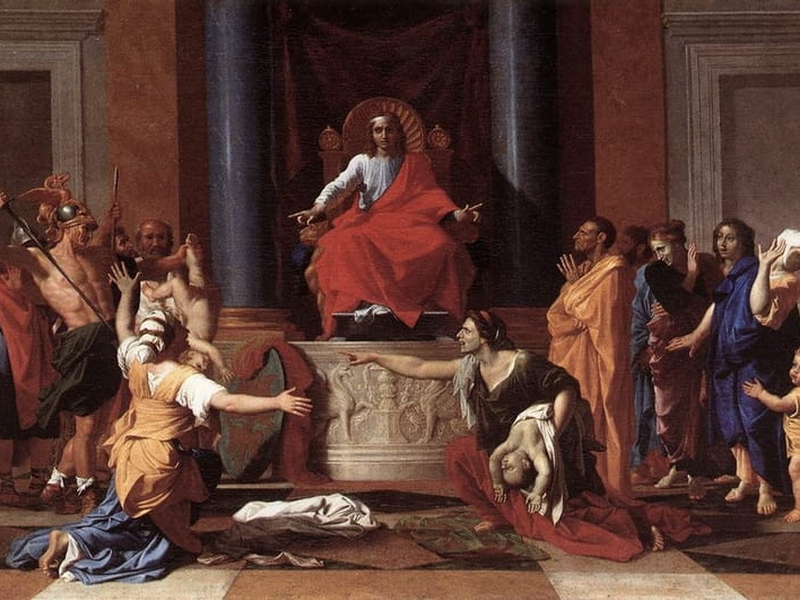
49980-nicolas_poussin_-_the_judgment_of_solomon_-_wga18330-800w-tn
Proverbs

Advice From a Sojourner, Part 1

1. The words of Agur, the son of Jakeh, the burden. The man declares to Ithiel, to Ithiel and Ucal: 2. Surely I am more stupid than any other man, And I do not have the understanding of a man. 3. And I have not learned wisdom, But I have…

by James B. JordanMay 15, 1989
hebrew-manuscript-6
Biblical Studies

The Problem of Psalm 137

Psalm 137 is widely regarded as one of the meanest of the imprecatory psalms. Certainly as we read it it is seems to be a song of pure vengeance. The exiles in Babylon, in grief over the judgment that Babylon has brought upon them, pray for the destruction of that…

by James B. JordanApril 15, 1989
timothy-eberly-djj49s6ud2o-unsplash
Biblical Studies

The Thigh of the Peace Offering

In the Levitical law, the priests received two particular portions of each peace offering: the "wave offering" of the breast and the "heave offering" (or better, "contribution") of the right thigh. The purpose of this essay is to attempt to determine the reason why the second of these, the thigh,…

by Peter LeithartApril 13, 1989
screen-shot-2022-01-07-at-6-38-22-pm
Biblical Studies

The Son of Joseph

The story of Jesus’ visit, early in His ministry, to the synagogue in His home town of Nazareth is recorded for us in Luke 4:16-30. You may remember that Jesus read from Isaiah about how the Messiah would preach the gospel, care for the poor, work miracles, and bring in…

by James B. JordanApril 12, 1989
e99a2225
Biblical Horizons

"Do This!"

(The essay that follows concerns a rather touchy subject: how the Lord’s Supper is to be done. I am not writing to insult or offend, but to challenge. To that end I have not "held back" but have "gone ahead" and said what I think needs to be said —…

by James B. JordanMarch 12, 1989
See all

Showing page 39 of 43

See all

Jehoram and Elisha

The history of the Omrides during the ministry of Elisha takes a curious turn. Instead of confronting the king with his sin, as Elijah generally did, Elisha instead repeatedly gives assistance to the son of Ahab (2 Kings 3; 6-7). Jehoram wavers, sometimes whining, sometimes hostile to Elisha, ultimately respectful.…

October 27, 2005

New Joseph

Dothan is mentioned in only two places in the Old Testament: Gen 37, at the beginning of the Joseph narrative, and 2 Kings 6, the place where the Aramean king attempts to find Elisha. Jacob sends Joseph to take food to his brothers, and he initially does not find them…

October 27, 2005

Things that are not

Jacques Ellul helpfully points out that God frightens away the Arameans in 2 Kings 7 by a mere sound, and it is a sound that has no physical cause. God overcomes things that are, Ellul says, through things that are not.

October 27, 2005

Food in 1-2 Kings

A critical issue throughout 1-2 Kings is the question of who provides bread. Early on, it’s Solomon, whose table overflows with good things and who rules an Israel that is continuously rejoicing and feasting. Kings continue to supply tables after the division of the kingdom, but they are often tables…

October 27, 2005

Puns in 2 Kings 7

Iain Provan points to two entertaining puns in the story of the siege of Samaria in 2 Kings 6-7. The first puns on “lepers” (Heb. MISORAIM) and “Egypt” (Heb. MIZRAIM): The Arameans become frightened by the sound of an army, thinkin that Egyptians are attacking; it’s only lepers, though, scrounging…

October 27, 2005

Blood and life

In his recent Concordia commentary on Leviticus, John Kleinig gives a good summary of what I think is the best explanation of the blood prohibtiion of Lev 17: “many animists regard blood as the most potent of all ritual substances. The blood of an animal was either drunk or, more…

October 27, 2005

Showing page 1932 of 2212

Browse by Category

In Medias Res

Your weekly digest for all things Theopolis.

Donate

Theopolis is nearly 100% donor-supported. Consider joining us on our mission.