Theopolis Logo

Writing

Explore our collection of theological essays, biblical studies, and reflections on faith and culture.

See all
screen-shot-2023-02-24-at-1-48-41-pm
Biblical Chronology

Chronologies and Kings: Part 3

The chronology of the Kings of Judah and Israel can be divided into three periods with clearly defined boundaries. The first period begins with the death of Solomon and the accessions of Rehoboam in the south (Judah) and Jeroboam in the north (Israel). It ends with the deaths of Ahaziah…

by James B. JordanSeptember 22, 1991

johann-walter-bantz-clv9dfjlwac-unsplash-1-5
Art

Arts & Play, Part 1

Most modern people regard the arts as essentially decorative. They are hardly very important, as compared to business, politics, or religion. Yet, from a Biblical point of view, the arts lie close to the heart of human life. The universe that God created is itself an artistic masterpiece by the…

by James B. JordanSeptember 22, 1991
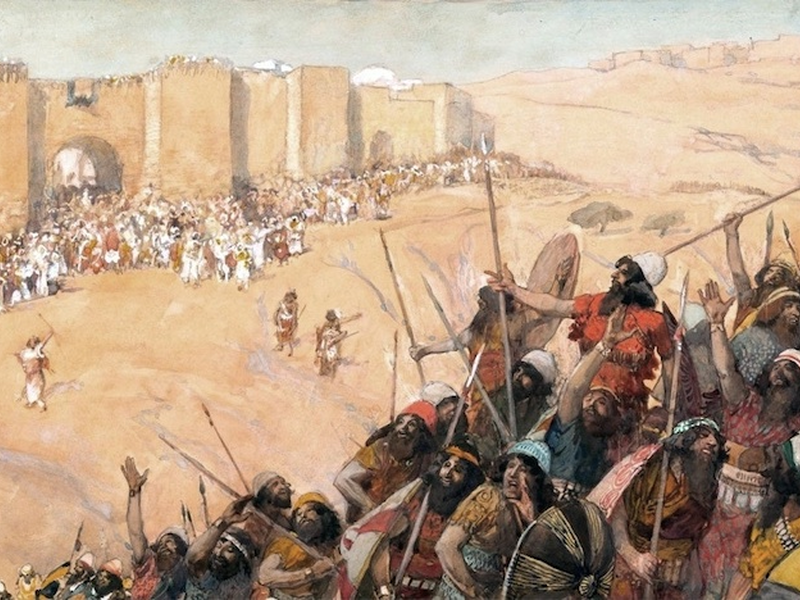
6273e95e0f5ac766258d8cf3_joshuasconquestoftheland-2
Exodus

Chronologies and Kings, Part 2

Before we move into a detailed survey of the history and chronology of the kings of Israel and Judah, let us review the chronological information that leads from creation to the kingdom. This will be helpful both to new readers of these essays, and a reminder for those who have…

by James B. JordanAugust 22, 1991
screen-shot-2023-02-24-at-1-48-41-pm
Biblical Chronology

Chronologies and Kings, Part 1

We have completed our overall survey of Biblical chronology, and now turn to a detailed examination of the Biblical information regarding the chronology of Israel’s kings. The first piece of chronological information we have regarding Israel’s kings is very cryptic, and it serves as an guide to the interpretation of…

by James B. JordanJuly 22, 1991
screenshot-2023-08-09-at-2-13-32-pm
Biblical Horizons

Book Review - To Take Place: Toward Theory in Ritual

Jonathan Z. Smith, To Take Place: Toward Theory in Ritual (Chicago: University of Chicago Press, 1987). Reviewed by Peter J. Leithart. The philosophes of the 18th century often attacked Christendom using the tools of anthropology and comparative religion. Rousseau contrasted the idyllic equality of primitive, natural peoples with the bondage…

by Peter LeithartJuly 6, 1991
screenshot-2023-08-09-at-1-47-41-pm
Biblical Horizons

Book Review: The Rise of Magic in Early Medieval Europe

Valerie I. J. Flint, The Rise of Magic in Early Medieval Europe (Princeton University Press, 1991). Reviewed by Peter J. Leithart. Valerie I. J. Flint, Professor of History at the University of Auckland, New Zealand, is refreshingly candid about her reasons for undertaking a study of The Rise of Magic…

by Peter LeithartJuly 6, 1991

Showing page 295 of 309

See all

Showing page 39 of 43

See all
Theology

Augustine and Cultural Diversity

Augustine has a sense of cultural diversity and historical change usually associated with post-Renaissance western thought. In Book 3 of On Christian Teaching he warns against the mistake of taking a literal statement in Scripture as figurative, and offers this test to determine what is literal and what figure: “anything…

September 9, 2005

Contradictions of heroism

In an essay on manhood and heroism in Homer, Michael Clarke describes Achilles’ towering rage as he returns to the field to avenge Patroclus, and asks: “is Achilles’ heroic excellence fulfilled or undone by his wildness as he moves towards death? The poem forbids us to frame an easy answer.…

September 8, 2005

Odyssey as Wisdom Literature

Proclussaid of the Odyssey, “Many are the wanderings and circlings of the soul: one among imaginings, one in opinions and one before these in understanding. But only the life according to NOUS has stability and this is the mystical harbor of the soul to which, on the one hand, the…

September 8, 2005

Sin and Impurity

Milgrom says that the “purification offering” deals with impurity and not with sin. Kiuchi says that it deals also with sin, suggesting that the “problem of terminology arises from the fact that the cultic law distinguishes between physical uncleanness and . . . (sin), whereas . . . (sin) itself…

September 8, 2005

Made sin

John Kleinig suggests in his commentary on Leviticus that 2 Cor 5:21 refers to Jesus’ fulfillment of the rites of Leviticus 4-5: “Even though Jesus was singless, God offered Jesus as the ‘sin offering’ for human sin. In this case Paul employs the term HAMARTIA alone, which the LXX also…

September 8, 2005

Sermon outline

INTRODUCTION Ephesians is about the formation of Christian culture, or, in Paul’s terminology, a corporate Christian “walk.” Once, we walked, zombie-like, in death and sin (2:1), but God raised us in Christ to walk in good works (2:10). We are called to walk in a manner worthy of our calling…

September 7, 2005

Showing page 1948 of 2212

Browse by Category

In Medias Res

Your weekly digest for all things Theopolis.

Donate

Theopolis is nearly 100% donor-supported. Consider joining us on our mission.