Theopolis Logo

Writing

Explore our collection of theological essays, biblical studies, and reflections on faith and culture.

See all
300298rgsdl
Biblical Studies

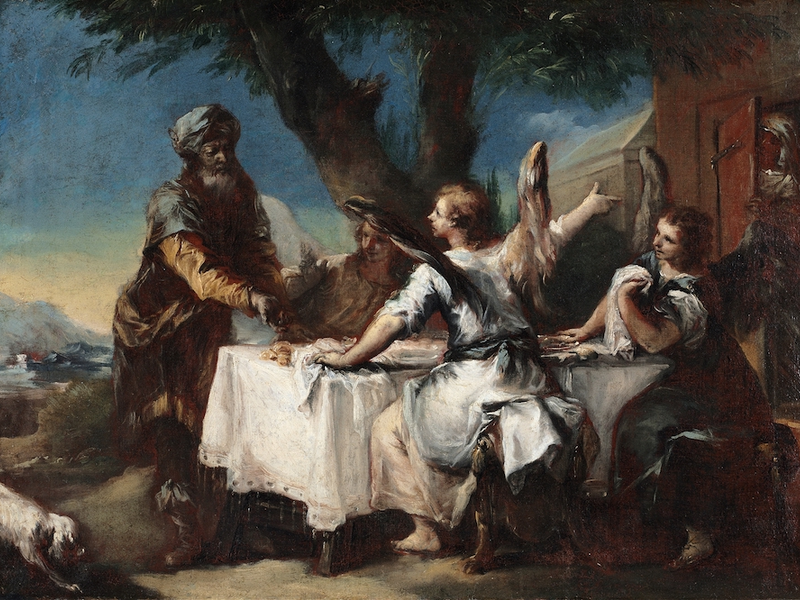
Is Abraham’s Life a Type?

The preceding essay has caused me to consider the possibility that the life of Abraham as recounted in Genesis contains a typological prophecy of the history of Israel; that is, that the events in Abraham’s life broadly anticipate events in Israel’s history. This kind of pattern is seen in the…

by James B. JordanMay 5, 2001

screen-shot-2022-05-12-at-12-07-23-pm
Hermeneutics

Thirty-Eight Years by the Sheep Pool

by: Jeff Meyers and James Jordan In the fifth chapter of John’s gospel we read of a man who had been ill for 38 years and who was lying by a pool located by the Sheep Gate of Jerusalem. This sheep waited, as did many other infirm people, for an…

by Jeff MeyersDecember 5, 2000
238070fgsdl
Biblical Horizons

How Are Women Saved?

What had been reduced to ruin by this sex, would by the selfsame sex be recovered to salvation. As Eve believed the serpent, so Mary believed the angel. The delinquency which the one occasioned by believing, the other by believing effaced. —Tertullian What is Paul saying about women and salvation…

by Jeff MeyersOctober 5, 2000
ben-white-w8qqn1pmqh0-unsplash
Jeremiah

The Return of Hamor

Back in Biblical Horizons 132 I discussed the horrible abuse of the converted men of Salem/Shechem in Genesis 34. These Hivites had joined the covenant by circumcision and then were slaughtered by Simeon and Levi. That, however, is not the end of their story. In Joshua 9 we find the…

by James B. JordanOctober 4, 2000
abraham-defeats-kings-g-jollain-2
Biblical Horizons

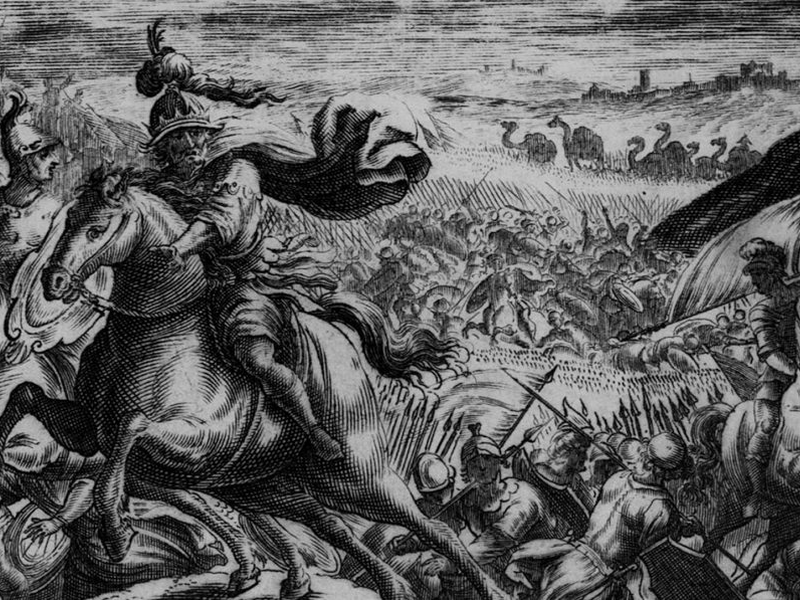
Abram’s 318 Men

Genesis 14:14 says that Abram mustered his trained men, “born in his house,” to rescue Lot, and gives their number as 318. It is clear that the precise number is provided for some reason, but what is it? S. Gevirtz notes that 318 is the sum of all the prime…

by James B. JordanSeptember 4, 2000
mikhail-preobrazhenskiy-9kszdpif_fo-unsplash
Hermeneutics

153 Large Fish

Simon Peter went up, and drew the net to land, full of large fish, a hundred and fifty-three; and although there were so many, the net was not torn. (John 21:11) This is one of those texts in the Bible that many people puzzle over. It is not a puzzle…

by James B. JordanSeptember 4, 2000

Showing page 241 of 309

See all

Showing page 39 of 43

See all

Exhortation, August 28

Hope is one of the traditional “theological virtues” – faith, hope and love. Hebrews 11 defines faith as hope, and for Paul “hope,” like Victor and Faith, is another name for Jesus (1 Timothy 1:1). In our sermon text, Paul encourages hope by saying God is able to do “exceeding…

August 28, 2005
Philosophy

Transcendence and Immanence

There’s a slight false step, in the midst of a very helpful point, in Bruce Ellis Benson’s superb Graven Ideologies : He has been explaining the “double transcendence” of Platonism - metaphysical (Truth’s being is beyong the sensible world) and epistemological (human beings can get beyond the sensible world to…

August 28, 2005
Music

But for Luther

In his Teaching Company tapes on Bach and the Baroque (recommended), Robert Greenberg suggests an historical sequence that accounts for the development of German music: Music for singing, which in the period was largely church music, must take account of the language in which the music is sung. German is…

August 27, 2005

Mystery of Christ

Is the “mystery of Christ” in Ephesians 3:4 a mystery about Christ or is Christ Himself the mystery? Let’s take the latter option - Christ Himself is the mystery (cf. Colossians 1:27). How does that connect with the way Paul unpacks the mystery in terms of Jew/Gentile union (v. 6)?…

August 27, 2005

Gifts of men

NT Wright points out that the ascent and descent language in Ephesians 4:7-10 is reminiscent of Moses ascending Mount Sinai and then descending with the tablets of the Ten Commandments. Jesus ascends to heaven, and when He returns He does not bring the law of commandments on tablets of stone,…

August 27, 2005
Literature

Tragedy and Time

Macbeth hopes that his one act of regicide will stop the flow of time - “if ‘twere done when ‘tis done, then ‘twere well it were done quickly.” But it can’t be done when it’s done; actions provoke reactions. He ends tragically because he cannot trammel up the consequence. Time…

August 27, 2005

Showing page 1951 of 2212

Browse by Category

In Medias Res

Your weekly digest for all things Theopolis.

Donate

Theopolis is nearly 100% donor-supported. Consider joining us on our mission.