Theopolis Logo

Writing

Explore our collection of theological essays, biblical studies, and reflections on faith and culture.

See all
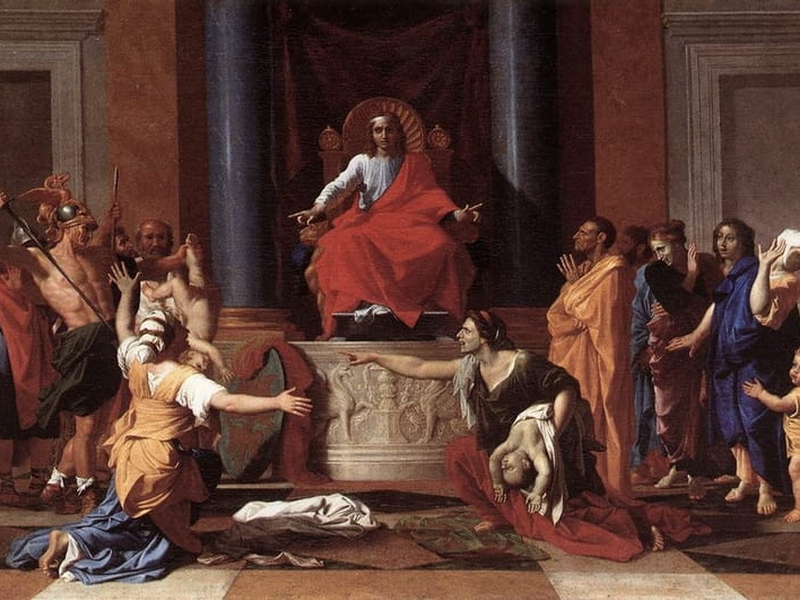
49980-nicolas_poussin_-_the_judgment_of_solomon_-_wga18330-800w-tn
Biblical Studies

Advice From a Sojourner, Part 2

In our first essay in this series ( part 1 ), we saw that Proverbs 30 opens with a puzzle, a cryptic sentence that challenges the reader to search out a matter in order to gain understanding. "It is the glory of God to conceal a matter, but the glory…

by James B. JordanOctober 26, 1989
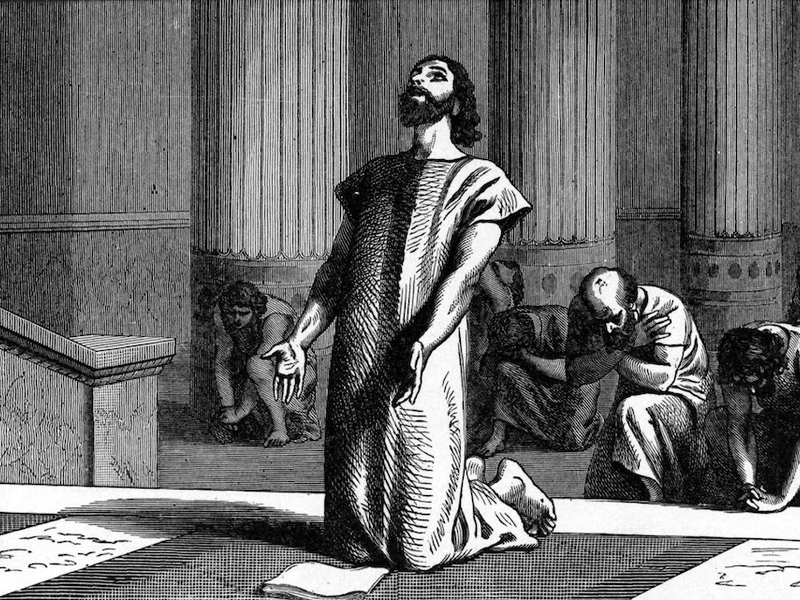
hezekiahs-prayer-2
Isaiah

Hezekiah’s Sign

The story of Hezekiah’s illness and recovery is familiar to every child who has attended Sunday School. Informed that he would die, faithful King Hezekiah pleaded in tears for a longer life. God heard his prayers and saw his tears, and promised fifteen more years. As a sign that He…

by Peter LeithartOctober 13, 1989
screen-shot-2021-08-12-at-2-57-54-pm
Proverbs

An Antidote for Yuppie Postmillennialism

1. The Blessed Hope "Looking for the blessed hope and the appearing of the glory of our great God and Savior, Christ Jesus." Titus 2:13 I was recently asked how I as a postmillennialist would preach on "The Blessed Hope." This is often a sticky question, because postmillennialists believe that…

by James B. JordanAugust 26, 1989
screen-shot-2022-01-10-at-5-52-39-pm
American Culture

Elijah’s War with Baal

1. Jeroboam and Ahab After Solomon died, the people came to his son, King Rehoboam, and asked for tax relief. Rehoboam refused to give it, and indeed told the people that he was going to tax them even more severely than his father had. At that point, with the blessing…

by James B. JordanJuly 26, 1989
screen-shot-2020-08-31-at-10-35-03-am
Biblical Horizons

The Love Feast

One aspect of truth is unity. It was Truth Incarnate who prayed for the unity of His people in John 17, which certainly makes unity a priority for them as well. In one sense, we know by faith that the Church is always invisibly unified in Christ, but there is…

by James B. JordanJune 16, 1989
screen-shot-2022-01-07-at-6-38-22-pm
Biblical Studies

The Son of Joseph, Revisited

Mr. Paul Miller of Vancouver writes that he is not persuaded by my remarks on Luke 4 on " The Son of Joseph ." He calls attention to Mark 6:1-6, where Jesus came "to His own part of the country," taught in the synagogue, and astonished many. The people said,…

by James B. JordanMay 16, 1989
See all

Showing page 39 of 43

See all

Exhortation, August 28

Hope is one of the traditional “theological virtues” – faith, hope and love. Hebrews 11 defines faith as hope, and for Paul “hope,” like Victor and Faith, is another name for Jesus (1 Timothy 1:1). In our sermon text, Paul encourages hope by saying God is able to do “exceeding…

August 28, 2005
Philosophy

Transcendence and Immanence

There’s a slight false step, in the midst of a very helpful point, in Bruce Ellis Benson’s superb Graven Ideologies : He has been explaining the “double transcendence” of Platonism - metaphysical (Truth’s being is beyong the sensible world) and epistemological (human beings can get beyond the sensible world to…

August 28, 2005
Music

But for Luther

In his Teaching Company tapes on Bach and the Baroque (recommended), Robert Greenberg suggests an historical sequence that accounts for the development of German music: Music for singing, which in the period was largely church music, must take account of the language in which the music is sung. German is…

August 27, 2005

Mystery of Christ

Is the “mystery of Christ” in Ephesians 3:4 a mystery about Christ or is Christ Himself the mystery? Let’s take the latter option - Christ Himself is the mystery (cf. Colossians 1:27). How does that connect with the way Paul unpacks the mystery in terms of Jew/Gentile union (v. 6)?…

August 27, 2005

Gifts of men

NT Wright points out that the ascent and descent language in Ephesians 4:7-10 is reminiscent of Moses ascending Mount Sinai and then descending with the tablets of the Ten Commandments. Jesus ascends to heaven, and when He returns He does not bring the law of commandments on tablets of stone,…

August 27, 2005
Literature

Tragedy and Time

Macbeth hopes that his one act of regicide will stop the flow of time - “if ‘twere done when ‘tis done, then ‘twere well it were done quickly.” But it can’t be done when it’s done; actions provoke reactions. He ends tragically because he cannot trammel up the consequence. Time…

August 27, 2005

Showing page 1951 of 2212

Browse by Category

In Medias Res

Your weekly digest for all things Theopolis.

Donate

Theopolis is nearly 100% donor-supported. Consider joining us on our mission.