Theopolis Logo

Writing

Explore our collection of theological essays, biblical studies, and reflections on faith and culture.

See all
medievalilluminatedmanuscript
Biblical Studies

The Art of Why

“We have a God who hides things because He loves to be sought out, chewed out and found out.” As Christians, we are rightly taught that we must not question God’s Word. The problem is that the Scriptures record many things which appear to have been given to us for…

by Mike BullMay 12, 2015

last-supper
Revelation

Eucharistic Harvest

The book of Revelation is a liturgy. John begins “in the Spirit” on the “Lord’s day” (1:10). Jesus appears, and Jesus tells him to record messages to seven churches, words of encouragement and rebuke, like the call to worship and confession at the beginning of a Christian liturgy. In chapter…

by Peter LeithartMay 7, 2015
sunrise-2
Creation

Maker of Heaven and Earth, (Part 5)

In my previous posts, I looked at the theme of creation as it is found in a sequence of psalms devoted to Yahweh’s Kingship (Psalms 93-100). Among other matters, these psalms declare that when the Kingdom of Israel’s God comes, it is the Kingdom of the world’s own Creator .…

by Stephen LongMay 7, 2015
13071-probablyvalentindeboulogne-saintpaulwritinghi-1
Deuteronomy

Paul the Levir

The church in Corinth was a pastoral nightmare. Factionalism, sexual immorality, incipient syncretism, using the church as a stage for self-promotion, and denial of the final resurrection were just some of the problems. In Paul’s first letter to the Corinthian church, he confronts each of these problems directly and in…

by Bill SmithMay 5, 2015
creation-eve
Covenant

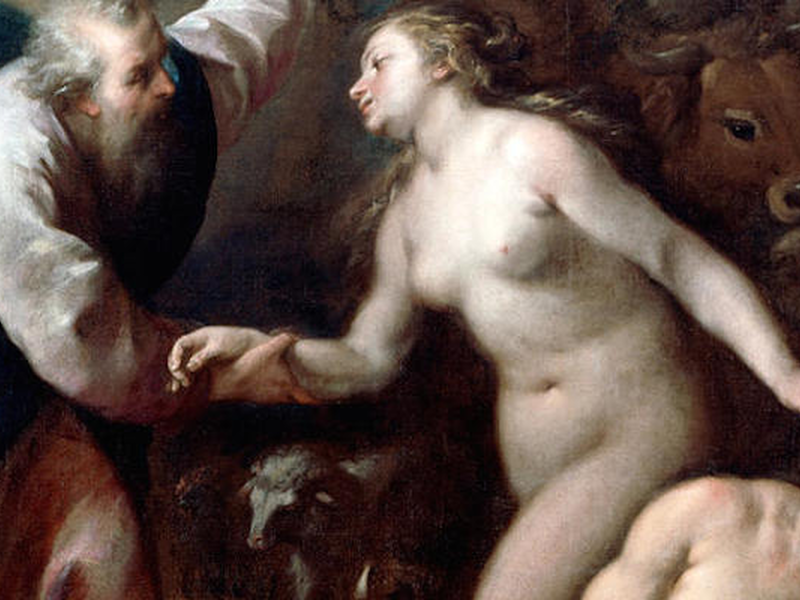
Covenant Structure in Genesis 2

The first chapters of the Word of God have a poetic rhythm. This is used to discredit their accuracy as historical narrative, but the truth is that these same rhythms continue far beyond the book of Genesis. In fact, the later texts shed light on the frustratingly succinct account of…

by Mike BullApril 30, 2015
light-bulb
Creation

Must A Light Bulb Be "Oriented Toward Illumination"?

Mr. Martian: What’s that there? Mr. Edison: (Edison holds up a standard, 60 watt lightbulb). It’s a lightbulb. Mr. Martian: A “lightbulb” you say? What exactly is a “lightbulb”? Mr. Edison: A lightbulb is an object used to illuminate a dark area, say a room. It’s made primarily of filament…

by Gerald HiestandApril 28, 2015

Showing page 154 of 309

See all

Showing page 39 of 43

See all
Philosophy

Giving and receiving

Pickstock offers a theological alternative to Derrida’s concern that giving is impossible since any hope of a return robs the gift of its character as gift and puts it instead into the category of mutually advantageous capitalist exchange. Pickstock points out that in renouncing “the return” as “an ethical category,”…

July 14, 2005
Philosophy

Lists

Pickstock uses the “list” as a crucial example of the dominance of asyndeton of modern discourse. Lists provide “a powerful organization of random phenomena,” but at the same time the order slips into chaos because there is nothing linking the “unrelated elements” of the list. They are merely juxtaposed spatially,…

July 14, 2005
Philosophy

Derrida’s indifference

Pickstock again: For Derrida, there is ultimately no real difference, since all difference is univocally violent. There are particular differences of this and that, but they are all different in the same way - violently different - so there is a “transcendent” sameness. Derrida’s absolute difference collapses is really penultimate…

July 14, 2005
Theology

Socrates and the erotic gaze

Catherine Pickstock argues that Socrates does not articulate a “metaphysical” view of self-presence or interiority. She focuses on the erotic character of knowledge in the Phaedrus, which she points out, radically undermines the interior/exterior boundary. Knowledge on this view always involves ecstasy, an attraction to an object outside, and the…

July 14, 2005

Structure in 2 Kings 16

2 Kings 16 is organized chiastically: 1. Formulaic introduction, 16:1-4 2. Threat to Jerusalem, and bribe of Tiglath-pileser, 16:5-9 3. State visit to Damascus, 16:10-11 (altar) 4. Ahaz ministers at the altar, 16:12-14 3’. Continuing worship at the altar, 16:15-16 2’. Tribute to Tiglath-pileser and plunder of temple, 16:17-18 1’.…

July 13, 2005

Showing page 1962 of 2212

Browse by Category

In Medias Res

Your weekly digest for all things Theopolis.

Donate

Theopolis is nearly 100% donor-supported. Consider joining us on our mission.