Theopolis Logo

Writing

Explore our collection of theological essays, biblical studies, and reflections on faith and culture.

See all
sixteen-miles-out-al48tflf4e8-unsplash
Food

Gluttony In The Bible (As Opposed To Gluttony In The American Church)

In the Bible, fatness is such a blessing, that it is especially hard to understand why wicked men are permitted to enjoy such a state. It requires a theodicy and faith in God. Thus: “For they have no pangs until death; their bodies are fat and sleek . They are…

by Mark HorneAugust 12, 2013

jeremy-yap-j39x2xx_8cq-unsplash
How to Worship

Biblical Worship (Video with James B. Jordan)

[fve]http://vimeo.com/71901553[/fve]

by Peter LeithartAugust 8, 2013
chris-bair-ndczc5739ck-unsplash
Deuteronomy

Holy Things for Holy People

The allusion to the Exodus story is contained in the first words of Deuteronomy 14:1 — “ye are the sons of Yahweh your God” — as well as in 14:2 in the use of the technical term translated “treasured possession,” “His own possession,” “peculiar people,” “precious people,” and so forth.…

by Ralph Allan SmithAugust 5, 2013
adam-and-eve-in-the-garden-of-eden-wenzel-peter
Deuteronomy

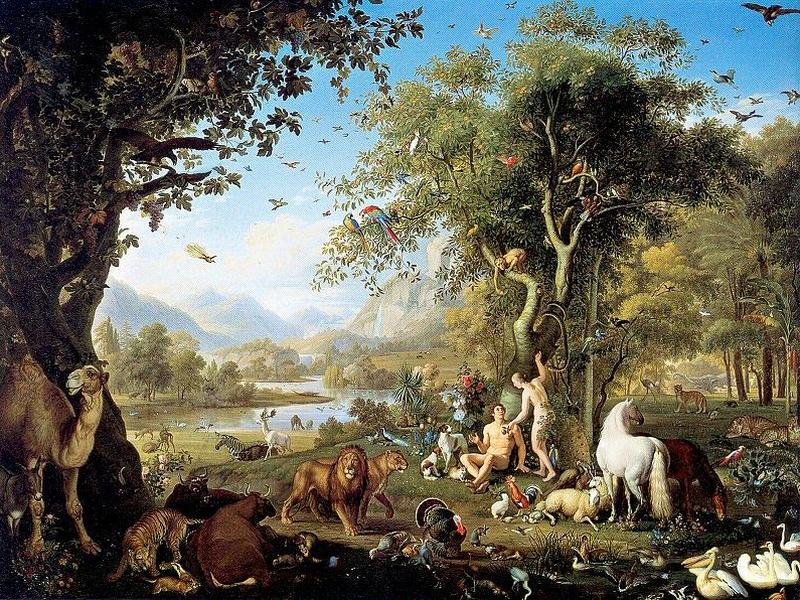
Forbidden Foods

I have argued that Deuteronomy 14:1-21 is an independent literary unit that applies the Third Word to the lives of Israelites from the time of Moses and Joshua. In this short pericope, Moses suggests broad and deep meaning by means of literary allusion to the stories of the creation and…

by Ralph Allan SmithJuly 31, 2013
david-weber-fwuo_zluhnw-unsplash
How to Worship

Pro-Sacramental Reformation

In his recently republished The New Creation , the late, delightful Herbert McCabe defends the priesthood of the plebs as roundly as anyone could want. Citing Hebrews, he claims that "there is an essential difference between the Christian community and the community of the Old Law, or any other religious…

by Peter LeithartJuly 29, 2013
eric-ward-7kqe_8meex8-unsplash
Augustine

Sexual Idolatry

Augustine famously prayed, “Our hearts our restless until they rest in You.” True indeed. Being creatures, we inherently sense our ontological poverty—our innate condition of dependence—and are compelled to find a sense of security. And it is also true—as Augustine’s own narrative painfully illustrates—that one of the things we most…

by Gerald HiestandJuly 24, 2013

Showing page 190 of 309

See all

Showing page 39 of 43

See all

More on Hart, The Beauty of the Infinite

Part 2: A Dogmatica Minora Section 1: Trinity Hart ended the previous section emphasizing that Christianity offers a story of the infinite that is also, contrary to all paganism, a story of beauty. To fill out this Christian narrative of infinite beauty, Hart focuses on the Nicene-Constantinopolitan creed as ?the…

May 31, 2005

Translation, 2 Kings 3

Now Yhoram son of ‘Achav reigned-as-king over Yisrael in Shimron in the year, the 18th, to Yhoshafat king of Yehudah. And he reigned-as-king two and ten years. And he did the evil in the eyes of Yahweh only not as his father and as his mother. And he caused-to-turn-aside the…

May 30, 2005

Mother-land

In 2 Kings 2, Elisha heals a “barren land,” a land described as “causing miscarriage” or as “abortive” itself. The land is mother, and the new “father” of the prophets sows salt to heal the land and make it fruitful. 2 Kings 3 picks up on this mother-land analogy. Elisha…

May 30, 2005

Whiners

Jehoram goes out into the wilderness with Jehoshaphat, and as soon as he encounters a bit of difficulty, he crumples, blaming his bad fortune on Yahweh’s perfidy: “Yahweh has called these three kings to give them into the hand of Moab.” He had a good teacher: When Ahab received the…

May 30, 2005

Jericho and Moab

Jehoram the son of Ahab wants to suppress the rebellion of Mesha, king of Moab (2 Kings 3). He gains the support of Jehoshaphat and the king of Edom, and then marches into the wilderness. They “go around” seven days and then find there is no water. Jehoshaphat, typically, asks…

May 30, 2005

Tertullian on baptism and resurrection

In his treatise on the resurrection of the flesh, Tertullian makes an intriguing connection between the phenomenology of baptism and the resurrection of the body. Baptism, he points out, is a corporeal rite, and this washing of the body points ot a resurrection of the body: “unless it were a…

May 30, 2005

Showing page 1974 of 2212

Browse by Category

In Medias Res

Your weekly digest for all things Theopolis.

Donate

Theopolis is nearly 100% donor-supported. Consider joining us on our mission.