Theopolis Logo

Writing

Explore our collection of theological essays, biblical studies, and reflections on faith and culture.

See all
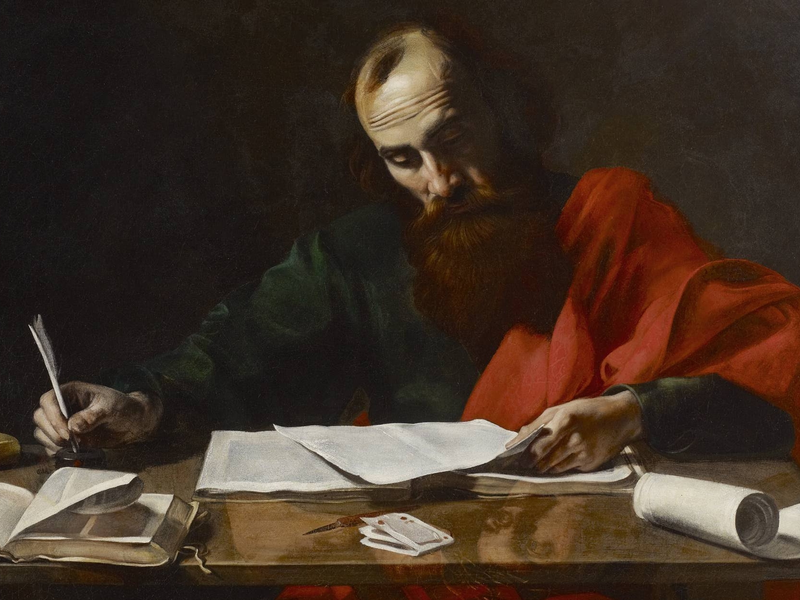
13071-probablyvalentindeboulogne-saintpaulwritinghi-1
1 Corinthians

The Great Exchange: Understanding Second Corinthians 5.21

He made Him who knew no sin to be sin on our behalf, that we might become the righteousness of God in Him. My argument is simple: What Paul means in writing the quotation above in context is the same as what he was telling the Ephesians when he wrote,…

by Mark HorneJune 7, 2004

ben-white-w8qqn1pmqh0-unsplash
Biblical Theology

What is Biblical Theology (Part 3) : The Art of Biblical Theology

THE ART OF BIBLICAL THEOLOGY IN PRACTICE: INTERTEXTUALITY AND TWO PAULINE CASE STUDIES The Art of Biblical Theology: Intertextuality Biblical Theology is really an art. Like other skills of this sort, it is not a matter of following rules (though there are certainly guidelines and techniques). Rather, it’s matter of…

by Rich LuskJune 6, 2004
malcolm-lightbody-tc2f02iq8le-unsplash
Biblical Theology

What is Biblical Theology: (Part 2) The Christotelic Spiral

Click HERE for Part 1 Reading Christotelically Jesus Christ is the heart of God’s plan for creation and history. There is no “hidden plan” or “hidden God” lurking behind Christ; rather, in and through Christ God has revealed himself and his intentions towards the world. In Christ, the Father has…

by Rich LuskJune 6, 2004
aaron-burden-qjdzyt_k8xg-unsplash
Biblical Studies

What is Biblical Theology? (Part 1)

STORY THEOLOGY AND A THEOLOGY OF STORY Defining Biblical Theology What is Biblical Theology? How does it compare to other ways of doing theology, such as Systematic Theology? Geerhardus Vos suggested that whereas Biblical Theology draws a line, Systematic Theology draws a circle. That is to say, Biblical Theology is…

by Rich LuskJune 6, 2004
screenshot-2023-09-21-at-3-59-23-pm
Hebrews

Living by His Faith: Some Rough Thoughts on the Faithfulness of Christ

The gospels strongly imply Jesus lived by faith in the promise of his heavenly Father. How else can his prayer life understood? How else could he have wrestled through the Gethsemane experience? How else could he have committed himself into his Father’s care at death? How could Jesus have presented…

by Rich LuskJune 6, 2004
sixteen-miles-out-al48tflf4e8-unsplash
John

John 3:16

John 3:16 is probably best-known, or at least, best-liked Bible passage in North America: “For God so loved the world, that he gave his only Son, that whoever believes in him should not perish but have eternal life.” This declaration of God’s love of the whole world is greatly comforting…

by Mark HorneJune 6, 2004

Showing page 223 of 309

See all

Showing page 39 of 43

See all
Theology

Say it ain’t so, Nicholas

For reasons that I’ll detail in a subsequent post, I’m a considerable fan of Nicholas of Cusa. I was unhappy to come across this from William Cavanaugh: “The origin of the modern concept of religion can be seen clearly in the thought of two fifteenth-century Christian Platonist thinkers, Nicholas of…

May 20, 2005

Pity the satirist

Michael Budde writes, “Like the Rolling Stones and other major concert acts, the Catholic Church has now taken on corporate sponsorship to underwrite the world tours of its major performer, Pope John Paul II. To finance his 1998 visit to Mexico city, the Archdiocese of Mexico City entered into sponsorship…

May 20, 2005

The Humor of 2 Kings 1

The story of 2 Kings 1 is undoubtedly meant humorously. Ahaziah falls ill and sends messengers off to consult with Baal-zebub, baal of the flies. On the way, his messengers meet a “baal of hair,” Elijah - right title, wrong god. Yahweh will not allow Ahaziah’s men ever to get…

May 19, 2005
Literature

Garber on Richard III

Here are some highlights of Marjorie Garber?s essay on Richard III in Shakespeare After All . 1) Garber suggests that Richard is the ?first fully realized and psychologically conceived character?Ein Shakespeare?s plays. Richard?s character is fully realize because he is complex, protean, chameleon and Machiavellian (cf. 3 Henry VI 3.2.191-193).…

May 17, 2005

Luther and Aquinas

A further note from Haight: One of the criticisms he lodges against Aquinas and scholasticism is that it tended to treat grace and conversion in a mechanistic fashion: “This is a fundamental distortion of the dynamics of grace when it is seen contrasted with a personalist description, and it has…

May 17, 2005

Nature, Supernature, and Grace

Underlying different doctrines of justification, and inseparable from them, are different notions of grace. The historical issues have been ably summarized by Roger Haight in his 1979 book, The Experience and Language of Grace. Haight points out that doctrines of grace have differed partly because the reality of grace is…

May 17, 2005

Showing page 1979 of 2212

Browse by Category

In Medias Res

Your weekly digest for all things Theopolis.

Donate

Theopolis is nearly 100% donor-supported. Consider joining us on our mission.