Theopolis Logo

Writing

Explore our collection of theological essays, biblical studies, and reflections on faith and culture.

See all
tanner-mardis-xuxghzhibn4-unsplash-1-2
Biblical Studies

Tweets-turned-Notes on the Bible’s Chronology

Summary In what follows, I will consider the “year-stamps” employed in Scripture, i.e., statements of the form, “Such-and-such an event took place in the Xth year of Y.” In the process, I will suggest some ways in which the Biblical narrative might relate to events in the extra-Biblical world, though…

by James BejonJuly 16, 2019
durer-prodigal-son-2
Luke

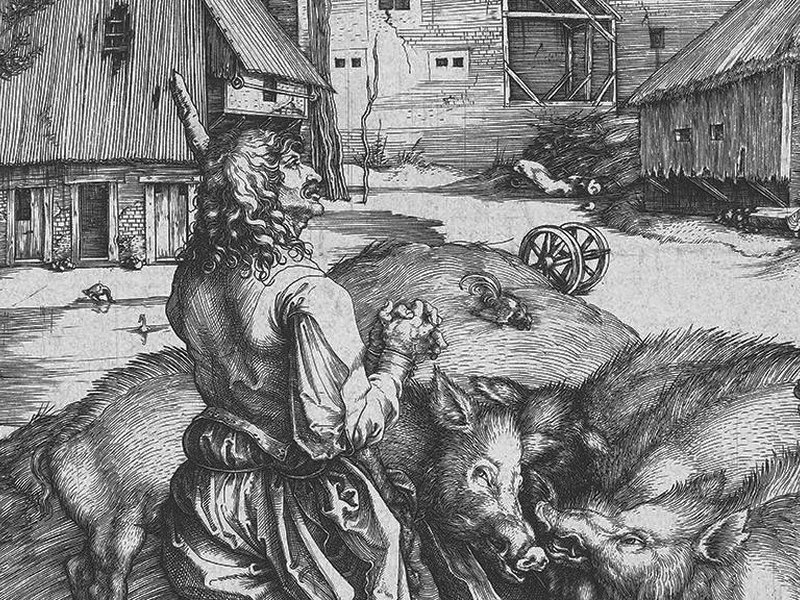
Perspectives on the Prodigal, (Part 2)

In the first essay on the parable of the Prodigal Son, I suggested that the problems commentators and others encounter in interpreting Jesus three-part parable are not accidental. These are not just problems in our ignorance of cultural background. They are intentional features of the stories —stories designed to poke…

by Ralph Allan SmithJuly 11, 2019
durer-prodigal-son-2
Luke

Perspectives on the Prodigal, (Part 1)

The story of the Prodigal Son is perhaps the most well-known story in the Bible. As others have observed, it may also be one of the most misunderstood. In two short essays, I will point out features of this story that are commonly neglected, aspects of Jesus’ parable that might…

by Ralph Allan SmithJuly 9, 2019
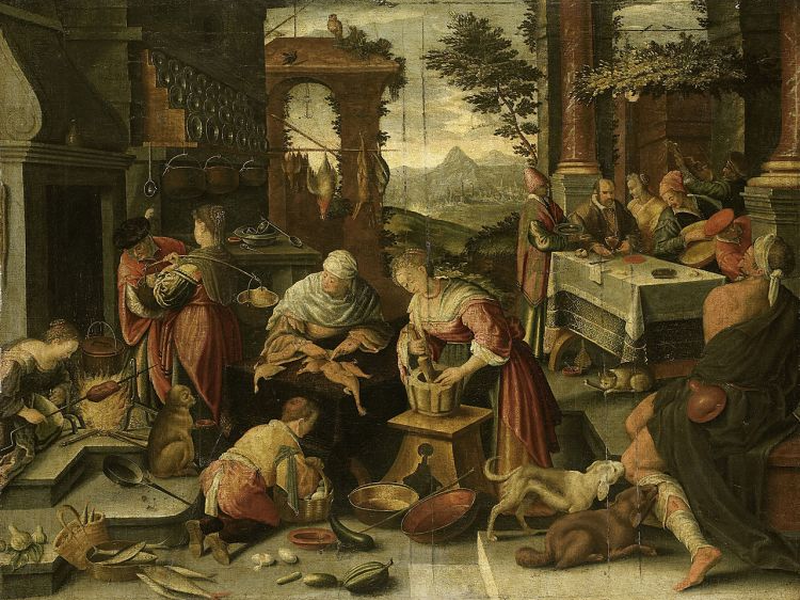
de-rijke-man-en-de-arme-lazarus-by-jacopo-da-ponte-16th-century
Luke

Lazarus and the Rich Man

The parable of Lazarus and the nameless rich man is not an independent story. It is part of a long context that begins in Luke 15:1, where Jesus is eating with tax collectors and sinners and the scribes and Pharisees grumble. In response to their hardheartedness, Jesus tells a three-part…

by Ralph Allan SmithJuly 4, 2019
aaron-burden-uynrnfdkjwg-unsplash
Luke

Everybody has Dropsy - Luke 14:1-24

The Bible is written so that even when a reader cannot pick up on what might be deeper or more detailed aspects of a text, there is virtually always a message to be heard. In the ancient world, where the “reader” of Scripture would likely be a church official facing…

by Ralph Allan SmithJuly 2, 2019
communion
Biblical Theology

Fruit Trees and Grain Plants

The distinction between garden (or vineyard) and field begins in Genesis 2. This relates to the ordering of the formless world. Plants of the field are contrasted with the garden planted by God in Genesis 2:5&8. Later on, under the Old Covenant the Israelites will be required to keep their…

by James B. JordanJune 27, 2019

Showing page 77 of 309

See all

Showing page 39 of 43

See all

Imputation

Luther writes (Commentary on Gal 2:20), “Christ and I must be joined together so that He lives in me and I in Him - and what a wonderful way of speaking that is. For because He lives in me, whatever there is in me of grace, righteousness, life, peace, salvation…

December 10, 2004

Regeneration

Calvin uses “regeneration” to describe the process of mortification and vivification by which the sinner is renewed in the image of God. This differs from the sense the word has in later Reformed writers. Melanchthon ( Apology for the Augsburg Confession ) uses the word in yet another sense: “we…

December 10, 2004

Grace

Robert Preus has a refreshingly unreconstructed chapter on divergent views on grace in his 1997 Justification and Rome . He asks why recent Catholic-Protestant dialogues have not addressed the issue of grace more directly, and claims that the affirmation that “justification is by grace” has quite a different meaning in…

December 10, 2004
Art

Audubon

There’s a fascinating review of Richard Rhodes’ recent biography of Audubon in the Dec 6 issue of The Weekly Standard . The reviewer has this to say about the “pervasive strangeness ” of Audubon’s art: “Audubon’s most powerful compositions (with few exceptions, such as the regal wild turkey cock and…

December 10, 2004

Abraham and Justification

Martin Chemnitz provides an intriguing discussion of Abraham’s justification in his classic Examination of the Council of Trent . He pinpoints the debate between Protestant and “papalist” as follows: The issue is whether the ground of our justification is found in our post-regeneration works or in an alien righteousness of…

December 9, 2004

Eternal Father, Sermon Notes, Third Sunday in Advent

INTRODUCTION According to Jesus?Econsistent testimony, the Father sent Jesus into the world (John 3:34; 5:24, 30; 7:28-29; 15:21; 16:5; 17:3). Jesus didn?t come to protect us from an overbearing and hostile Father. He came in obedience to the Father?s commission. In fact, everything Jesus did manifests the Father (John 5:19-20),…

December 8, 2004

Showing page 2029 of 2212

Browse by Category

In Medias Res

Your weekly digest for all things Theopolis.

Donate

Theopolis is nearly 100% donor-supported. Consider joining us on our mission.