
Theopolis Logo

Writing

Explore our collection of theological essays, biblical studies, and reflections on faith and culture.

See all
giammarco-zeh-ljawhtg-unsplash
Biblical Horizons

OPEN BOOK: Views and Reviews

Isaac E. Mozeson, The Word: The Dictionary that Reveals the Hebrew Sources of English (Northvale, NJ: Jacob Aaronson Inc., 1995), 310 pp. Reviewed by James B. Jordan. Once there was only one language in the world, the language God spoke to Adam. At the Tower of Babel, there came to…

by James B. JordanJune 28, 1996
tim-wildsmith-j6jv-mkdzqs-unsplash
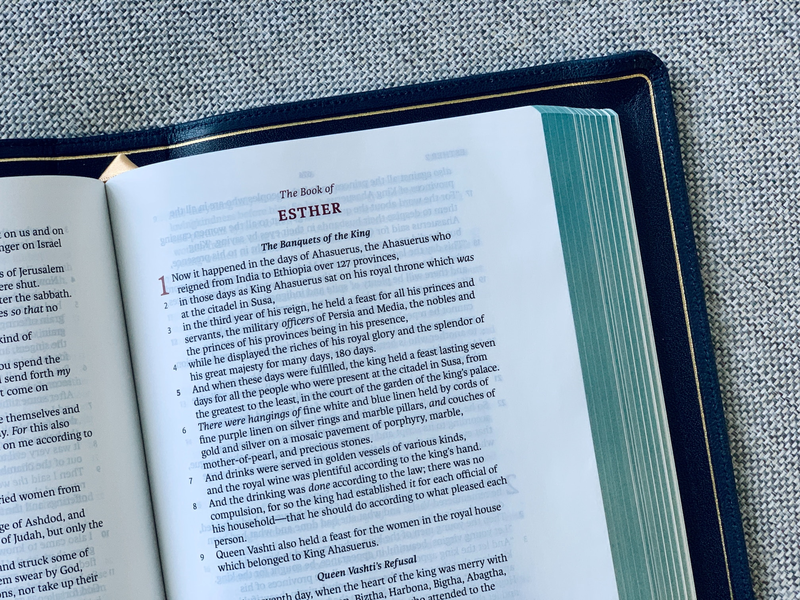
Esther

Esther: Historical & Chronological Comments (IV)

2. The Setting of the Book of Esther A. Xerxes (continued from previous issue) Ezra 6:14 says that the Jews finished building "according to the command of the God of Israel and the decree of Cyrus and Darius and Artaxerxes king of Persia." The problem with this verse is that…

by James B. JordanJune 28, 1996
ales-krivec-4mibe6zg5r0-unsplash
Acts

Jesus and Amalek

This essay goes with our previous study of the Amalek pattern back in Biblical Horizons No. 2. Since many do not have this essay, entitled "The Battle of Gog and Magog," let me cite the relevant paragraphs: Note in Genesis 12-15 that Abram moves into the land after escaping Pharaoh…

by James B. JordanJune 28, 1996
aaron-burden-1ebsmyrau-s-unsplash
Proverbs

The Strange Woman

Proverbs 7:6-23 is one of several passages early in the Proverbs in which Solomon warns his son about the wiles and dangers of the "strange woman." It is certainly quite proper to take these as straightforward warnings against sexual sins, and these are certainly warnings that need to be impressed…

by Peter LeithartJune 27, 1996
jan-kahanek-g3o5ztrk2e4-unsplash
Biblical Studies

Some Observations

1. In Luke 4:20 we read that after Jesus finished reading from Isaiah, "the eyes of all in the synagogue were fixed upon Him." This is usually taken in a psychological sense: They were amazed at Jesus somehow. I suggest that, as always, a merely psychological reading is a modern…

by James B. JordanMay 28, 1996
tim-wildsmith-j6jv-mkdzqs-unsplash
Esther

Esther: Historical & Chronological Comments (III)

2. The Setting of the Book of Esther Up to now we have assumed what we must prove, that the king in Esther is Darius the Great. While Biblical chronologists have usually taken this position, commentators on the book of Esther have often taken others as the king. One view,…

by James B. JordanMay 28, 1996

Showing page 265 of 309

See all

Showing page 39 of 43

See all

Scriptural Use of “Justification”

James White (in The God Who Justifies )issues this important caution in his treatment of the meaning of the Hebrew and Greek word-groups for justification and righteousness: “there are obvious instances in which the biblical term speaks of a moral or ethical quality when it speaks of someone being righteous.…

November 26, 2004

Scriptural Use of “Justification”

James White (in The God Who Justifies )issues this important caution in his treatment of the meaning of the Hebrew and Greek word-groups for justification and righteousness: “there are obvious instances in which the biblical term speaks of a moral or ethical quality when it speaks of someone being righteous.…

November 26, 2004

Incredibles

I’m not the first one to notice, by any means, but let me chime in: The Incredibles is an overt attack on egalitarianism. All the bad guys in the movie want to flatten out the differences between “supers” and everyone else - the litigious people who are injured during rescues,…

November 25, 2004
Theology

Reno on Genesis

Rusty Reno had some sharp observations on the importance of creatio ex nihilo in a paper giving a preview of his theological commentary on Genesis. He said that it fit with the overall Scriptural polemic against idolatry, and demonstrates that idolatry is fundamentally nihilism ?Edevotion to nothing, what does not…

November 25, 2004

Written or Oral?

Does the OT show signs of being a product of long oral tradition? In his 2004 book Biblical Narrative and the Death of the Rhapsode (Indiana University Press), Robert S. Kawashima argues that it does not. He believes that the Bible manifests a very different narrative art from the epic…

November 25, 2004

Gathercole on Sin in Romans

Simon Gathercole had some interesting points in his paper on “Jewish and Gentile sin in Paul.” He wanted to show that the “history of sin” was revelatory of God’s character, and had an integral role in the work of redemption. He defended this thesis by examining parallels between Romans 1:18-32…

November 25, 2004

Showing page 2035 of 2212

Browse by Category

In Medias Res

Your weekly digest for all things Theopolis.

Donate

Theopolis is nearly 100% donor-supported. Consider joining us on our mission.