Theopolis Logo

Writing

Explore our collection of theological essays, biblical studies, and reflections on faith and culture.

See all
cloister

Gatekeepers

1 Chronicles 9:1 seems to bring the genealogies of 1 Chronicles to an end. The Chronicler has recorded the genealogy of the human race from Adam, focusing on the descendants of Abraham through Jacob. Summing it all up, he says, “So all Israel was enrolled by genealogies; and behold, they…

by Peter LeithartJune 21, 2016
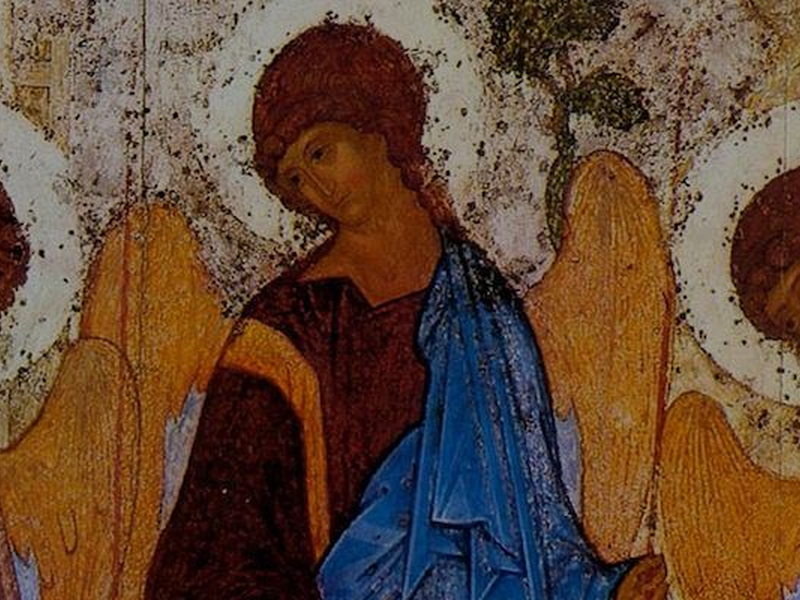
trinity-1-2
Trinity

Are the Divine Persons Persons?

The “personalist” understanding of the Trinity, articulated most influentially in the work of John Zizioulas, has fallen on hard times. Recent scholars have attacked Zizioulas’s idea that Cappadocian Trinitarianism represented an ontological revolution, hammering on the distinction between divine and human personhood. Michel Barnes’s conclusion is the most drastic of…

by Peter LeithartJune 16, 2016
img_4660-2
Architecture

On Biblical Theology

Biblical Theology is often defined as the historical unfolding of God’s revelation, or of God’s revelation and of the history of his covenantal redemption and transformation of humanity and the world. In practice, Biblical Theology is usually broader than this, and also includes the study of literary structure and of…

by James B. JordanJune 14, 2016
laughing_statue_by_xxbobbiie-d5f0meh-2
Humor

Wise Laughter

We are made to be happy. Created to enter into the eternal joy of God, our whole being inclines to that end, but the fallen world has put forth barriers and by our own sin we bar ourselves from that endless delight, and death blinds us to that reality. Yet…

by Remy WilkinsJune 7, 2016
img_7664
Liturgy

Why Theopolis? Take Two

At the end of Revelation, John sees the heavenly city descending to earth. The city shines with the brilliance of God's glory, which lightens the nations, so that kings bring their glory to the city. This is not a vision of the final new heaven and new earth. It's a…

by Peter LeithartJune 2, 2016
trinity-1-2
Attributes of God

How Can We Talk About God?

“No one has ever seen God,” writes John (John 1:18). If this is the case, then how can we speak about God? Some people say we actually cannot. Or at least we cannot speak about God positively, i.e. who He is. We can only say who or what God is…

by Bogumil JarmulakMay 31, 2016

Showing page 130 of 309

See all

Showing page 39 of 43

See all

David's Speech to Solomon

1 Chronicles 22:6–16 records David's hortatory speech to Solomon about building the temple. It is divided into two large sections, both marked by the phrase “my son” (22:7, 11). The first section repeats Yahweh's oracle to David explaining why he would not build the house and promising that David's son…

January 24, 2017

The Essential Mary

S ince the Son is incarnate, argues Aaron Riches in his Ecce Homo , “we must speak of unum esse simpliciter ,” yet Constantinople II determined that the Son is persona composita . Thus, in the words of Aquinas, “there is another being of this suppositum . . . insofar…

January 24, 2017

David's Restraint, Yahweh's Trap

W hen King Nahash of Ammon dies, David sends his condolences to his son Hanun (1 Chronicles 19). Nahash had shown love-and-loyalty ( hesed ) to David, so David returns hesed (v. 2). Hanun doesn't believe it, and the princes (apparently young advisors) stoke up his suspicions (v. 3). David…

January 23, 2017

Sherlock's Soap-Operization

N icholas Barber gets Sherlock just right. Benedict Cumberbatch has the intensity to kill the title role, and, puppyish though he is, Martin Freeman's Dr. Watson is a credible sidekick. The production is slick, the characters compelling, the rapport sharp and often witty. It's hugely entertaining. Then they go and…

January 20, 2017

Thomas and Pure Nature

S ummarizing a line of argument from Aquinas, Robert Spaemann ( Essays in Anthropology ) notes that Thomas acknowledges that “By nature animals are sufficiently equipped to attain their own end” (15). The question is: Are human beings? And if the end of human beings is union with God, how…

January 20, 2017

Christ the Lion

J esus is the Lion of Judah. This is no random metaphor, according to the medieval bestiary, the verse Physiologus attributed to the 11th-century writer Theobaldus. Lions have various habits, all of which point to Christ. For instance: “As the Lion dwells on the high mountain, so Christ the spiritual…

January 20, 2017

Showing page 214 of 2212

Browse by Category

In Medias Res

Your weekly digest for all things Theopolis.

Donate

Theopolis is nearly 100% donor-supported. Consider joining us on our mission.