Theopolis Logo

Writing

Explore our collection of theological essays, biblical studies, and reflections on faith and culture.

See all
last-supper
Luke

Table Talk

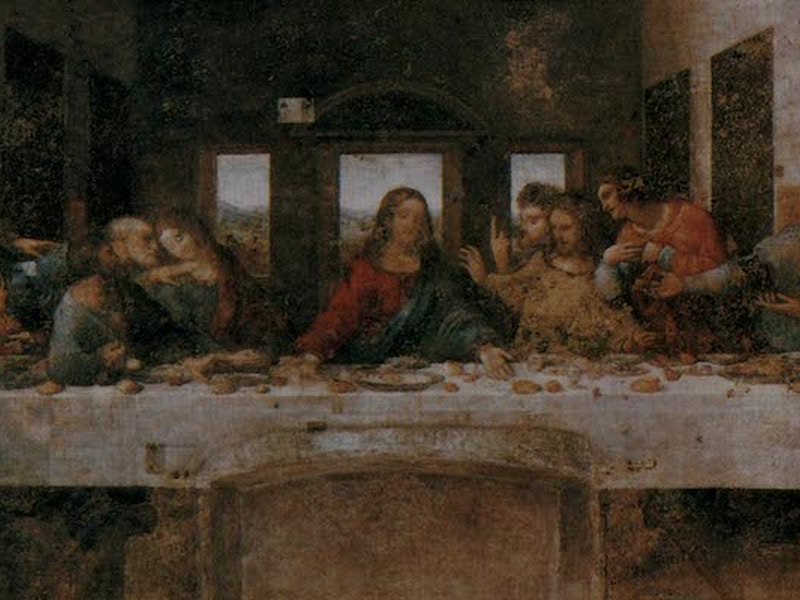
Along His journey to Jerusalem, Jesus stops frequently to have meals, three times with Pharisees (7:37-50; 11:37-54; 14:1-35). Meals were central to Jesus’ ministry. He comes “eating and drinking” (Luke 7:34). While His meals are not just for refreshment, they are opportunities for teaching the protocols of the kingdom. Meals…

by Peter LeithartApril 19, 2016

music-violin
Biblical Theology

A Musical Case for Typological Realism, (Part 4)

Time as a realm of participation can be difficult for us imaginatively to grasp. While music is a profoundly temporal art, exploring the medium of time like no other, most of our temporal experience seems decidedly unmusical in character, disjointed and unorchestrated. The form in which we naturally discover time…

by Alastair RobertsApril 14, 2016
John

Jesus' Burial Clothes

John devotes much attention to Jesus’ burial clothes. He tells us that Nicodemus brought about a hundred pounds of myrrh and aloes to spice Jesus body, and that He was bound in linen wrappings. We find out that His body and His head were wrapped separately. (John 19:39-40; 20:6-7). When…

by James B. JordanApril 12, 2016
clock
Biblical Theology

A Musical Case for Typological Realism, (Part 3)

Thinking about time in terms of music also helps us to appreciate its unity and inner relations. Henri Bergson observes our cultural habit of dividing time into discrete moments, and conceiving of these as if akin to objects in a spatial succession. [1] Against such a notion, Bergson argues for…

by Alastair RobertsApril 7, 2016
screen-shot-2016-03-31-at-9-32-11-am
Biblical Theology

A Musical Case for Typological Realism, (Part 2)

As we attend to these and other aspects of music’s temporality, Begbie suggests, we will find means by which to resist some of our habitual modern ways of conceptualizing time, most especially our tendency to conceive of time as if it were a homogeneous set of technologically quantifiable units laid…

by Alastair RobertsMarch 31, 2016
biblioteca-vasconcelos-crop
Biblical Theology

Systematic Typology (Part Three)

The Hidden Dimension In many fields of scientific study, the apparent complications and contradictions are dispelled once the internal logic is perceived. Biblical hermeneutics is no different, since the author of Creation is the Author of the Word. The Bible’s literary labyrinth radiates organically from an algorithm so simple it…

by Mike BullMarch 29, 2016

Showing page 133 of 309

See all

Showing page 39 of 43

See all

Are Trinitarian Persons Persons?

B oethius defined persona as an “individual substance of a rational nature ( natuae rationalis individua substantia ). This definition is often cited as evidence that medieval Trinitarian theology, deeply influenced by Boethius, did not teach that the Trinitarian “Persons” are persons in the modern sense of the term -…

January 19, 2017

Justice and Righteousness

N estled within several chapters of 1 Chronicles that describe David's wars, 1 Chronicles 18:14–17 explains the purpose of those wars: To establish Yahweh's order of justice in Israel, an order of justice that David himself administers and mediates. Having conquered Philistia, Moab, Ammon, and Edom, David reigns over “all…

January 18, 2017

God's Sacramental Self-Gift

What does God give in creation and redemption? He gives us our own existence, and that the gift He gives is Himself. Both are true. Luther captures this latter point in his 1528 “Confession”: “These are the three Persons and the one God, Who has given Himself to us wholly…

January 17, 2017

Anthropomorphism and Nature

I n his Essays in Anthropology , Robert Spaemann observes that “the beginning of modern science was marked by polemics against the concept of nature. The concept of nature is now taken to be anthropomorphic, while the essentially teleological idea of things in the cosmos having ‘movement in themselves' is…

January 17, 2017

American Covenant

P hilip Gorski's American Covenant examines the American tradition of civil religion or civic republicanism from the Puritans through President Obama. Gorski contrasts this tradition with the two most belligerent contenders in contemporary American politics, religious nationalism and radical secularism. Civil religion differs from radical secularism in its anthropology (communitarian…

January 16, 2017

Conrad’s Mesmerizing Obscurity

K ate Symondson begins her TLS review of recent editions of Joseph Conrad’s letters and his novel Victory with a reminder of FR Leavis's complaint about Conrad's “insistence on inexpressible and incomprehensible mystery.” Symondson writes, “Instead of the Victorian preference for pellucid—almost pedantic—hardened detail, mist shrouds and encircles Conrad's fiction.…

January 13, 2017

Showing page 216 of 2212

Browse by Category

In Medias Res

Your weekly digest for all things Theopolis.

Donate

Theopolis is nearly 100% donor-supported. Consider joining us on our mission.