
Theopolis Logo

Writing

Explore our collection of theological essays, biblical studies, and reflections on faith and culture.

See all
alfons-morales-ylswjsy7stw-unsplash-1
Judges

Book Review: E. John Hamlin, At Risk in the Promised Land: A Commentary on the Book of Judges

E. John Hamlin, At Risk in the Promised Land: A Commentary on the Book of Judges International Theological Commentary. Grand Rapids: Eerdmans, 1990. For anyone who has developed a taste for the rich biblical theology of Meredith Kline, James B. Jordan, Vern Poythress, and others, it is difficult to find…

by Peter LeithartJuly 17, 1993
Exodus

The Rock That Followed Them

". . . and all drank the same spiritual drink, for they were drinking from a spiritual rock that followed them; and the rock was Christ" (1 Corinthians 10:4). Paul’s passing comment about the rock that followed the Israelites in the wilderness has often been treated as a bit of…

by Peter LeithartJuly 17, 1993
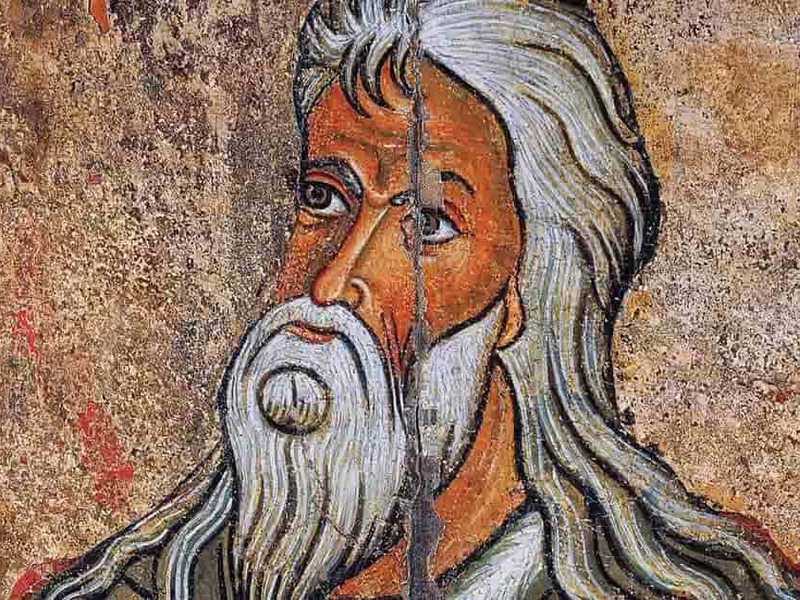
elijah-1200x630-min
Biblical Studies

Elijah and Moses

Several months ago, my brief article entitled "Elijah’s Exodus" was published in Biblical Horizons . Since that time, further study has made it evident that Elijah’s exodus in 1 Kings 17 is part of a larger pattern in which Elijah’s ministry closely parallels Moses’. The following parallels are evident: Elijah…

by Peter LeithartJuly 17, 1993
screenshot-2023-08-24-at-8-20-17-am
Exodus

The Footstool of His Feet

The translation and theology of the Hebrew term kapporet have long been puzzling to scholars. On the translation of the term, I have nothing new to offer. I wish instead to concentrate on the theological symbolism of the kapporet . The kapporet was the solid gold slab that laid "above"…

by Peter LeithartJune 17, 1993
Exodus

A Note on Exodus 22:31

Peter Leithart's article entitled " Prey in My House" pointed out that tearing flesh is a sign of kingly rule and dominion, and that God is portrayed as the Lion-King who tears flesh. The tithe brought to God’s house provides the money for the torn flesh of the sacrifices offered…

by James B. JordanJune 4, 1993
screen-shot-2022-05-12-at-12-07-23-pm
Biblical Chronology

Jubilee (Part 3)

The Seventy Years of Sabbaths 2 Chronicles 36:20-21 reads: "And those who had escaped from the sword he carried away to Babylon; and there they were slaves to him and to his sons until the rule of the kingdom of Persia, to fulfill the word of Yahweh by the mouth…

by James B. JordanApril 4, 1993

Showing page 285 of 309

See all

Showing page 39 of 43

See all

Day of Wrath (Romans 2)

What about taking “day of wrath” in Romans 2 as AD 70? Some arguments: 1) Dunn lists the verses that use similar phrases for “wrath and indignation” and “tribulation and distress,” and most of them are about historical judgments on Israel. There’s a cluster of uses in Deut 28:55ff, which…

November 7, 2003
Theology

Intellectualism and Voluntarism both arise

Intellectualism and voluntarism both arise from the same theological error: from the assumption that there is some realm that is independent and autonomous. This is most obvious with intellectualism: For intellectualists, things have indepdendent value that God recognizes and evaluates. Voluntarists are, however, making the same error. They assume that…

November 6, 2003

Studebaker on Pauw

Steve Studebaker writers in the Scottish Journal of Theology (56:3) about Edwards’s trinitarian theology, and includes an extended critique of Amy Plantinga Pauw’s treatment of Edwards’s incipient “social trinitarianism.” According to Studebaker, Pauw’s analysis only works if one assumes that the history of Trinitarian theology can be sketched out as…

November 5, 2003

The Olive Tree (Romans 11)

In the same issue of JSNT, Philip Esler examines ancient oleiculture to illumine Paul’s use of the olive tree image in Romans 11. When he describes branches being grafted into an olive tree, Paul refers to a common practice. But the normal practice is to graft cultivated olive branches onto…

November 5, 2003

Acts 20:20

Jerome Neyrey has an interesting article on Acts 20:20 in the current issue of JSNT. He examines the cultural background to Paul’s use of the phrase “in public and from house to house” by examining various expressions in Greek and Latin writers that correspond to modern “public” and “private.” These,…

November 5, 2003
Literature

Modernity

To what extent is modernity merely a recovery of the tragic? Tragedy, to my knowledge, simply didn’t exist in the medieval world. Drama revived late in the medieval period, but tragedy was reintroduced by the Renaissance. In Shakespeare, the tragic is set in a larger Christian comic setting, with profoundly…

November 5, 2003

Showing page 2170 of 2212

Browse by Category

In Medias Res

Your weekly digest for all things Theopolis.

Donate

Theopolis is nearly 100% donor-supported. Consider joining us on our mission.