Theopolis Logo

Writing

Explore our collection of theological essays, biblical studies, and reflections on faith and culture.

See all
tanner-mardis-xuxghzhibn4-unsplash-1-2
Biblical Studies

Tweets-turned-Notes on the Bible’s Chronology

Summary In what follows, I will consider the “year-stamps” employed in Scripture, i.e., statements of the form, “Such-and-such an event took place in the Xth year of Y.” In the process, I will suggest some ways in which the Biblical narrative might relate to events in the extra-Biblical world, though…

by James BejonJuly 16, 2019
durer-prodigal-son-2
Luke

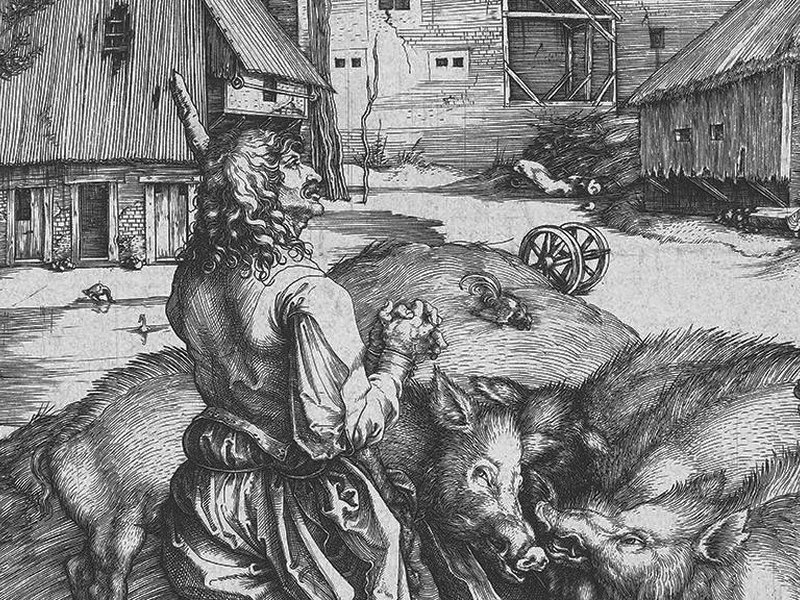
Perspectives on the Prodigal, (Part 2)

In the first essay on the parable of the Prodigal Son, I suggested that the problems commentators and others encounter in interpreting Jesus three-part parable are not accidental. These are not just problems in our ignorance of cultural background. They are intentional features of the stories —stories designed to poke…

by Ralph Allan SmithJuly 11, 2019
durer-prodigal-son-2
Luke

Perspectives on the Prodigal, (Part 1)

The story of the Prodigal Son is perhaps the most well-known story in the Bible. As others have observed, it may also be one of the most misunderstood. In two short essays, I will point out features of this story that are commonly neglected, aspects of Jesus’ parable that might…

by Ralph Allan SmithJuly 9, 2019
de-rijke-man-en-de-arme-lazarus-by-jacopo-da-ponte-16th-century
Luke

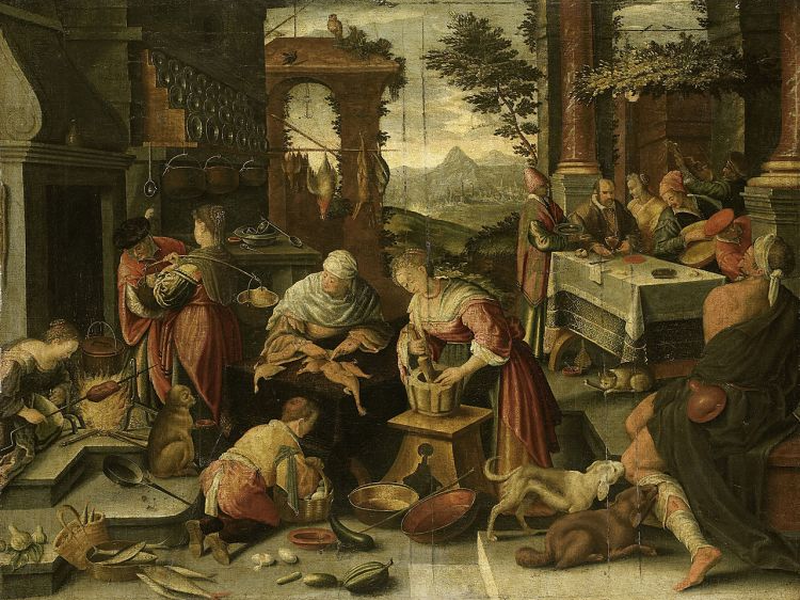
Lazarus and the Rich Man

The parable of Lazarus and the nameless rich man is not an independent story. It is part of a long context that begins in Luke 15:1, where Jesus is eating with tax collectors and sinners and the scribes and Pharisees grumble. In response to their hardheartedness, Jesus tells a three-part…

by Ralph Allan SmithJuly 4, 2019
aaron-burden-uynrnfdkjwg-unsplash
Luke

Everybody has Dropsy - Luke 14:1-24

The Bible is written so that even when a reader cannot pick up on what might be deeper or more detailed aspects of a text, there is virtually always a message to be heard. In the ancient world, where the “reader” of Scripture would likely be a church official facing…

by Ralph Allan SmithJuly 2, 2019
communion
Biblical Theology

Fruit Trees and Grain Plants

The distinction between garden (or vineyard) and field begins in Genesis 2. This relates to the ordering of the formless world. Plants of the field are contrasted with the garden planted by God in Genesis 2:5&8. Later on, under the Old Covenant the Israelites will be required to keep their…

by James B. JordanJune 27, 2019

Showing page 77 of 309

See all

Showing page 39 of 43

See all
Reformation

Careening Toward Division

A s recounted in From Conflict to Communion , jointly produced by the Lutheran World Federation and the Pontifical Council for Promoting Christian Unity, the Reformation was an academic dispute that careened into a division of the church. Apart from the first four theses, Luther's 95 Theses did not state…

January 10, 2017
Language

Is Language a Tool?

D aniel Everett thinks language is a tool, and has written a book about it: Language: The Cultural Tool . He develops his theory over-against the notion that language is the product of a biological “instinct.” On this Chomskyan/Pinkerian view, “language is part of our genetic endowment and that, because…

January 9, 2017

The Iago Problem

R eflecting on Daniel Craig's recent performance as Iago, Tamsin Shaw puzzles over the “Iago problem” in a secular world: “The concept of evil has fallen out of favor in our disenchanted world. Its religious and superstitious connotations are permissible in horror movies, but otherwise often deemed embarrassing. Without some…

January 6, 2017

Accidental Empire

I n a TLS retrospective on Kipling , Michael Holroyd notes the obvious: “By the time he won the Nobel Prize for Literature in 1907 he was well known as the private soldiers' poet, and had achieved fame for beating the drum on behalf of the British Empire. The British…

January 6, 2017

Shakespeare's Oaths

I n her TLS review of John Kerrigan's Shakespeare's Binding Language , Emma Smith calls attention to the liturgical and sacramental dimensions of Shakespearean oaths, contracts, and vows: “Binding in Measure emerges as deeply theological and sacramental (‘grounded in the Roman military oath of sacramentum,' as Kerrigan tells us in…

January 6, 2017

Beware the Smuggler

A delicious 1964 poem from Norman MacCaig ( Poems of Norman MacCaig , 165), entitled “The Smuggler”: Watch him when he opens his bulging words—justice, fraternity, freedom, internationalism, peace, peace, peace. Make it your custom to pay no heed to his frank look, his visas, his stamps and signatures. Make…

January 6, 2017

Showing page 219 of 2212

Browse by Category

In Medias Res

Your weekly digest for all things Theopolis.

Donate

Theopolis is nearly 100% donor-supported. Consider joining us on our mission.