Theopolis Logo

Writing

Explore our collection of theological essays, biblical studies, and reflections on faith and culture.

See all
tanner-mardis-xuxghzhibn4-unsplash-1-2
Biblical Studies

Tweets-turned-Notes on the Bible’s Chronology

Summary In what follows, I will consider the “year-stamps” employed in Scripture, i.e., statements of the form, “Such-and-such an event took place in the Xth year of Y.” In the process, I will suggest some ways in which the Biblical narrative might relate to events in the extra-Biblical world, though…

by James BejonJuly 16, 2019
durer-prodigal-son-2
Luke

Perspectives on the Prodigal, (Part 2)

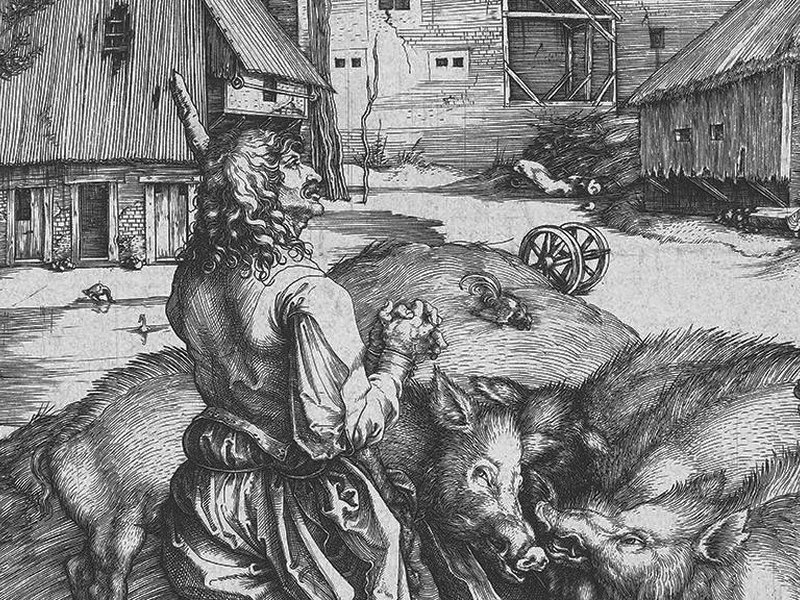
In the first essay on the parable of the Prodigal Son, I suggested that the problems commentators and others encounter in interpreting Jesus three-part parable are not accidental. These are not just problems in our ignorance of cultural background. They are intentional features of the stories —stories designed to poke…

by Ralph Allan SmithJuly 11, 2019
durer-prodigal-son-2
Luke

Perspectives on the Prodigal, (Part 1)

The story of the Prodigal Son is perhaps the most well-known story in the Bible. As others have observed, it may also be one of the most misunderstood. In two short essays, I will point out features of this story that are commonly neglected, aspects of Jesus’ parable that might…

by Ralph Allan SmithJuly 9, 2019
de-rijke-man-en-de-arme-lazarus-by-jacopo-da-ponte-16th-century
Luke

Lazarus and the Rich Man

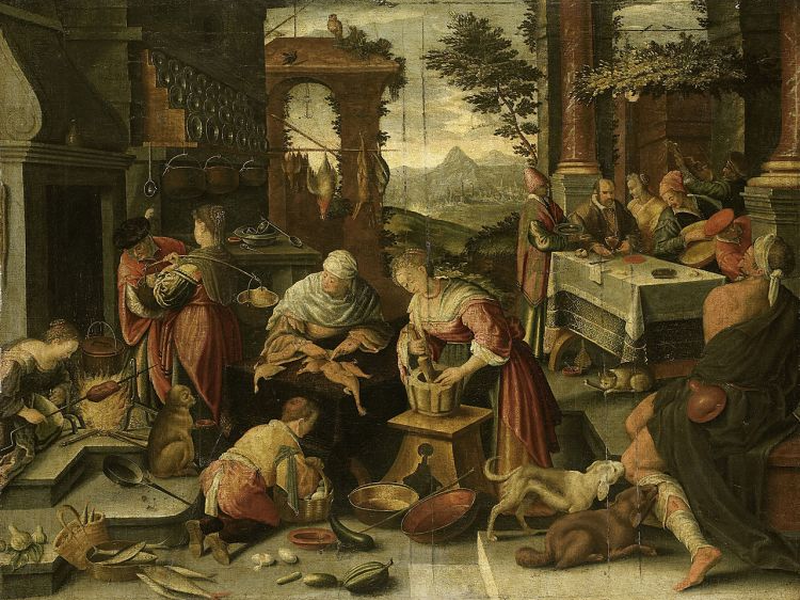
The parable of Lazarus and the nameless rich man is not an independent story. It is part of a long context that begins in Luke 15:1, where Jesus is eating with tax collectors and sinners and the scribes and Pharisees grumble. In response to their hardheartedness, Jesus tells a three-part…

by Ralph Allan SmithJuly 4, 2019
aaron-burden-uynrnfdkjwg-unsplash
Luke

Everybody has Dropsy - Luke 14:1-24

The Bible is written so that even when a reader cannot pick up on what might be deeper or more detailed aspects of a text, there is virtually always a message to be heard. In the ancient world, where the “reader” of Scripture would likely be a church official facing…

by Ralph Allan SmithJuly 2, 2019
communion
Biblical Theology

Fruit Trees and Grain Plants

The distinction between garden (or vineyard) and field begins in Genesis 2. This relates to the ordering of the formless world. Plants of the field are contrasted with the garden planted by God in Genesis 2:5&8. Later on, under the Old Covenant the Israelites will be required to keep their…

by James B. JordanJune 27, 2019

Showing page 77 of 309

See all

Showing page 39 of 43

See all
screenshot-2023-12-12-at-10-36-28-am-2
Luke

Exhortation, September 14

The exhortation for Sunday, September 14: Jesus knew that His teaching differed from the teaching of others in Israel and especially from the Pharisees, and His warnings at the end of the sermon show that He wanted to distinguish His teaching from others. He gives a quick succession of “cartoons”…

September 15, 2003
essay-final-par38758
CultureHistory

Aldous Huxley

The life of Aldous Huxley is a parable of the modern age. Descended from Darwin’s bulldog Thomas Henry Huxley and Matthew Arnold, Huxley was part of an elite intellectual class of distinctly Victorian orientation. He was greatly offended by the “mass culture” that he saw developing around him, and wrote…

September 15, 2003
sixteen-miles-out-d40gdcd_-he-unsplash
Luke

Sermon on the Plain

In Jesus’ “sermon on the plain” in Luke 6 there are a number of cool structures and numerological patterns. The whole sermon is divided into three large chunks, the Beatitudes (vv. 20-27), a section on love of enemies (vv. 27-38, which is marked out by the beginning phrase “But I…

September 13, 2003
kenny-eliason-4mm6mjeg21i-unsplash
Politics

Noemie Emery

Noemie Emery is one of the most interesting political writers today. She has a David Brooksish ability to display the inner connections between politics, personality, and culture, all with a sharp historical sensibility. She is not nearly so entertaining a writer as Brooks, but more profound. Consider this superb passage…

September 13, 2003
ben-white-qdy9ahp0mto-unsplash
History

Stabbing the Privates

Neil Elliot, in the book mentioned in the previous post, says that “The conspirators who assassinated Caligula included an officer he had sexually humiliated, who stabbed the emperor repeatedly in the genitals.” I recall that Plutarch records something similar about Brutus’s strike against Julius Caesar. Does this suggest that striking…

September 12, 2003
screenshot-2024-05-03-at-10-41-22-am
RomansSex

Paul on Sexual Immorality

In the midst of some typical and typically inane apology for sodomy, Neil Elliot (in Liberating Paul: The Justice of God and the Politics of the Apostle , Orbis, 1994) raises the interesting question of why Paul focuses on sexual immorality at the beginning of his letter to the Romans…

September 12, 2003

Showing page 2199 of 2212

Browse by Category

In Medias Res

Your weekly digest for all things Theopolis.

Donate

Theopolis is nearly 100% donor-supported. Consider joining us on our mission.