Theopolis Logo

Writing

Explore our collection of theological essays, biblical studies, and reflections on faith and culture.

See all
31-03-0213
Hermeneutics

Apocalyptic Eyes

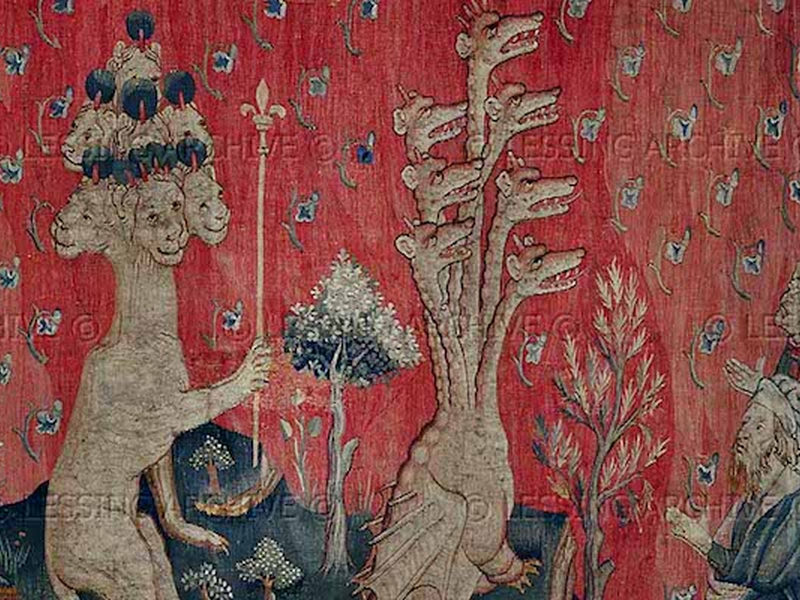
Flying scrolls. Red horses. Beasts coming out of the sea. Winged women. The list goes on. Apocalyptic literature in the Bible is like a cross between science fiction and Marvel comics. And the Bible has a fair bit of this sort of thing. Daniel sees visions in Babylon, Zechariah sees…

by Toby SumpterNovember 4, 2014

bhm-skyline-2
Theopolis News

New Name, New Look

Trinity House Institute has taken a new name, the Theopolis Institute. This striking new name expresses our unique vision and mission and captures the unified purpose behind all our specific programs and activities. We still have Bible, liturgy, and culture in our tagline. We still offer the same courses on…

by TheopolisNovember 4, 2014
istock_000012860926small
Atonement

Not Fearing the Devil

Adam Kotsko offers a socio-political variation on the Christus Victor atonement theory in his 2010 study, The Politics of Redemption: The Social Logic of Salvation . He does this by explaining "the devil" in terms of the Hegelian concept of "objective spirit," Geist . As Kotsko puts it, Geist "refers…

by Peter LeithartOctober 13, 2014
jez-timms-8muutamcwu4-unsplash
Leviticus

The Meaning of Sacrifice

Two factors keep Nahtali Meshel from discussing the meaning of sacrifice until late in his The "Grammar" of Sacrifice . The first has to do with the texts he draws from: "P says little about the meaning of its rituals" (174). The other has to do with the grammatical theory…

by Peter LeithartOctober 8, 2014
jez-timms-8muutamcwu4-unsplash
Leviticus

Praxemics

Chapter 5 of Naphtali Meshel's The "Grammar" of Sacrifice focuses on "praxemics," the physical actions of sacrificial ritual. Praxemes are constituted by six elements: an "atomact," an elementary physical act or gesture; an actor; an object that is acted up; a target for the action and often for the object…

by Peter LeithartOctober 6, 2014
markus-winkler-aid-xyrtlec-unsplash
Leviticus

Jugation and Hierarchy

Two chapters of Naphtali Meshel’s The “Grammar” of Sacrifice cover what he calls “jugation” and “hierarchies.” The first involves the addition of other materials to an animal offering. Jugates include wine, cereal, and oil that are added to the animals (zoemes) that are offered in sacrifice. Some jugates are coordinated…

by Peter LeithartOctober 1, 2014

Showing page 167 of 309

See all

Showing page 39 of 43

See all
aaron-burden-qjdzyt_k8xg-unsplash
Theology

Theology in Rhetorical Mode

David S. Cunningham’s book Faithful Persuasion is a defense of doing theology in a rhetorical mode. Among other things, he offers a devastating deconstruction of an argument for the historical critical method of exegesis. First, he quotes Benjamin Jowett: It may be laid down that Scripture has one meaning —…

August 19, 2003
aaron-burden-qjdzyt_k8xg-unsplash
Luke

Luke 8:39

There’s a nice twist in Luke 8:39 that indicates how Luke understands Jesus’ relationship to God. Jesus tells the Gadarene demoniac to “return to your house and describe what great things God has done for you.” The healed demoniac “went away, proclaiming throughout the whole city what great things Jesus…

August 19, 2003
sixteen-miles-out-al48tflf4e8-unsplash
LukeJustification

Luke and Justification

In Luke 5 and 8, two stories are told that may shed some interesting light on the question of justification. In 5:17-26, men lower a man on a bed through the roof of a house so that Jesus can heal him. Verse 20 says “seeing their faith, Jesus said, ‘Man,…

August 19, 2003
sixteen-miles-out-d40gdcd_-he-unsplash
LukeNumerology

Numbers in Luke 3

Another thought from Luke, this time chapter 3. The genealogy of Jesus in Luke 3 contains 77 names. Several commentators suggest that the names are arranged in 11 groups of 7, and that there is a pattern of 7s (groups of 2 and 3 7s) that provides an overview of…

August 19, 2003
aaron-burden-1ebsmyrau-s-unsplash
LukeTheology

Simeon’s Song

In Simeon’s song in Luke 2, he says that Jesus will cause the “fall and rising” of many in Israel. “Rising” translates ” anastasis ,” the word for resurrection. That may help to explain the sequence (fall—rise, rather than rise—fall). Simeon is perhaps not talking only about people being cast…

August 19, 2003
screen-shot-2022-05-12-at-12-07-23-pm
LukeChristmas

Exhortation, August 17

The exhortation from August 17, 2003: Ancient heretics tried to deny it, and modern heretics do the same, but Luke could hardly make it clearer that Jesus is the human God. Throughout the first chapter of Luke’s gospel, Luke uses the word “Lord” to describe the God of Israel. Gabriel…

August 17, 2003

Browse by Category

In Medias Res

Your weekly digest for all things Theopolis.

Donate

Theopolis is nearly 100% donor-supported. Consider joining us on our mission.