Theopolis Logo

Writing

Explore our collection of theological essays, biblical studies, and reflections on faith and culture.

See all
cross-2
Church Calendar

The Good Friday Paradise Party

I grew up in the 1950s. This was before the "Sixties" and the democratization, informalization, and general cheapening of the church and her worship. Ministers were Father Donovan, Pastor Eckhart, Reverend MacPherson, Mister (Episcopal) Parker, and Brother Smith. Liturgical speech was high language, sounding kind of like the King James…

by James B. JordanMarch 25, 2016
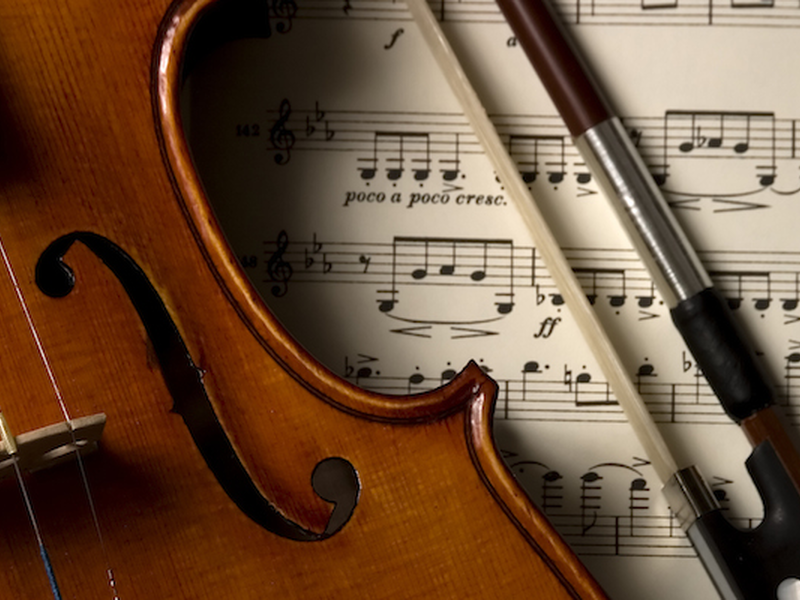
music-violin
Hermeneutics

A Musical Case for Typological Realism, (Part 1)

Metaphor exerts a surprisingly powerful influence within our thinking. Although it is easily dismissed as little more than a figure of speech, when we attend more closely to the ways in which we use it, metaphor’s importance swiftly becomes more apparent. Although many of our metaphors have become quite invisible…

by Alastair RobertsMarch 24, 2016
tree-2
Creation

True Science

What is a tree, scientifically speaking? A mere googling gives the following answer: “a woody perennial plant, typically having a single stem or trunk growing to a considerable height and bearing lateral branches at some distance from the ground.” We can increase detail by describing its family, genus, species and…

by Remy WilkinsMarch 22, 2016
fasting
Church Calendar

Food for Thought from Ethiopia

The majority of Western evangelical Christians rarely, if ever, fast as a form of spiritual discipline. In our culture, fasting is more connected with dieting than worship, the other side of our deeply ambiguous fascination with food. Food is everywhere. We eat more than ever before, at greater speed, and…

by Sam BusseyMarch 17, 2016
unnamed
Biblical Theology

What is Systematic Typology? – Part Two

A Grammar of Creation An understanding of the visual-musical language of the Bible must begin with Genesis 1. This is fortunate, because when explaining biblical types to academics, as opposed to children, one is repeatedly forced to start from scratch. From birth, a healthy child is attuned to rhythm and…

by Mike BullMarch 15, 2016
wall_e_by_mrcanavan-d3f92cn
Art

Wall-E and the New Creation

In an inverse Eden, a land laid waste, one works alone tending the trash. There are none like him in all the earth, inquisitive, playful and most drawn to those mysterious, dancing bipedal creatures who lost earth and left it to go wandering the vast wilderness of space. Humans have…

by Remy WilkinsMarch 10, 2016

Showing page 134 of 309

See all

Showing page 39 of 43

See all

Augustinian Optimism and Modern Science

P eter Harrison points out in his The Fall of Man and the Foundations of Science (10–11) that the Reformation coincided with the rediscovery of ancient skepticism. While the Reformers were undermining traditional Catholic sources of authority from one side, Montaigne and others were corroding certainty from the other. Descartes…

December 12, 2016

Apocalypse Preserved

Karl Shuve's contribution to Apocalypses in Context traces the Christian use of Jewish apocalyptic, especially of the Book of the Watchers from 1 Enoch, which even makes it into the universal canon of the New Testament (Jude). The Watcher story appears in Justin, who “blames ‘every evil' on the Watcher…

December 9, 2016

Constructing Modernity

Thomas Fabisiak wonders, What does the New Jerusalem have to do with modernity? ( Apocalypses in Context ). Ask most modern philosophers, and the answer will be, Not much. Fabisiak speaks of the “'rhetorical construction' of modernity” that takes the form of a dismissal or expulsion of apocalyptic and all…

December 9, 2016

Chess and Soviet Man

In a 2011 New Yorker profile of Norwegian chess champion Magnus Carlsen, D.T. Max digresses to explain the logic behind the Soviet interest in chess: “Lenin, an enthusiastic player, made the game a priority for the new nation. In 1920, Alexander Ilyin-Zhenevsky, a commissar of Soviet chess, wrote that chess,…

December 9, 2016

Erotics of Reading

In the middle stanzas of “Erotikos Logos,” watching someone else reading, Scott Cairns ( Slow Pilgrim , 278) writes, “So much, of course, depends upon your own willingness to find something worthy here, even as you bring - as you must - something worthy to the effort. So much of…

December 9, 2016

From Polemic to Propaganda

Andrew Pettegree ( Reformation and the Culture of Persuasion ) observes a shift in rhetorical tone in Protestant-Catholic debates between the early and mid sixteenth century: “While much of the polemical writing of Luther’s day was rumbustious in tone, making liberal use of ridicule and ad hominem attacks, it still…

December 9, 2016

Showing page 224 of 2212

Browse by Category

In Medias Res

Your weekly digest for all things Theopolis.

Donate

Theopolis is nearly 100% donor-supported. Consider joining us on our mission.