Theopolis Logo

Writing

Explore our collection of theological essays, biblical studies, and reflections on faith and culture.

See all
max-kukurudziak-qbc3zmxw0g8-unsplash
History

Report from Ukraine

We lost Crimea. That is very clear. Putin proved he was not lying when he said he would place women and children ahead of his soldiers to storm Ukrainian military bases. Russian soldiers did exactly that with women (some who volunteered and some who were forced). Russia now occupies all…

by San SanychMarch 28, 2014
screenshot-2023-09-21-at-3-59-23-pm
Church Calendar

God Gone Silent

Sound is an indicator of life and energy. “Sound signals the present use of power, since sound must be in active production to exist at all.” Things don’t have to be alive to make themselves visible, and “a primitive hunter can see, feel, smell, and taste an elephant when the…

by Peter LeithartMarch 26, 2014
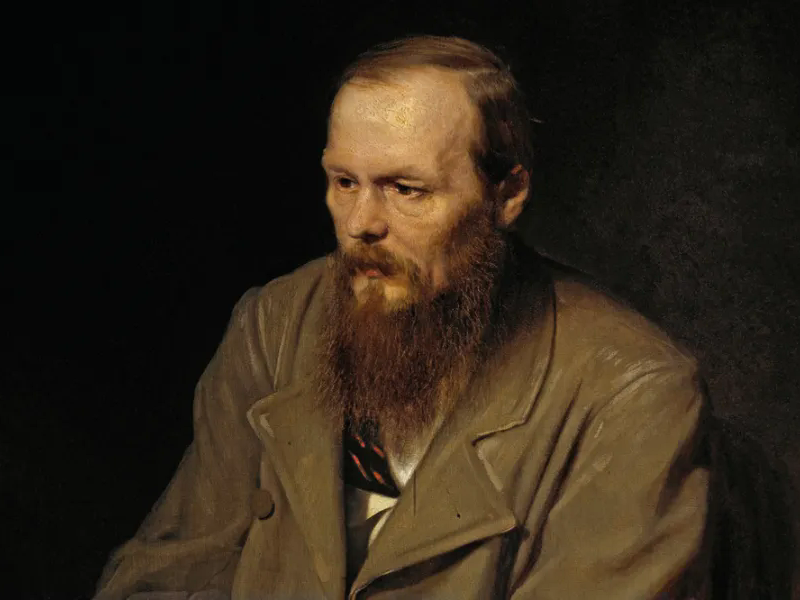
web-lead-image_final_dostoevsky
Books

Dostoevsky the Liberal

In the most famous section of his best-known novel, Dostoevsky’s Ivan Karamazov brings forward his case against God. He opens with a horrific litany of outrages against children. Turkish soldiers make a baby laugh and then shoot a pistol into his face. A little girl is beaten, thrashed, kicked by…

by Peter LeithartMarch 24, 2014
kelly-sikkema-ggs0_g6wi-i-unsplash
Epistemology

Subsidiary-Focal Integration and Liturgy

​At the heart of Esther Lightcap Meek's splendid ​Little Manual for Knowing is a concept she picked up from Michael Polanyi, "subsidiary-focal integration." The concept begins from the insight that all our knowing, all our experience, is double. We focus on something, but we are capable of "indwelling" that focal…

by Peter LeithartMarch 19, 2014
engin-akyurt-uz9qpvbol0e-unsplash
Revelation

White Stone

Jesus promises the overcomers of Pergamum "hidden manna" and a "white stone." The hidden manna is often linked with the manna stashed away in the ark of the covenant. The white stone has proved more elusive. Exodus tells us that manna was white (Exodus 16:31) and like bdellium (Numbers 11:7),…

by Peter LeithartMarch 17, 2014
226961fgsdl
Leviticus

A Theology of Festivity

Leviticus 23 begins with a reference to “Yahweh’s appointed times” ( mo’ade-YHWH ). Mo’ed is the common term for the feasts of Israel. A few dimensions to this term. First, it means “appointed time” or “designated time.” It is a time set by Yahweh. Yahweh has claimed certain times as…

by Peter LeithartMarch 12, 2014

Showing page 177 of 309

See all

Showing page 39 of 43

See all

House of Wisdom

1 Chronicles 22 records a lengthy speech from David to his son Solomon. The very setup suggests an analogy with the book of Proverbs, in which Solomon gives instructions to his son the prince. For the Chronicler, Solomon learned to teach wisdom by receiving it from David. That formal hint…

December 1, 2016

Sources of Apocalyptic

I n his 1892 Lectures on the Apocalypse (29–30), William Milligan argues that “the symbolism of the Revelation is wholly and exclusively Jewish.” He illustrates: Even “the crown of life” in chap. i. 10 is not the wreath of the victor in the Grecian games, but the Hebrew crown of…

December 1, 2016

Limits of Pen and Tongue

S hakespeare's Sonnet 103 laments the limits of language to capture the thing it describes. “Look in your glass,” the poet says, and you will see a face that overwhelms “my blunt invention quite.” The reality dulls the poet’s lines and disgraces him. And it would be a sin to…

November 30, 2016

Church With Soul of America?

The paragraphs below are taken, with slight changes, from a column I wrote at Firstthings.com in July 2015. The questions are even more pressing since Trump's election. I mmigration has always roiled under the surface of American politics. It’s the price of being America, a land subdued by outcasts and…

November 30, 2016

A House by and for Nations

A fter David sinfully takes a census of Israel (1 Chronicles 21), the threshing site where he builds the altar that arrests the plague becomes the temple site (1 Chronicles 22:1). David begins preparations for the temple. First, he gathers the “strangers” (Heb. ger ), non-Israelite residents of the land…

November 29, 2016

Love Well What You Leave

S hakespeare's Sonnet 73 embodies the excessiveness of poetry. It’s possible to summarize the poem in a brief statement: “I’m getting old. I'll die. Love me while you can.” Why so belabor the point? One effect of belaboring through fourteen lines of iambic pentameter is to link aging with cosmic…

November 29, 2016

Showing page 228 of 2212

Browse by Category

In Medias Res

Your weekly digest for all things Theopolis.

Donate

Theopolis is nearly 100% donor-supported. Consider joining us on our mission.