Theopolis Logo

Writing

Explore our collection of theological essays, biblical studies, and reflections on faith and culture.

See all
tanner-mardis-xuxghzhibn4-unsplash-1-2
Biblical Studies

Tweets-turned-Notes on the Bible’s Chronology

Summary In what follows, I will consider the “year-stamps” employed in Scripture, i.e., statements of the form, “Such-and-such an event took place in the Xth year of Y.” In the process, I will suggest some ways in which the Biblical narrative might relate to events in the extra-Biblical world, though…

by James BejonJuly 16, 2019
durer-prodigal-son-2
Luke

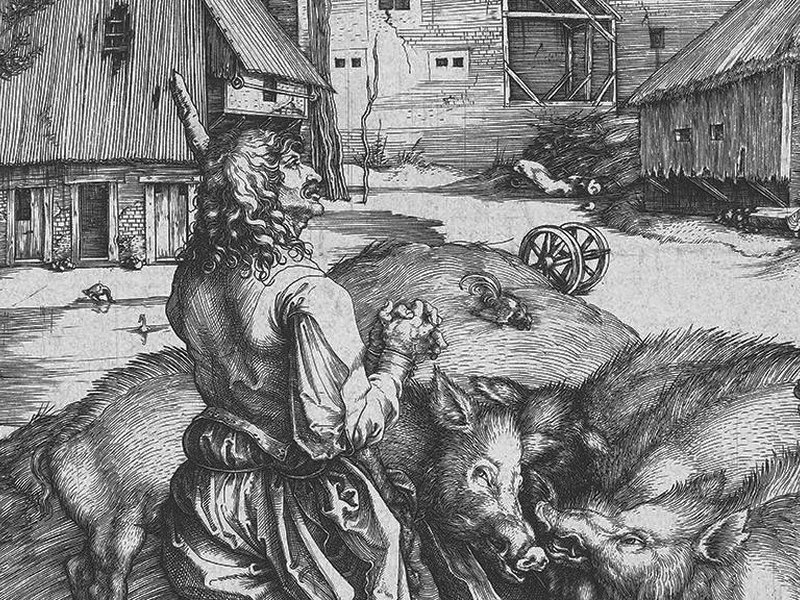
Perspectives on the Prodigal, (Part 2)

In the first essay on the parable of the Prodigal Son, I suggested that the problems commentators and others encounter in interpreting Jesus three-part parable are not accidental. These are not just problems in our ignorance of cultural background. They are intentional features of the stories —stories designed to poke…

by Ralph Allan SmithJuly 11, 2019
durer-prodigal-son-2
Luke

Perspectives on the Prodigal, (Part 1)

The story of the Prodigal Son is perhaps the most well-known story in the Bible. As others have observed, it may also be one of the most misunderstood. In two short essays, I will point out features of this story that are commonly neglected, aspects of Jesus’ parable that might…

by Ralph Allan SmithJuly 9, 2019
de-rijke-man-en-de-arme-lazarus-by-jacopo-da-ponte-16th-century
Luke

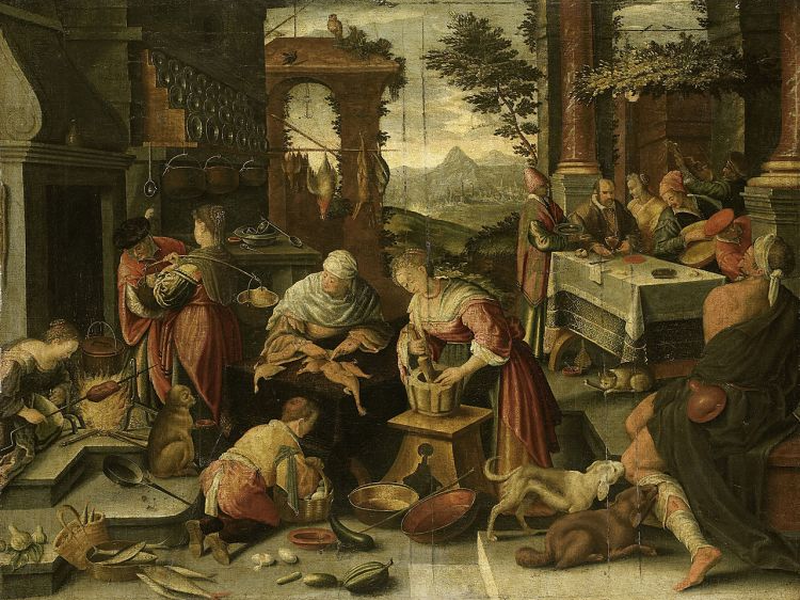
Lazarus and the Rich Man

The parable of Lazarus and the nameless rich man is not an independent story. It is part of a long context that begins in Luke 15:1, where Jesus is eating with tax collectors and sinners and the scribes and Pharisees grumble. In response to their hardheartedness, Jesus tells a three-part…

by Ralph Allan SmithJuly 4, 2019
aaron-burden-uynrnfdkjwg-unsplash
Luke

Everybody has Dropsy - Luke 14:1-24

The Bible is written so that even when a reader cannot pick up on what might be deeper or more detailed aspects of a text, there is virtually always a message to be heard. In the ancient world, where the “reader” of Scripture would likely be a church official facing…

by Ralph Allan SmithJuly 2, 2019
communion
Biblical Theology

Fruit Trees and Grain Plants

The distinction between garden (or vineyard) and field begins in Genesis 2. This relates to the ordering of the formless world. Plants of the field are contrasted with the garden planted by God in Genesis 2:5&8. Later on, under the Old Covenant the Israelites will be required to keep their…

by James B. JordanJune 27, 2019

Showing page 77 of 309

See all

Showing page 39 of 43

See all

Shepherd of Israel

1 Chronicles 11–12 form a unit, framed by references to David’s coronation ceremony at Hebron: A. Gathering at Hebron, conquest of Jerusalem, 11:1–10 B. David’s followers while a fugitive, 11:11–47 B'. David’s host at Ziklag, 12:1–22 A’. Coronation festival at Hebron, 12:23–40 11:1-10 is itself framed by references to “all…

October 25, 2016
Reformational Catholicism

Reformational Catholicism, A Wish-List

I n a 2014 piece published in First Things , I offered a “wish list” for Protestant churches, a checklist for a future catholic Protestantism. The wish list doesn't cover everything. It doesn't mention those things that Protestants, especially Evangelicals, already do, often exceedingly well, things like missions and evangelism…

October 24, 2016

Lust Made Law

D ante is moving through the circle of the lustful (Comedy, Canto 5) and sees a host of classical lovers. Among them is Semiramis, less famous than Dido or Cleopatra, but an exceedingly important illustration of how lust misshapes language and law. Rodney Payton explains ( A Modern Reader’s Guide…

October 21, 2016

Incontinence, Malice, Bestiality

E xplaining the moral structure of hell in Canto 11 of Dante’s Comedy , Virgil lays out three general categories of sin: incontinence, malice, and mad bestiality (lines 83-4). That’s not quite what we expect, or what most commentators see. It seems more like incontinence, violence, and fraud. Incontinent sins…

October 21, 2016

Infernal Baptism

R odney Payton ( Modern Reader’s Guide to Dante’s Inferno , 88–89) observes that “Dante’s vocabulary is rich in words denoting water,” including “the Italian words for water, river, little river, bog, marsh, stream, pond, slough, fount, and waves, at lest. In many cases the nouns are modified by adjectives…

October 21, 2016
Shakespeare

Antidote to Sadness

A ntonio of Venice is inexplicable sad. So is Portia of Belmont, her “little body . . . aweary of this great world” ( Merchant of Venice 2.1). Antonio and Portia have all that they could want. They aren’t anxious about money; neither is pining for love. Why so sad?…

October 21, 2016

Showing page 240 of 2212

Browse by Category

In Medias Res

Your weekly digest for all things Theopolis.

Donate

Theopolis is nearly 100% donor-supported. Consider joining us on our mission.