Theopolis Logo

Writing

Explore our collection of theological essays, biblical studies, and reflections on faith and culture.

See all
mountains
American Culture

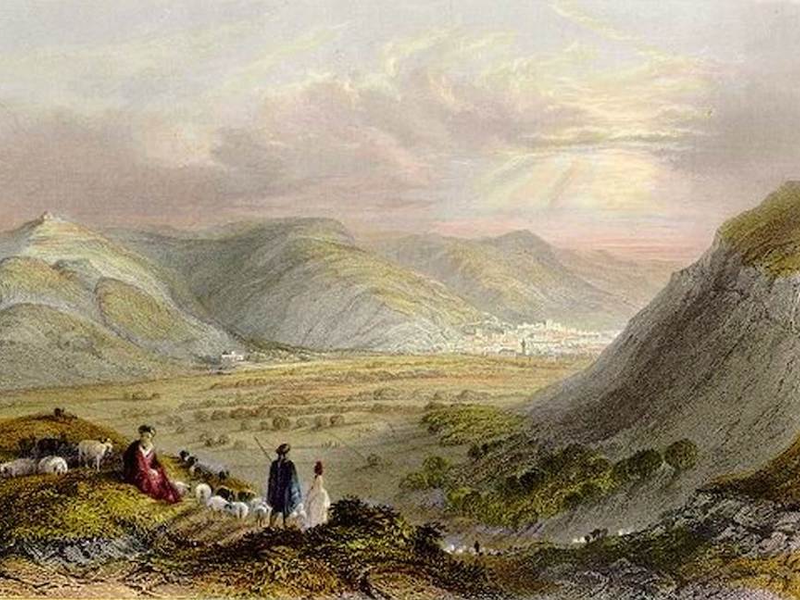
Gerazim and Ebal

Place names become fraught with meaning by association with people and events. The name “Wittenberg” calls to mind Luther and the Reformation for Protestants and Catholics alike. Geneva has a wider range of associations, but the Reformation Wall, with its four main statues of William Farel, John Calvin, Theodore Beza,…

by Ralph Allan SmithFebruary 16, 2017

screen-shot-2017-02-14-at-7-59-35-am
Art

Tomboys and Totems

“…a mystery without a solution, a horror story without savagery, a nightmare in which all the watches stop at noonday…” The Bestial Gardens of Men Then they will say to the mountains, “Fall on us!” and to the hills, “Cover us!” (Luke 23:30) The following lines by Edgar Allan Poe,…

by Mike BullFebruary 14, 2017
aaron-burden-1ebsmyrau-s-unsplash
Biblical Studies

The Structure and Typology of the Bathsheba Incident

2 Samuel 11-12, which record David’s sin with Bathsheba and its aftermath, is structured chiastically: This arrangement highlights several things about the episode. It reinforces what is obvious from even a casual reading, that the transition in the story occurs with Nathan’s confrontation of David’s sin and David’s confession. Up…

by James B. JordanFebruary 8, 2017
bestiary
Anthropology

Anthropomorphism and Christian Humanism

Medieval bestiaries are packed with quaintly inaccurate information about animals, birds, and other created things. Foxes and snakes are devilish critters; stags, pelicans and elephants are Christlike in their various ways. Of course, the medievals picked this up from the Bible, where bestiary observations are fairly common. “Go to the…

by Peter LeithartFebruary 2, 2017
beer
Beer

The End of Beerocracy

What do Reformational Catholicism and craft beer have in common? The question seems to beg for a punchline. Better yet, it would be pretty good clickbait for an article on Katharina von Bora’s “spirited” contribution that helped spark the Protestant Reformation. Well, this is no joke and I am certainly…

by John CrawfordJanuary 31, 2017
calvin
Pastoral Ministry

Calvin and Pastoral Care

Suffering Defined Suffering happens. We witness it all around us and experience it in our lives. It often comes from forces beyond our control. Suffering is inscrutable; it strikes unexpectedly, on a bright summer day or a cold winter night. We lament and are bewildered by suffering. But we are…

by Uri BritoJanuary 26, 2017

Showing page 117 of 309

See all

Showing page 39 of 43

See all

Guilt and Guilt-Bearing

B rad Littlejohn presents a number of criticisms of my account of penal substitution in Delivered from the Elements of the World . I won’t attempt to address all of them, but focus—at once too briefly and at tedious length—on Brad’s central substantive question, which concerns guilt and Jesus’ guilt-bearing.…

September 20, 2016

Atomizing and Abstraction

I ’ve been reading commentaries on Revelation 1:12–20, learning a great deal, but getting increasingly frustrated. Even the best commentators sometimes fall into the twin faults of contemporary interpretation—atomization and abstraction. Let’s take the “robe” that Jesus wears. Many have suggested that the robe designates Jesus as a priest, but…

September 20, 2016

Beyond Language?

I n his Anchor Bible commentary on Revelation , Craig Koester says this about John's initial vision of Jesus: “ The figure’s appearance defies easy description: hair that is white like wool or snow, eyes like a flame of fire, a voice like rushing water, a face like the sun.…

September 19, 2016

Macbeth’s Three Murders

I n a contribution to Harold Bloom’s collection of essays on Macbeth , Robert Lanier Reid observes that ” Interpreters of Macbeth have focused almost exclusively on the first murder, the killing of a king in Acts 1–2, as the basis for understanding the play—its social, psychological, and metaphysical meanings.…

September 16, 2016

Motiveless Malignity

“W hat purpose do the Weird Sisters have for confronting the hero—or what is their masters’ purpose, if they in fact have such masters?” asks Susan Snyder in her contribution to Macbeth . She doesn’t think the play gives a clear answer, and she adds that the play doesn’t explain…

September 16, 2016

Macbeth and the Bible

P eter Milward writes of “meta-drama” in Hamlet and Macbeth in his contribution Shakespeare’s Christianity . He argues (unconvincingly) that Shakespeare had in mind the situation of recusant Catholics in England. Milward’s analysis of the biblical features of the play is more compelling. He notes that “already from the opening…

September 16, 2016

Showing page 252 of 2212

Browse by Category

In Medias Res

Your weekly digest for all things Theopolis.

Donate

Theopolis is nearly 100% donor-supported. Consider joining us on our mission.