Theopolis Logo

Writing

Explore our collection of theological essays, biblical studies, and reflections on faith and culture.

See all
tanner-mardis-xuxghzhibn4-unsplash-1-2
Biblical Studies

Tweets-turned-Notes on the Bible’s Chronology

Summary In what follows, I will consider the “year-stamps” employed in Scripture, i.e., statements of the form, “Such-and-such an event took place in the Xth year of Y.” In the process, I will suggest some ways in which the Biblical narrative might relate to events in the extra-Biblical world, though…

by James BejonJuly 16, 2019
durer-prodigal-son-2
Luke

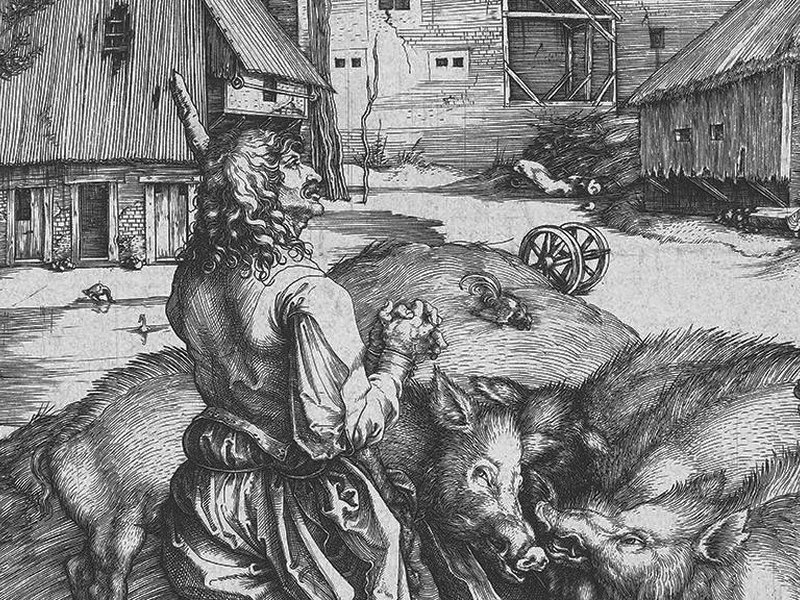
Perspectives on the Prodigal, (Part 2)

In the first essay on the parable of the Prodigal Son, I suggested that the problems commentators and others encounter in interpreting Jesus three-part parable are not accidental. These are not just problems in our ignorance of cultural background. They are intentional features of the stories —stories designed to poke…

by Ralph Allan SmithJuly 11, 2019
durer-prodigal-son-2
Luke

Perspectives on the Prodigal, (Part 1)

The story of the Prodigal Son is perhaps the most well-known story in the Bible. As others have observed, it may also be one of the most misunderstood. In two short essays, I will point out features of this story that are commonly neglected, aspects of Jesus’ parable that might…

by Ralph Allan SmithJuly 9, 2019
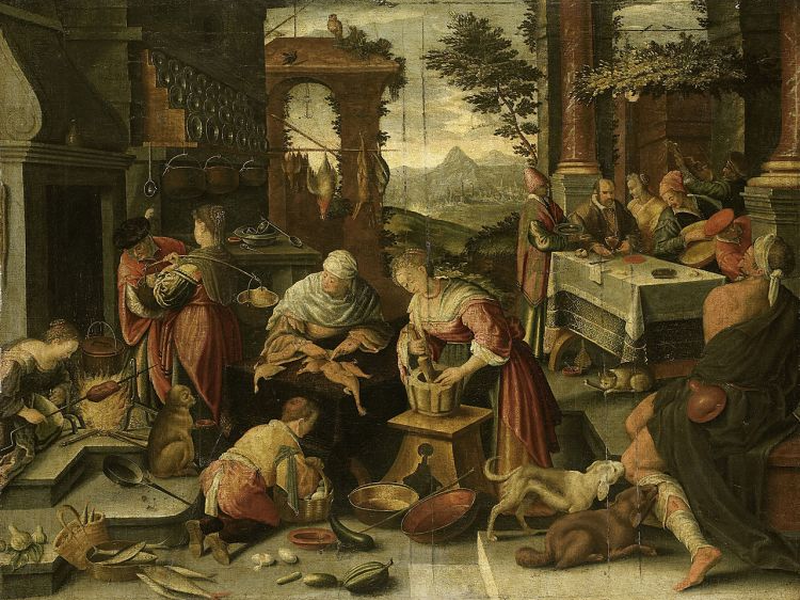
de-rijke-man-en-de-arme-lazarus-by-jacopo-da-ponte-16th-century
Luke

Lazarus and the Rich Man

The parable of Lazarus and the nameless rich man is not an independent story. It is part of a long context that begins in Luke 15:1, where Jesus is eating with tax collectors and sinners and the scribes and Pharisees grumble. In response to their hardheartedness, Jesus tells a three-part…

by Ralph Allan SmithJuly 4, 2019
aaron-burden-uynrnfdkjwg-unsplash
Luke

Everybody has Dropsy - Luke 14:1-24

The Bible is written so that even when a reader cannot pick up on what might be deeper or more detailed aspects of a text, there is virtually always a message to be heard. In the ancient world, where the “reader” of Scripture would likely be a church official facing…

by Ralph Allan SmithJuly 2, 2019
communion
Biblical Theology

Fruit Trees and Grain Plants

The distinction between garden (or vineyard) and field begins in Genesis 2. This relates to the ordering of the formless world. Plants of the field are contrasted with the garden planted by God in Genesis 2:5&8. Later on, under the Old Covenant the Israelites will be required to keep their…

by James B. JordanJune 27, 2019

Showing page 77 of 309

See all

Showing page 39 of 43

See all

Our Religious War

M ary Eberstadt doesn't believe we're in a war of the religious v. the secular. In an adapted excerpt from her newly-released It's Dangerous To Believe: Religious Freedom and Its Enemies , she argues that the battle is between “competing faiths: one in the Good Book, and the other in…

June 27, 2016

What Brexit Can't Fix

I an Morris puts the discontent with Western elites, reflected most dramatically in Britain's departure from the E.U., in a larger historical perspective. “Throughout history, when things have gone wrong, people have blamed their leaders,” Morris writes. “In the West, things are now going wrong more than they used to,…

June 27, 2016

Beloved Son and Vineyard

I n his long-anticipated and dramatically-completed (read the Preface) Echoes of Scripture in the Gospels , Richard B. Hays devotes a few pages to the parable of the vineyard as recounted in Mark 12. He observes, as every commentator does, that Jesus is the son who is finally sent to…

June 27, 2016

He Is Not Here

P lace, writes Robert Pogue Harrison ( The Dominion of the Dead ), is established by a hic jacet : “here lies” the body of my ancestors. To this the gospel poses a direction challenge: When the women show up at the tomb of Jesus, angels tell them hic non…

June 24, 2016

Darkness Rebuked

D on't participate in ( sugkoinoneo ) darkness, Paul says (Ephesians 5:11). Communion with darkness is fruitless, sterile ( akarpos ). Instead of communing with the works of darkness, instead of joining them in one dead flesh, we are to “expose” the works of darkness. Elegcho , “expose,” can also…

June 24, 2016

Tomb Culture

I n an essay on “The Evangelical Subversion of Myth,” René Girard examines Matthew 23:27, Jesus's comparison of the Pharisees to whited sepulchers, and Jesus's condemnation of the Pharisees who are sons of those who kill the prophets. On the last passage, Girard cleverly observes that the Pharisees' effort to…

June 23, 2016

Showing page 275 of 2212

Browse by Category

In Medias Res

Your weekly digest for all things Theopolis.

Donate

Theopolis is nearly 100% donor-supported. Consider joining us on our mission.