Theopolis Logo

Writing

Explore our collection of theological essays, biblical studies, and reflections on faith and culture.

See all
banner
Theopolis News

Theopolis Fellows Program Postponed

Since Theopolis began in 2013, we have been aiming for the fall of 2016 as the launch date for our year-long Fellows Program. As it turned out, we had only a handful of applicants, most withdrew for one reason or another (none for lack of interest), and we are left…

by Peter LeithartJuly 6, 2016
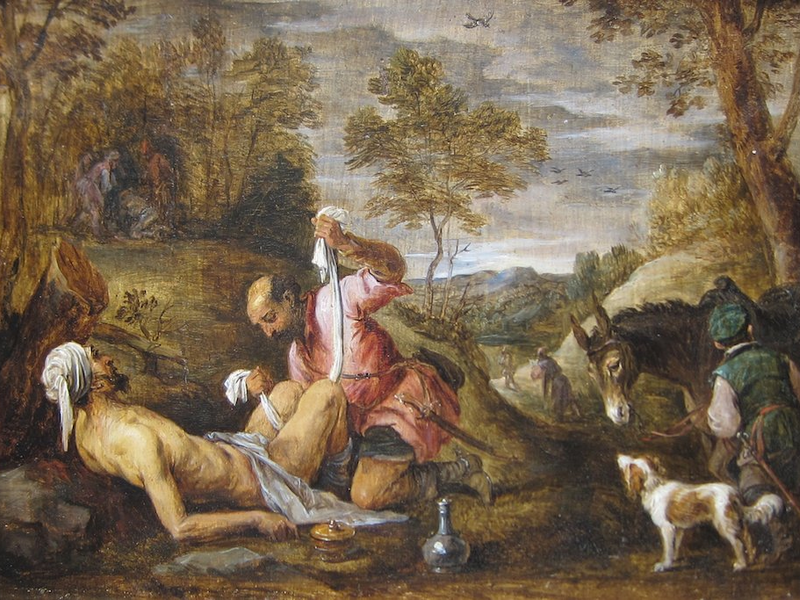
good-samaritan-2
Justice

Aiming at Shalom, (Part 1)

Charles Spurgeon once quipped, “If you give a man the gospel, wrap it in a sandwich. And if you give a man a sandwich, wrap it in the gospel.” With those words, the great Baptist preacher captured the essence of the church’s mission in the world. The church’s mission is…

by Rich LuskJuly 5, 2016
city-heaven
Contentment

Learning Contentment, (Part 2)

This is a continuation of a previous essay by Lindsey Tollefson . 6. We own everything . Sometimes the biggest thing that is keeping us discontent is because we are not happy with what we have been given in material possessions. Especially in the United States it is so easy…

by Lindsey TollefsonJune 30, 2016
medievalilluminatedmanuscript

Do Not Forget

Proverbs 3:1-12 form a section marked off by the reference to the father-son relationship at the beginning and end (vv. 1, 12). Within this section, Solomon gives a series of six commands to his son (vv. 1, 3, 5, 7, 9, 11), the first and the last (vv. 1, 11)…

by Peter LeithartJune 28, 2016
e99a1883
Theopolis News

Year-End Letter

A letter from Theopolis President Peter Leithart as our fiscal year draws to an end . Dear Friend of Theopolis: It was one of those moments when you realize that other people understand you better than you understand yourself. I was having lunch with a pastor friend at a BJ’s…

by TheopolisJune 27, 2016
sky-from-bridge
Contentment

Learning Contentment, (Part 1)

Learning to be content and completely satisfied in Christ is certainly a life-long process and a lesson that we are always learning, and always being tested on. As I am learning and wrestling against discontent, I am always looking for practical and tangible ways to set my course towards joy…

by Lindsey TollefsonJune 23, 2016

Showing page 129 of 309

See all

Showing page 39 of 43

See all

Simon, Son of John

A fter sharing a breakfast of fish at the shore of Tiberius with his disciples, Jesus speaks directly to Peter (John 21). Peter had denied Jesus three times; now Jesus confirms his love three times. Peter denied Jesus at a charcoal fire in the high priest's court; now he's restored…

May 30, 2016

Choosing Apocalyptics

I n the closing chapter of Heaven on Earth , Richard Landes considers the import of the two major apocalyptic threats of the early twenty-first century—anthropogenic global warming (AGW) and global jihad warming (GJW). Both seem to portend TEOTWAWKI, the end of the world as we know it. What we…

May 27, 2016

DysUtopian Literature

I n his study of The Dystopian Impulse in Modern Literature , Keith Booker observes that “much of the history of recent utopian thought can be read as a gradual shift from utopian to dystopian emphases, while utopian thought itself has come more and more to be seen as escapist…

May 27, 2016

God-Fearers

W e are apt to think of a deeply religious person as a ‘true believer,' writes Howard Wettstein in The Significance of Religious Experience . In the Hebrew Bible, though, “there is no expression . . . that corresponds to our term, ‘believer.' The phrase that comes closest is ‘…

May 27, 2016

Varieties of Apocalypse

R ichard Landes's Heaven on Earth is a study of millennial apocalyptic movements, that is, movements that share a belief in “ a millennial vision of the world transformed, and an apocalyptic belief in that transformation’s imminence ” (22). Though the movement he explores share a belief in the transformation…

May 26, 2016

Millennial Modernity

According to Richard Landes ( Heaven on Earth ), traditional societies are organized by a “prime divider,” a boundary between elites and commoners. He follows Ernest Gellner in called these “agro-literate” societies, since that phrase names two key technologies that mark the division. More generally, “Elites construct prime dividers along…

May 26, 2016

Showing page 285 of 2212

Browse by Category

In Medias Res

Your weekly digest for all things Theopolis.

Donate

Theopolis is nearly 100% donor-supported. Consider joining us on our mission.