
Theopolis Logo

Writing

Explore our collection of theological essays, biblical studies, and reflections on faith and culture.

See all
giammarco-zeh-ljawhtg-unsplash
Biblical Horizons

OPEN BOOK: Views and Reviews

Isaac E. Mozeson, The Word: The Dictionary that Reveals the Hebrew Sources of English (Northvale, NJ: Jacob Aaronson Inc., 1995), 310 pp. Reviewed by James B. Jordan. Once there was only one language in the world, the language God spoke to Adam. At the Tower of Babel, there came to…

by James B. JordanJune 28, 1996
tim-wildsmith-j6jv-mkdzqs-unsplash
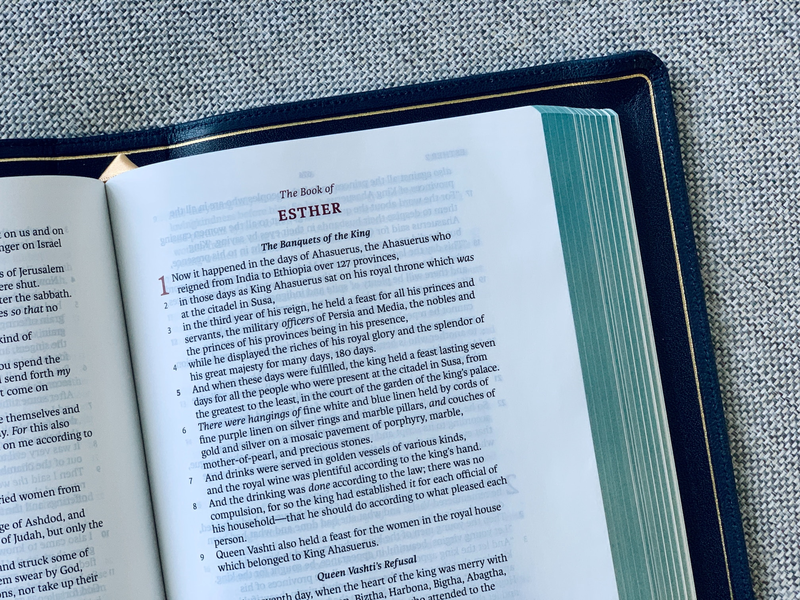
Esther

Esther: Historical & Chronological Comments (IV)

2. The Setting of the Book of Esther A. Xerxes (continued from previous issue) Ezra 6:14 says that the Jews finished building "according to the command of the God of Israel and the decree of Cyrus and Darius and Artaxerxes king of Persia." The problem with this verse is that…

by James B. JordanJune 28, 1996
ales-krivec-4mibe6zg5r0-unsplash
Acts

Jesus and Amalek

This essay goes with our previous study of the Amalek pattern back in Biblical Horizons No. 2. Since many do not have this essay, entitled "The Battle of Gog and Magog," let me cite the relevant paragraphs: Note in Genesis 12-15 that Abram moves into the land after escaping Pharaoh…

by James B. JordanJune 28, 1996
aaron-burden-1ebsmyrau-s-unsplash
Proverbs

The Strange Woman

Proverbs 7:6-23 is one of several passages early in the Proverbs in which Solomon warns his son about the wiles and dangers of the "strange woman." It is certainly quite proper to take these as straightforward warnings against sexual sins, and these are certainly warnings that need to be impressed…

by Peter LeithartJune 27, 1996
jan-kahanek-g3o5ztrk2e4-unsplash
Biblical Studies

Some Observations

1. In Luke 4:20 we read that after Jesus finished reading from Isaiah, "the eyes of all in the synagogue were fixed upon Him." This is usually taken in a psychological sense: They were amazed at Jesus somehow. I suggest that, as always, a merely psychological reading is a modern…

by James B. JordanMay 28, 1996
tim-wildsmith-j6jv-mkdzqs-unsplash
Esther

Esther: Historical & Chronological Comments (III)

2. The Setting of the Book of Esther Up to now we have assumed what we must prove, that the king in Esther is Darius the Great. While Biblical chronologists have usually taken this position, commentators on the book of Esther have often taken others as the king. One view,…

by James B. JordanMay 28, 1996

Showing page 265 of 309

See all

Showing page 39 of 43

See all
Music

Romanticism and the Rhetoric of Music

Prior to the 18th century, writes Mark Evan Bonds, instrumental music was considered inferior to music that accompanied words ( Wordless Rhetoric ). According to the artistic theory developed by Johann Georg Sulzer, “instrumental music . . . can be pleasing and at times moving, but its ‘meaning' is relatively…

April 7, 2016

Areopagus in Acts

Paul's speech on the Areopagus is the second of three programmatic speeches in Acts. Robert Tannehill notes ( The Narrative Unity of Luke-Acts ) that they trace the progression of Paul's mission: “Careful planning is indicated by the fact that we have three different types of speeches addressed to three…

April 7, 2016

World Self-Revealed

In his now-classic Sources of the Self (143-4), Charles Taylor observes that Descartes is “in many ways profoundly Augustinian: the emphasis on radical reflexivity, the importance of the cogito, the central role of a proof of God's existence which starts from ‘within,' from features of my own ideas, instead of…

April 6, 2016

Pure Music

Mark Evan Bonds's Absolute Music is a study of 19th-century debates concerning the purity or absoluteness of music, the question of the possibility and/or propriety of segregating music from the rest of the world, music as a sheer aesthetic experience, an experience of pure beauty or simple form. It's a…

April 6, 2016

Pattern of Paul's Mission

Robert Tannehill points out in the second volume of his Narrative Unity of Luke-Acts that Acts 16-19 depicts a recurring “public accusation type-scene.” Prior to chapter 16, the public accusations against Paul and his associates are not highlighted. After chapter 16, they are. “In 16:20-21 Romans accuse the mission of…

April 6, 2016

Autonomy v. Independence

Matthew B. Crawford argues in The World Beyond Your Head that things discipline our attention and thus make genuine knowledge of the world possible: “ things that can serve as a kind of authority for us, by way of structuring our attention. The design of things—for example, cars and children’s…

April 5, 2016

Showing page 302 of 2212

Browse by Category

In Medias Res

Your weekly digest for all things Theopolis.

Donate

Theopolis is nearly 100% donor-supported. Consider joining us on our mission.