Theopolis Logo

Writing

Explore our collection of theological essays, biblical studies, and reflections on faith and culture.

See all
screen-shot-2021-06-03-at-8-49-15-am
Ezra

Ezra: The Aaronic Rest-Giver

If you’re a preacher looking for good commentaries on Ezra, you’ll struggle. Certainly to find ones that wrestle in good detail with the text. And certainly ones that don’t cost you an arm and a leg. There’s a good bit more for Nehemiah, which is odd, as the two are…

by Rhys LavertyJune 8, 2021

christian-lue-k1e6994p3t8-unsplash
1 John

1 John in Community

Quick thought experiment: try to pretend you’ve never read 1 John before. Read 1:1-6. Go ahead; I’ll wait. Now, on to v. 7: “But if we walk in the light as He is in the light, we have fellowship with ______….” What word would you expect in that blank, based…

by Tim NicholsJune 1, 2021
noahs-ark-genesis
Hermeneutics

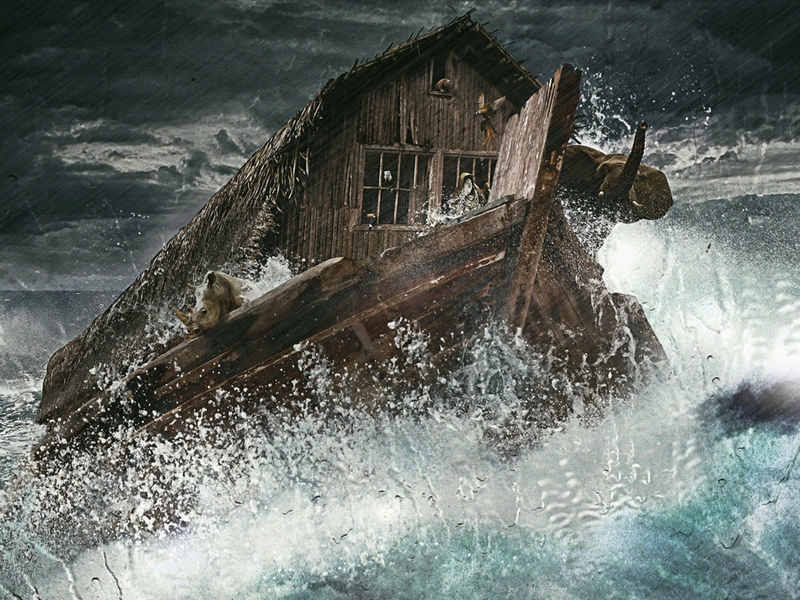
Spending Time with Noah: Reflections on Prepositions in the Flood Narrative

In my work as a Bible translator, I was recently checking our translation team’s draft of Genesis 8:8, which says of Noah (translating the Hebrew quite literally): And he sent out the dove from with him to see: had the waters lessened from upon the face of the ground? Part…

by Josh JensenMay 25, 2021
86758
Philosophy

Steven Weinberg Destroyed My Faith

Just in case a reader may not know Weinberg, he is a theoretical physicist and the winner of the Nobel prize in physics in 1979, as well as countless other prizes for his research. He is also a prolific, lucid, and captivating writer. If you want to read something on…

by Ralph Allan SmithMay 18, 2021
screen-shot-2020-09-17-at-9-11-45-am
Colossians

Reconciliation in Colossians 1:20

Colossians 1:15-20 is a famous passage in Paul’s epistles because it is a succinct and powerful poem. It appears even to have been a hymn. Given the uniquely Pauline language — “reconciliation” is a term used only by Paul — it should not seem odd to attribute the poem/hymn to…

by Ralph Allan SmithMay 11, 2021
stalker_still
Movies

Terror of Knowing Myself

Stalker (1979) is a film by Andrei Tarkovsky based on Roadside Picnic by the Strugatsky brothers. It shows a day from the life of a stalker, a man who enters the so-called "Zone", an Alien landing site, where he leads people to a room that grants people’s innermost desires, which…

by Bogumil JarmulakMay 4, 2021

Showing page 55 of 309

See all

Showing page 39 of 43

See all
Time

Time, Curse or Gift?

New Year's Day makes on reflective, at least about the past year, perhaps about life, perhaps, more broadly, about time itself. Many view time as a curse. Some see it as a curse because of missed chances. As one day or year moves on to the next, all we can…

December 31, 2015

Lordly Obedience

Paraphrased/quoted from Karl Barth, Church Dogmatics , 4.1, pp. 185ff. In the incarnation, the eternal Son of God makes His way into a far country, and takes on the form of a servant. “But the incarnation, the taking of the form of the servant, means not only that God becomes…

December 24, 2015

The Harvest

GB Caird ( The Revelation of St John the Divine ) has a superb discussion of the harvest scene at the end of Revelation 14. He takes it not as a depiction of horrific judgment but rather as the harvest of the saints in martyrdom. He points out that Jesus…

December 24, 2015

Jews, Muslims, Christians

In his Washington Post piece about the Wheaton College controversy, Miroslav Volf equates Christian positions on Islam to Christian views of Judaism: “Christian theologians neither insisted that they worship a different God than Jews nor did they accuse Jews of idolatry. That’s a step that would have been easy to…

December 24, 2015

Economy on Steroids

The Economist's Schumpeter reports on the extreme physical disciplines of top American executives - early rising, strenuous exercise, frenetic pace. Then this: “according to one CEO, several of his peers are now dabbling in mind-boosting drugs such as Modafinil and Ritalin, which aid concentration. This trend is likely to intensify:…

December 23, 2015

Hamann, Kant, Enlightenment

According to Hamann, the guilt of the dependent is not in “laziness or cowardice,” as Kant seems to imply. “No, in the blindness of his guardian who pretends to see, and precisely for this reason must assume responsibility for the guilt of all.” Again, “How can one mock the laziness…

December 23, 2015

Showing page 337 of 2212

Browse by Category

In Medias Res

Your weekly digest for all things Theopolis.

Donate

Theopolis is nearly 100% donor-supported. Consider joining us on our mission.