Theopolis Logo

Writing

Explore our collection of theological essays, biblical studies, and reflections on faith and culture.

See all
evangelists
Matthew

Dating Matthew, (Part 1)

When might the Gospel according to Matthew have been written? Of course, any answer can only be speculation, but that does not mean we are reduced to groundless opinion. In this series of articles I point the way to an approach different from the general consensus among scholars today which…

by Ralph Allan SmithNovember 22, 2016

hebrew-manuscript-3
Hermeneutics

Synopticity, (Part 2)

In my first essay on “synopticity” I offered a rather rough definition of the phenomenon and important, though not exhaustive examples. In this essay, I want to introduce broader aspects of the phenomenon of “synopticity.” The first example that I have in mind is conventional stories, stories of different historical…

by Ralph Allan SmithNovember 17, 2016
screen-shot-2016-03-31-at-9-32-11-am
Ascension

Brexit and the Binding of Satan, Part 4

Since the judgment of Babel was followed by the initiation of the circumcision, the impending end of the circumcision in AD70 explains the significance of the first century miracle of foreign tongues. Except for a few Aramaic “teasers” in the book of Daniel, the Word of God was monolingual and…

by Mike BullNovember 15, 2016
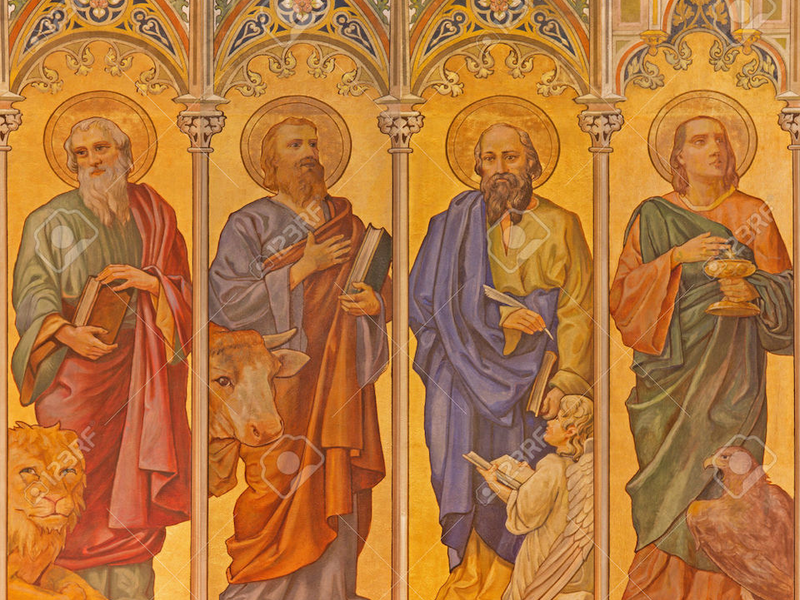
four-evangelists
Hermeneutics

Synopticity, (Part 1)

To the best of my knowledge “synopticity” is not a word used in theology or Biblical studies, but it seems an appropriate word to describe the kind of phenomena associated with the Synoptic Gospels, Matthew, Mark, and Luke. These three Gospels tell essentially the same story with significant — sometimes…

by Ralph Allan SmithNovember 10, 2016
laughing_statue_by_xxbobbiie-d5f0meh-2
Humor

Learning to Laugh

Humor is a funny thing. It is altogether familiar yet also mysterious. What makes us laugh? Why do we find things funny? There are academic fields of study dedicated to discovering what makes things humorous. These academicians even have a journal entitled International Journal of Humor Research . No joke.…

by Bill SmithNovember 8, 2016
chaucer
Literature

Flawed Means of Grace: Liturgy in The Pardoner's Tale

Out of all the characters in Geoffrey Chaucer’s The Canterbury Tales , the Pardoner has been called the “one lost soul.” The pious Parson, who closes out the collection of tales with a sermon on the seven deadly sins and how a sinner can absolve himself of them, connects the…

by Christian LeithartNovember 3, 2016

Showing page 122 of 309

See all

Showing page 39 of 43

See all

Doctrinal Indifference?

More conservative Christians have often charged that ecumenically-minded churches and theologians are indifferent to doctrine, aiming for a LCD theology. Ecumenical theologian James Wagner (in the 1963 collection The Challenge to Reunion ) argues that the precise opposite is true: “there is probably no group within the Christian fellowship throughout…

August 27, 2015

Americanization and Reunion

American church history is largely a story of division, wrote Robert Lee is a contribution to the 1963 collection, The Challenge of Reunion . In the early twentieth century, that began to change as American churches became “astir with a new spirit of unity and cooperation” (138). He lists 14…

August 27, 2015

Laughing Last

In a chapter on “How to Be Theologically Funny,” Stanley Hauerwas ( The Work of Theology ) states his opinion that Barth was “‘naturally' funny,” but immediately adds that this doesn't really capture the deep role that humor plays in Barth: “his humor was also a reflection of the character…

August 27, 2015

The Christian Revolution

Writing in 1961 ( Is Christ Divided? ), Lesslie Newbigin observed that while it is “common to say that we live in an age of revolutionary change,” it is uncommon “for Christians to welcome this fact.” Newbigin thinks that's a mistake: “we should welcome it—not merely because of the challenge…

August 27, 2015

Impassibility

John Peckham devotes a long chapter of his The Love of God to the question of divine emotions, the impassibility question. He emphasizes the need to “maintain the Creator/creature distinction, divine transcendence, ontological invulnerability, omnipotence, omniscience and the fact that God is not involuntarily vulnerable. . . . God is…

August 26, 2015

American Greatness

To listen to Trump, America is in trouble because we haven't been adequately looking after our own interests. To make America great means to put American interests first. Which raises a question: Is putting America first the way we became great in the first place? Might America's greatness instead have…

August 26, 2015

Showing page 384 of 2212

Browse by Category

In Medias Res

Your weekly digest for all things Theopolis.

Donate

Theopolis is nearly 100% donor-supported. Consider joining us on our mission.