Theopolis Logo

Writing

Explore our collection of theological essays, biblical studies, and reflections on faith and culture.

See all
screen-shot-2023-02-24-at-1-48-41-pm
Biblical Chronology

Chronologies and Kings: Part 3

The chronology of the Kings of Judah and Israel can be divided into three periods with clearly defined boundaries. The first period begins with the death of Solomon and the accessions of Rehoboam in the south (Judah) and Jeroboam in the north (Israel). It ends with the deaths of Ahaziah…

by James B. JordanSeptember 22, 1991

johann-walter-bantz-clv9dfjlwac-unsplash-1-5
Art

Arts & Play, Part 1

Most modern people regard the arts as essentially decorative. They are hardly very important, as compared to business, politics, or religion. Yet, from a Biblical point of view, the arts lie close to the heart of human life. The universe that God created is itself an artistic masterpiece by the…

by James B. JordanSeptember 22, 1991
6273e95e0f5ac766258d8cf3_joshuasconquestoftheland-2
Exodus

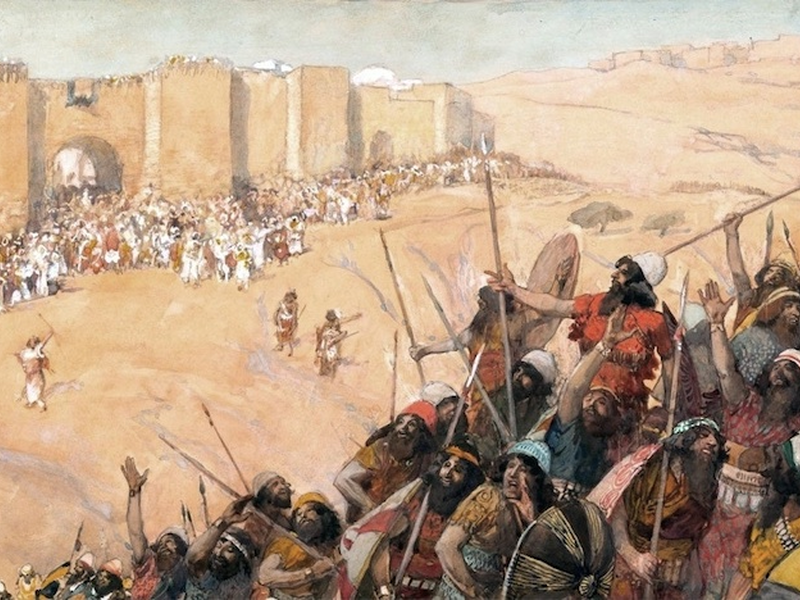
Chronologies and Kings, Part 2

Before we move into a detailed survey of the history and chronology of the kings of Israel and Judah, let us review the chronological information that leads from creation to the kingdom. This will be helpful both to new readers of these essays, and a reminder for those who have…

by James B. JordanAugust 22, 1991
screen-shot-2023-02-24-at-1-48-41-pm
Biblical Chronology

Chronologies and Kings, Part 1

We have completed our overall survey of Biblical chronology, and now turn to a detailed examination of the Biblical information regarding the chronology of Israel’s kings. The first piece of chronological information we have regarding Israel’s kings is very cryptic, and it serves as an guide to the interpretation of…

by James B. JordanJuly 22, 1991
screenshot-2023-08-09-at-2-13-32-pm
Biblical Horizons

Book Review - To Take Place: Toward Theory in Ritual

Jonathan Z. Smith, To Take Place: Toward Theory in Ritual (Chicago: University of Chicago Press, 1987). Reviewed by Peter J. Leithart. The philosophes of the 18th century often attacked Christendom using the tools of anthropology and comparative religion. Rousseau contrasted the idyllic equality of primitive, natural peoples with the bondage…

by Peter LeithartJuly 6, 1991
screenshot-2023-08-09-at-1-47-41-pm
Biblical Horizons

Book Review: The Rise of Magic in Early Medieval Europe

Valerie I. J. Flint, The Rise of Magic in Early Medieval Europe (Princeton University Press, 1991). Reviewed by Peter J. Leithart. Valerie I. J. Flint, Professor of History at the University of Auckland, New Zealand, is refreshingly candid about her reasons for undertaking a study of The Rise of Magic…

by Peter LeithartJuly 6, 1991

Showing page 295 of 309

See all

Showing page 39 of 43

See all

Semper reformanda

In his contribution to Denominationalism , Winthrop Hudson suggests that one of the principles of English Independent ecclesiology was the refusal to “make our present judgment and practice a binding law unto ourselves for the future” (25). It's a stance based on a recognition of fallibility and proneness to sin.…

June 10, 2015

Where there's fire...?

The Greek kapnos (“smoke”) appears twelve times in Revelation. Hold that number, because it might be significant. The twelve uses are grouped into six scenes, alternating between smoke having to do with the worship and glory of God and smoke from hell or hell's allies: A. Smoke of incense, 8:4…

June 9, 2015

On Subjects and Objects

“I believe in subjects and objects,” writes David Martin at the outset of his Future of Christianity (4). He illustrates with a sociological example: He believes in “religious visions of the world to come and the objective status of the dynamics of social and political action.” Martin intends to resist…

June 9, 2015

Notes Toward a Johannine Theory of Labor

Jesus tells His disciples that they are being sent into a field to harvest where they had not sown or labored. “One sows, and another reaps” (John 4:35-38). It's a principle of ministry: Ministry starts in the middle. Even in a fresh mission field, the missionary doesn't enter a place…

June 9, 2015

Sources of Schism

In a study of American Protestant schisms between 1890 and 1990, John Sutten and Mark Chaves claim that churches don't divide for purely doctrinal reasons, but rather “in response to attempts by denominational elites to achieve organizational consolidation” (171). The 1848 schism within the Plymouth Brethren, for instance, was about…

June 9, 2015

Owen and Mather on Union

In an essay on “Rules of Walking in Fellowship,” John Owen claimed that “Union is the main aim and most proper fruit of love ; neither is there any thing or duty of the saints in the gospel pressed with more earnestness and vehemency of exhortation than this.” For Owen,…

June 8, 2015

Showing page 415 of 2212

Browse by Category

In Medias Res

Your weekly digest for all things Theopolis.

Donate

Theopolis is nearly 100% donor-supported. Consider joining us on our mission.