Theopolis Logo

Writing

Explore our collection of theological essays, biblical studies, and reflections on faith and culture.

See all
hebrew-manuscript-2
Hermeneutics

The Complexity of Biblical Allusion

There is no question about the fact that the book of Deuteronomy is full of literary allusion. But there is a serious problem, even a paradox, of understanding how that allusion works. To begin with, if we assume that Deuteronomy was written by Moses — with some editorial emendations added…

by Ralph Allan SmithJanuary 23, 2018

bladerunner
Culture

The Artificial Resurrection

Genesis and Genetics in Blade Runner 2049 The power of science fiction, and what’s positive about it, is that you’re able to experience the worst-case scenario without actually having to live it. (Actor Ryan Gosling, who plays Officer “K”) (Warning: The following analysis contains spoilers for both Blade Runner films.)…

by Mike BullJanuary 18, 2018
sixteen-miles-out-d40gdcd_-he-unsplash
Biblical Studies

The Battle of Gog and Magog

The battle of Gog and Magog is found in Ezekiel 38-39. My purpose in this brief essay is to propound an explanation for this passage that I have not encountered in any of my commentaries, but that makes more sense to me than any other. I offer it here in…

by James B. JordanJanuary 16, 2018
resurrection

Deep Hope

I. Varlam Shalamov in Kolyma Tales describes his experience of the Gulag, where he spent more than a dozen of years. In a story titled The Life of Engineer Kipreev Shalamov reflects on the theme of hope in the life of a prisoner: “Hope always shackles the convict. Hope is…

by Bogumil JarmulakJanuary 11, 2018
abraham-defeats-kings-g-jollain-2
Biblical Theology

Abram’s 318 Men

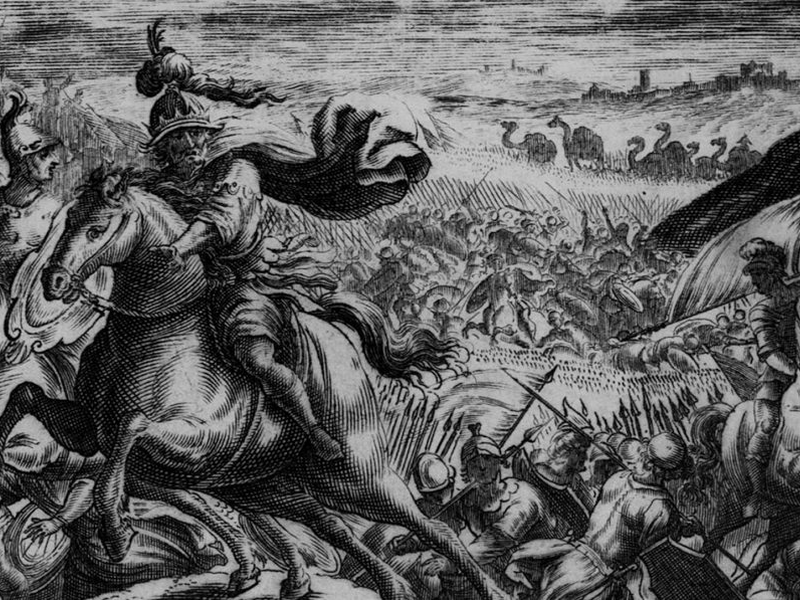
Genesis 14:14 says that Abram mustered his trained men, “born in his house,” to rescue Lot, and gives their number as 318. It is clear that the precise number is provided for some reason, but what is it? S. Gevirtz notes that 318 is the sum of all the prime…

by James B. JordanJanuary 9, 2018
tanner-mardis-xuxghzhibn4-unsplash-1
Biblical Studies

The Flying Scroll

And he said to me, "What do you see?" And I answered, "I see a flying scroll; its length is twenty cubits and its width ten cubits" (Zechariah 5:2). Immediately following his vision of the outpouring of the Spirit upon the restoration community (4:1-14), Zechariah saw a flying scroll. The…

by Peter LeithartJanuary 4, 2018

Showing page 100 of 309

See all

Showing page 39 of 43

See all

Purity, Pauline Style

In his study of The Concept of Purity at Qumran and in the Letters of Paul , Michael Newton argues that Paul transfers the logic and patterns of purity and cult from the temple to the new temple-community, the church. Relying mainly on Corinthians, Newton writes: “By describing the Christian…

May 12, 2015

Sodom v. Circumcision

A hermeneutical rule of thumb I share with students: Chapter 2 comes after chapter 1. It has many applications, as in “Chapter 18 comes after chapter 17.” Make the observation, then ask, Why? Why is that story there , after this one and before that one? The story of Sodom…

May 11, 2015

Is David Among the Prophets?

After describing the heroes of faith from creation to Jericho with some leisure, Hebrews 11 closes with a rapid-fire survey of everything from the judges on (vv. 32-38). It's a nicely constructed passage. First, six individuals are named, followed by a general reference to “prophets”: Gideon, Barak, Samson, Jephthah, David,…

May 11, 2015

Mark of the Beast

In a 1991 article in the Tyndale Bulletin , Edwin Judge reviews the symbolic resonances of the phrase “mark of the beast,” but notes, rightly that “the visions of Revelation keep disconcertingly coming down to earth” (158). So he looks for historical evidence of a mark imposed by Roman authorities…

May 11, 2015

Anthropology and the Bible

In an essay on atonement in the Jewish Studies Quarterly from the early 1990s, Mary Douglas explains “the social origins of ideas about defilement in general”: Living in a community, people find themselves wanting to keep apart from some dissimilar others and to be included within sets of similars. To…

May 11, 2015

The Imperialism of Liberal Reason

“The ambition of the liberal political philosopher,” writes Paul Kahn ( Putting Liberalism in its Place , 120), is to find that set of arguments that is so compelling that every individual, not corrupted by the illogic of interest, would necessarily affirm those reasons as his own.” Because it assumes…

May 8, 2015

Showing page 428 of 2212

Browse by Category

In Medias Res

Your weekly digest for all things Theopolis.

Donate

Theopolis is nearly 100% donor-supported. Consider joining us on our mission.