Theopolis Logo

Writing

Explore our collection of theological essays, biblical studies, and reflections on faith and culture.

See all
screen-shot-2023-02-24-at-1-48-41-pm
Biblical Chronology

Chronologies and Kings: Part 3

The chronology of the Kings of Judah and Israel can be divided into three periods with clearly defined boundaries. The first period begins with the death of Solomon and the accessions of Rehoboam in the south (Judah) and Jeroboam in the north (Israel). It ends with the deaths of Ahaziah…

by James B. JordanSeptember 22, 1991

johann-walter-bantz-clv9dfjlwac-unsplash-1-5
Art

Arts & Play, Part 1

Most modern people regard the arts as essentially decorative. They are hardly very important, as compared to business, politics, or religion. Yet, from a Biblical point of view, the arts lie close to the heart of human life. The universe that God created is itself an artistic masterpiece by the…

by James B. JordanSeptember 22, 1991
6273e95e0f5ac766258d8cf3_joshuasconquestoftheland-2
Exodus

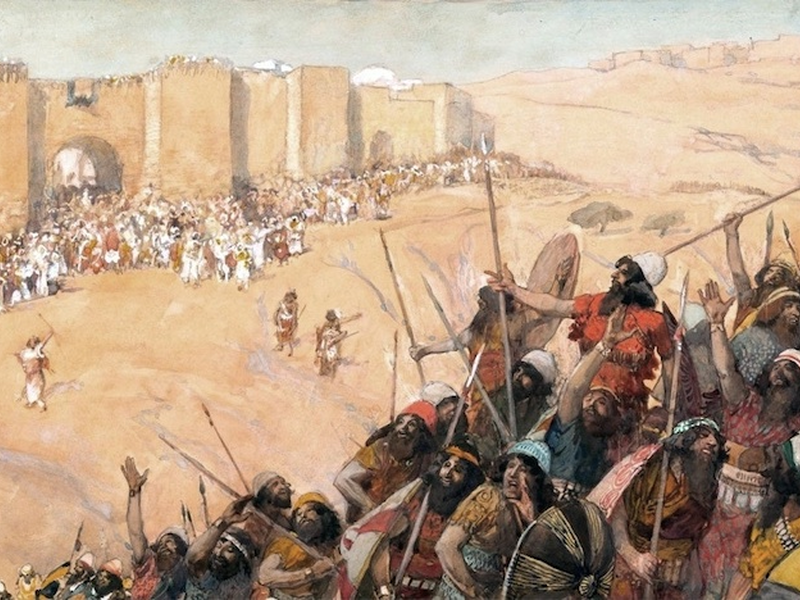
Chronologies and Kings, Part 2

Before we move into a detailed survey of the history and chronology of the kings of Israel and Judah, let us review the chronological information that leads from creation to the kingdom. This will be helpful both to new readers of these essays, and a reminder for those who have…

by James B. JordanAugust 22, 1991
screen-shot-2023-02-24-at-1-48-41-pm
Biblical Chronology

Chronologies and Kings, Part 1

We have completed our overall survey of Biblical chronology, and now turn to a detailed examination of the Biblical information regarding the chronology of Israel’s kings. The first piece of chronological information we have regarding Israel’s kings is very cryptic, and it serves as an guide to the interpretation of…

by James B. JordanJuly 22, 1991
screenshot-2023-08-09-at-2-13-32-pm
Biblical Horizons

Book Review - To Take Place: Toward Theory in Ritual

Jonathan Z. Smith, To Take Place: Toward Theory in Ritual (Chicago: University of Chicago Press, 1987). Reviewed by Peter J. Leithart. The philosophes of the 18th century often attacked Christendom using the tools of anthropology and comparative religion. Rousseau contrasted the idyllic equality of primitive, natural peoples with the bondage…

by Peter LeithartJuly 6, 1991
screenshot-2023-08-09-at-1-47-41-pm
Biblical Horizons

Book Review: The Rise of Magic in Early Medieval Europe

Valerie I. J. Flint, The Rise of Magic in Early Medieval Europe (Princeton University Press, 1991). Reviewed by Peter J. Leithart. Valerie I. J. Flint, Professor of History at the University of Auckland, New Zealand, is refreshingly candid about her reasons for undertaking a study of The Rise of Magic…

by Peter LeithartJuly 6, 1991

Showing page 295 of 309

See all

Showing page 39 of 43

See all

Truth or Tribalism?

One Body Through the Cross , the Princeton Proposal for Christianity Unity, criticizes the ecumenical movement for “liberal indifference” to orthodoxy, which has sometimes provoked a reaction of “divisive sectarianism.” For some, the solution is to stress traditional doctrinal formulations, but this cure is part of the disease. As Margaret…

February 25, 2015

Be What We Are

The Princeton Proposal for Christian Unity ( One Body Through the Cross ) works within two “poles”: On the one hand, there is an already-established unity, “a bond of faith and communion in Christ, established by the action of God.” On the other hand, we are called to “a deeper…

February 25, 2015

Division Breeds Diversion

The Princeton Proposal on Christian Unity ( In One Body Through the Cross ) claims that “division breeds never-ending diversion from authentic mission” (section 35), and offers a shrewd diagnosis of how this occurs. It happens when “the distinct identities of our churches tempt us to relish the special marks…

February 25, 2015

Making Church Visible

In his Unitive Protestantism , John T. McNeill sketches the “communio” ecclesiology of the Reformers: “They interpreted the creedal tenet of ‘the Holy Catholic Church’ in terms of the communio sanctorum , and identified the latter both with the invisible communion of the saved and with the true visible church…

February 25, 2015

Witness of Abstinence

Jeremiah 35 introduces the Rechabites. This is a clan within Israel that had refrained from wine, lived in tents, and refused to sow seed or plant vineyards for generations. The sole basis for this abstinence from normal life was the command of Jonadab the son of Rechab who commanded “You…

February 24, 2015
Modernity

Gullible Rationalists

One of the delights of Philip Ball’s forthcoming Invisible is to see how frequently rationalists and materialists were have been taken in by charlatans. One might have thought that those who came-of-age and were Enlightened by reason would be immune to tricks, beliefs in ghosts, and in fairies and sprites.…

February 24, 2015

Showing page 459 of 2212

Browse by Category

In Medias Res

Your weekly digest for all things Theopolis.

Donate

Theopolis is nearly 100% donor-supported. Consider joining us on our mission.