Theopolis Logo

Writing

Explore our collection of theological essays, biblical studies, and reflections on faith and culture.

See all
screen-shot-2023-05-02-at-1-14-25-pm
Poetry

Seed-bearing Fruit

Ten-thousand ‘yeses’ and a single ‘no.’ From bough it dangles, beauty to the eyes, For belly, food, a fruit to make one wise. Too soon, they eat; they know; the leaves they sew, But, oh! the Love who asks, “Where did you go?” Confessions flow from under leaf’s disguise; A…

by Marc HaysAugust 16, 2023
screenshot-2023-08-15-at-8-22-28-am
Augustine

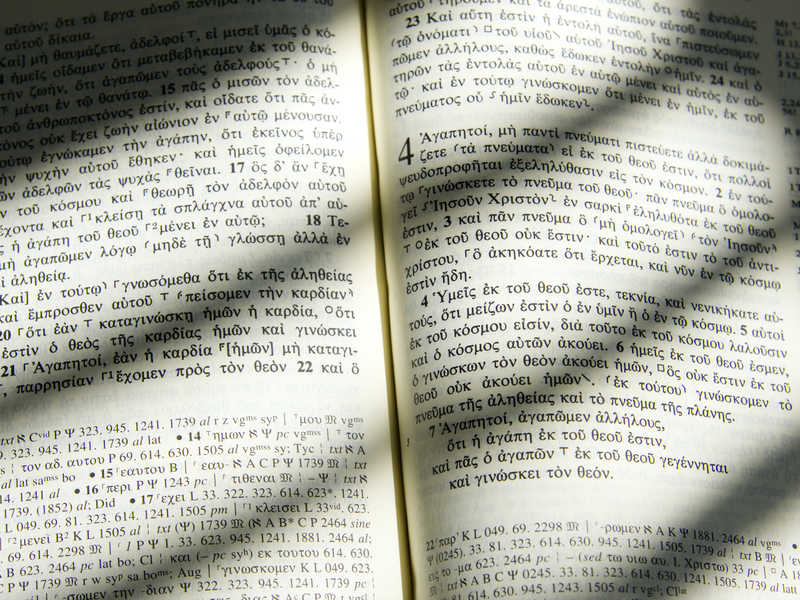
Eternal Life Chiasm in John's Gospel

In his masterful work, De Doctrina Christiana , Augustine of Hippo writes: I would have learned men to know that the authors of our Scriptures use all those forms of expression which grammarians call by the Greek name tropes, and use them more freely and in greater variety than people…

by Doug PonderAugust 15, 2023
screenshot-2023-08-08-at-11-13-28-am
Ruth

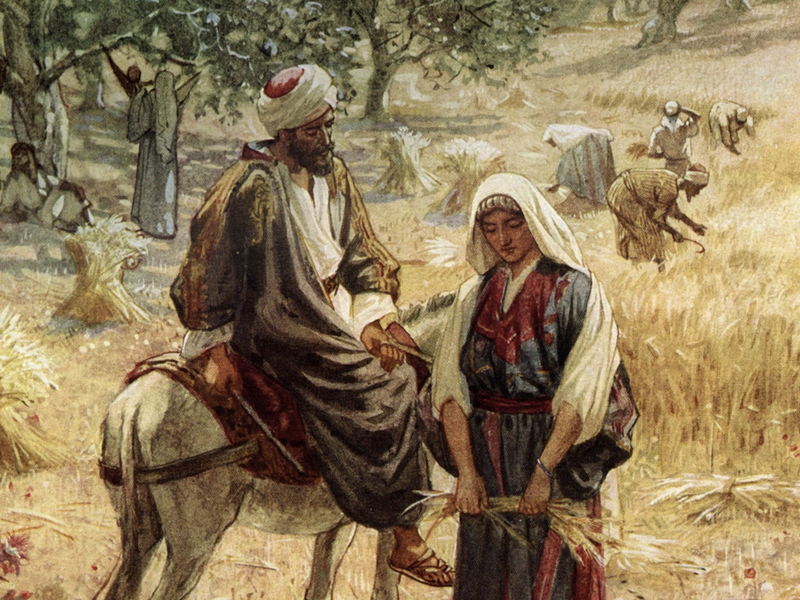
Lot, Ruth, and the Work of New Creation

“In accordance with the creation pattern, God sovereignly took hold of Adam and put him to sleep. Then God divided Adam by removing flesh and bone from his side, and restructured humanity into male and female. When Adam awoke, God distributed the woman to him. Adam gazed upon her and…

by Josh JensenAugust 8, 2023
rev-1-barbie-tp-0002-high-res-jpeg-647e152f50df6-2
Culture

The Barbie Movie

Greta Gerwig’s new film, Barbie, has been criticized, probably rightly, for having too many ideas and layers to properly bring in any for a landing. Gerwig herself thought the script was so “ wild and anarchic ” that she was surprised WB agreed to make it. Many see it as…

by Robin HarrisAugust 1, 2023
mariam-soliman-ht5xmeulydg-unsplash-2
Matthew

Why Does John the Baptizer Look Like a Camel?

“Now John wore a garment of camel’s hair and a leather belt around his waist, and his food was locusts and wild honey” (Matt. 3:4). Why is John the Baptizer clothed with camel’s hair? Why does he want to look like a camel? Or at least: what does he expect…

by Jeff MeyersJuly 26, 2023
darwin
Literature

Stinking, Rotten Ministers of the Gospel

In the second greatest story ever told, The Brothers Karamazov , Fyodor Dostoyevsky tells the story of a family plagued by the lasting legacy of sin’s destructive power and the all-surpassing truth that God is Light and in Him is no darkness. The young protagonist, Alyosha, is a monk committed…

by Garrett SoucyJuly 18, 2023

Showing page 29 of 309

See all

Showing page 39 of 43

See all
Sex

Porneia

In a 2011 JBL article, Kyle Harper examines the usage of the Greek word porneia from its classical uses through the New Testament and into the early church. He hopes to specify its meaning, since the usual English translation as “sexual immorality” is “so vague” that it “inevitable threatens to…

January 14, 2015

Purity and the Other

In his contribution to Purity and the Forming of Religious Traditions , Philippe Borgeaud explores ancient comparative anthropology, the ways in which Greeks used other cultures as “mirrors.” Along the way (269-70), he discusses Porphyry’s De Abstinentia , which he compares to Mary Douglas’s classic Purity and Danger . For…

January 14, 2015
Theology

Passion of Poetry

Sketching a theological account in support of Reformed ressourcement in their Reformed Catholicity , Michael Allen and Scott Swain appeal to the argument of Reinhold Hutter’s Suffering Divine Things . Hutter tries to avoid both a notion of “strict continuation” between the church and the incarnate Christ and a Barthian…

January 14, 2015
Nevin Lectures

Nevin Lectures, 2015

Robert Louis Wilken, noted church historian and Chairman of the Board of the Institute on Religion and Public Life, will deliver the second annual Nevin Lectures on February 20-21, at the Hodges Chapel of the Beeson Divinity School, Birmingham, Alabama. Wilken will give three lectures on “The Catholic Roots of…

January 14, 2015

Baptism and Justification in Christian Tradition

In his study of Justification in Earlier Medieval Theology , Charles Carlson concludes that early medieval commentators on Paul did not give any special attention to justification. For most of the early scholastics, “justification” was a synonym for the remission of sins, and prior to the thirteenth century it was…

January 13, 2015

Priests of Babylon

Ancient Babylonian temples were busy places. There were butchers and cooks for the meat, bakers for the bread and brewers of beer. The temple was supplied by farmers and milkmen, fishermen, oxherds, orchard keepers. Some were specialists in setting the table of the god, and others artisans who work with…

January 13, 2015

Showing page 477 of 2212

Browse by Category

In Medias Res

Your weekly digest for all things Theopolis.

Donate

Theopolis is nearly 100% donor-supported. Consider joining us on our mission.