Theopolis Logo

Writing

Explore our collection of theological essays, biblical studies, and reflections on faith and culture.

See all
tanner-mardis-xuxghzhibn4-unsplash-1-2
Biblical Studies

Tweets-turned-Notes on the Bible’s Chronology

Summary In what follows, I will consider the “year-stamps” employed in Scripture, i.e., statements of the form, “Such-and-such an event took place in the Xth year of Y.” In the process, I will suggest some ways in which the Biblical narrative might relate to events in the extra-Biblical world, though…

by James BejonJuly 16, 2019
durer-prodigal-son-2
Luke

Perspectives on the Prodigal, (Part 2)

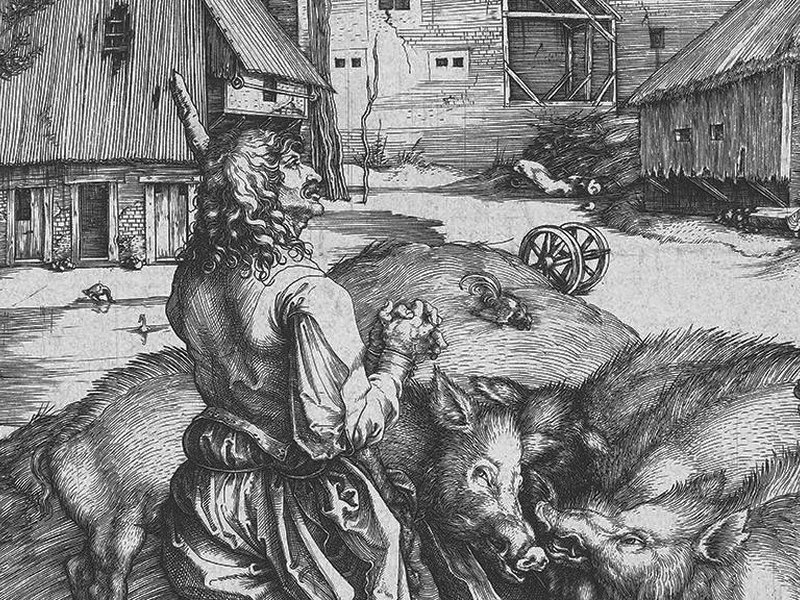
In the first essay on the parable of the Prodigal Son, I suggested that the problems commentators and others encounter in interpreting Jesus three-part parable are not accidental. These are not just problems in our ignorance of cultural background. They are intentional features of the stories —stories designed to poke…

by Ralph Allan SmithJuly 11, 2019
durer-prodigal-son-2
Luke

Perspectives on the Prodigal, (Part 1)

The story of the Prodigal Son is perhaps the most well-known story in the Bible. As others have observed, it may also be one of the most misunderstood. In two short essays, I will point out features of this story that are commonly neglected, aspects of Jesus’ parable that might…

by Ralph Allan SmithJuly 9, 2019
de-rijke-man-en-de-arme-lazarus-by-jacopo-da-ponte-16th-century
Luke

Lazarus and the Rich Man

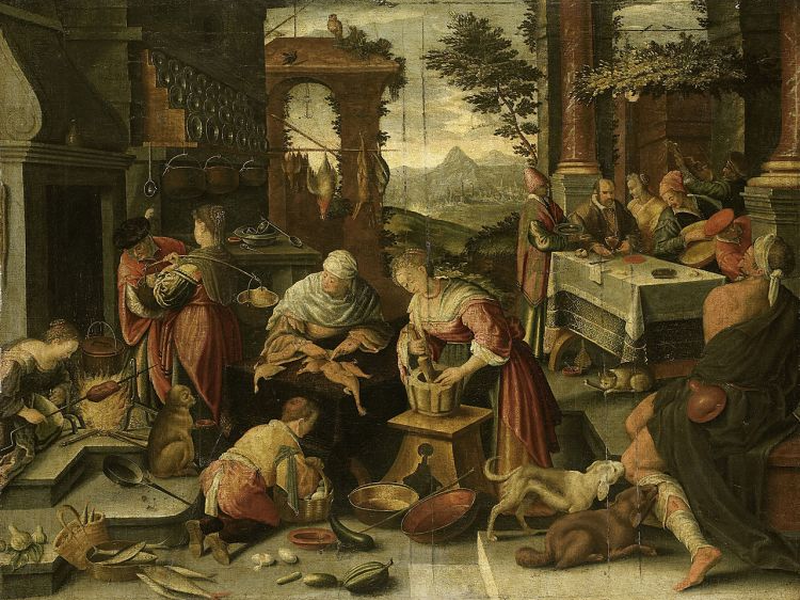
The parable of Lazarus and the nameless rich man is not an independent story. It is part of a long context that begins in Luke 15:1, where Jesus is eating with tax collectors and sinners and the scribes and Pharisees grumble. In response to their hardheartedness, Jesus tells a three-part…

by Ralph Allan SmithJuly 4, 2019
aaron-burden-uynrnfdkjwg-unsplash
Luke

Everybody has Dropsy - Luke 14:1-24

The Bible is written so that even when a reader cannot pick up on what might be deeper or more detailed aspects of a text, there is virtually always a message to be heard. In the ancient world, where the “reader” of Scripture would likely be a church official facing…

by Ralph Allan SmithJuly 2, 2019
communion
Biblical Theology

Fruit Trees and Grain Plants

The distinction between garden (or vineyard) and field begins in Genesis 2. This relates to the ordering of the formless world. Plants of the field are contrasted with the garden planted by God in Genesis 2:5&8. Later on, under the Old Covenant the Israelites will be required to keep their…

by James B. JordanJune 27, 2019

Showing page 77 of 309

See all

Showing page 39 of 43

See all

Elements v. Spirit

Martinus de Boer ( Galatians , 372) notes that the verb “walk by the Spirit” in Galatians 5:25 isn’t the normal peritateo but stoicheo , which means “stand or move in a row or line” as in a military formation. De Boer notes that “there may be an allusion, whether…

October 15, 2014

Thomas and the East

Several times in his The Godly Image , Romanus Cessario observes how Greek patristic writers influence Thomas’s understanding of the satisfaction of Christ. Cessario traces a shift from Thomas’s early Anselmian juridicism to a more personalist understanding of the atonement in his mature work. The difference, he suggests, had to…

October 15, 2014
Science

Revolutionary Curiosity

The scientific revolution is often characterized as a revolution in method. In place of speculative, deductive metaphysical science came experimental, empirical science. Philip Ball ( Curiosity ) argues that behind this was a revolution in mentality, in the questions that could be asked and investigated: “To the new philosophers, the…

October 14, 2014
Abortion

Pro

Katha Pollitt thinks that advocates of abortion rights have been cowed into meekness. In Pro , she argues that abortion needs to be reclaimed as a “positive social good,” and “an essential option for women — not just ones in dramatic, terrible, body-and-soul-destroying situations, but all women — and thus…

October 14, 2014

Teresa of Avila

Julia Kristeva’s vigorous, rambling Teresa, My Love is a very personal reaction to the life and writings of Teresa of Avila. Kristeva, a noted feminist cultural theorist, doesn’t share St. Teresa’s faith. Still, she gets to the heart of Teresa’s mysticism in this quotation: “After the dialogical Socrates, before the…

October 14, 2014

Desire of the Flesh

The desire of the flesh is set against the desire of the Spirit, Paul says, so that the two are in opposition (Galatians 5:17). Where they clash, the combat stymies human choice: “you may not do the things that you wish” (cf. Romans 7). By returning to the “flesh” of…

October 14, 2014

Showing page 514 of 2212

Browse by Category

In Medias Res

Your weekly digest for all things Theopolis.

Donate

Theopolis is nearly 100% donor-supported. Consider joining us on our mission.