Theopolis Logo

Writing

Explore our collection of theological essays, biblical studies, and reflections on faith and culture.

See all
screen-shot-2023-02-24-at-1-48-41-pm
Biblical Chronology

Chronologies and Kings: Part 3

The chronology of the Kings of Judah and Israel can be divided into three periods with clearly defined boundaries. The first period begins with the death of Solomon and the accessions of Rehoboam in the south (Judah) and Jeroboam in the north (Israel). It ends with the deaths of Ahaziah…

by James B. JordanSeptember 22, 1991

johann-walter-bantz-clv9dfjlwac-unsplash-1-5
Art

Arts & Play, Part 1

Most modern people regard the arts as essentially decorative. They are hardly very important, as compared to business, politics, or religion. Yet, from a Biblical point of view, the arts lie close to the heart of human life. The universe that God created is itself an artistic masterpiece by the…

by James B. JordanSeptember 22, 1991
6273e95e0f5ac766258d8cf3_joshuasconquestoftheland-2
Exodus

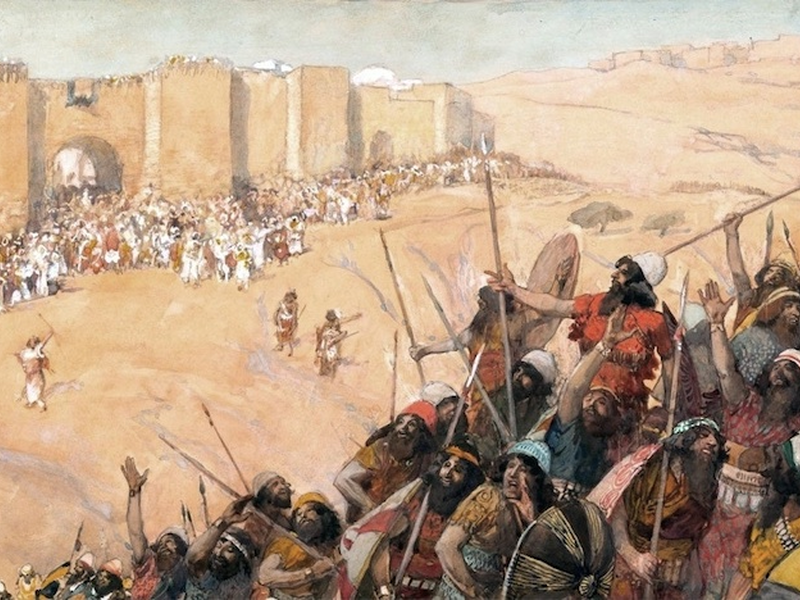
Chronologies and Kings, Part 2

Before we move into a detailed survey of the history and chronology of the kings of Israel and Judah, let us review the chronological information that leads from creation to the kingdom. This will be helpful both to new readers of these essays, and a reminder for those who have…

by James B. JordanAugust 22, 1991
screen-shot-2023-02-24-at-1-48-41-pm
Biblical Chronology

Chronologies and Kings, Part 1

We have completed our overall survey of Biblical chronology, and now turn to a detailed examination of the Biblical information regarding the chronology of Israel’s kings. The first piece of chronological information we have regarding Israel’s kings is very cryptic, and it serves as an guide to the interpretation of…

by James B. JordanJuly 22, 1991
screenshot-2023-08-09-at-2-13-32-pm
Biblical Horizons

Book Review - To Take Place: Toward Theory in Ritual

Jonathan Z. Smith, To Take Place: Toward Theory in Ritual (Chicago: University of Chicago Press, 1987). Reviewed by Peter J. Leithart. The philosophes of the 18th century often attacked Christendom using the tools of anthropology and comparative religion. Rousseau contrasted the idyllic equality of primitive, natural peoples with the bondage…

by Peter LeithartJuly 6, 1991
screenshot-2023-08-09-at-1-47-41-pm
Biblical Horizons

Book Review: The Rise of Magic in Early Medieval Europe

Valerie I. J. Flint, The Rise of Magic in Early Medieval Europe (Princeton University Press, 1991). Reviewed by Peter J. Leithart. Valerie I. J. Flint, Professor of History at the University of Auckland, New Zealand, is refreshingly candid about her reasons for undertaking a study of The Rise of Magic…

by Peter LeithartJuly 6, 1991

Showing page 295 of 309

See all

Showing page 39 of 43

See all

Is It Still Atheism?

“Atheism may have turned a corner,” writes Tom Roston at Quartz . He’s referring to Sam Harris’s latest, Waking Up , subtitled “A Guide to Spirituality without Religion.” It’s got Harris quoting Rumi, a Sufi mystic of the 13th century: “One day, you will find yourself outside this world which…

September 22, 2014

Incense in Heaven

When John enters heaven, he sees several things “before the throne”: seven lamps that are the seven Spirits, a sea of glass like crystal, eventually a pile of discarded crowns (Revelation 4:5, 6, 10). Elders sit on thrones around the throne (4:4). He doesn’t see any altar. He also doesn’t…

September 22, 2014
Baptism

Recreated in Four Dimensions

Have you ever been to a wedding where the heavens opened and a voice declared the couple “husband and wife”? Few of us have. Beautiful as they are, most marriages are quite mundane. Yet when Jesus talks about marriage, He describes it as something that God does: “What God has…

September 22, 2014

No Flesh Justified

No one is justified by the works of law, Paul says, and supports the claim with what appears to be a paraphrase of Psalm 143:2. The Psalm says “for not righteous before your face are all the living.” Paul writes, “by the works of the law no flesh is justified”…

September 19, 2014

Foreknowledge, Providence, Freedom

If God knows all that is going to happen, can I be free? Saying “No” creates considerable difficulties about our understanding of human nature. But if we insist on human freedom in such a way that excludes God’s foreknowledge, we face equally considerable difficulties, this time about God’s nature. Ryan…

September 19, 2014

Eschatological Ontology

Pannenberg’s notion of the ontological priority of the future may be difficult to grasp, but it falls into place when we realize that the scope of his ontology was “reality as a whole.” That may seem to add diffuseness to the vagueness of the original concept, but the two large…

September 19, 2014

Showing page 525 of 2212

Browse by Category

In Medias Res

Your weekly digest for all things Theopolis.

Donate

Theopolis is nearly 100% donor-supported. Consider joining us on our mission.