Theopolis Logo

Writing

Explore our collection of theological essays, biblical studies, and reflections on faith and culture.

See all
g-_k-_chesterton_at_work
Books

Interpreting "The Man Who Was Thursday"

I just finished re-reading G. K. Chesterton’s The Man Who Was Thursday . I have in the past had the temerity to say that I believe it to be the best novel of the 20th century. Be that as it may, I still maintain that it is at least one…

by Richard BledsoeJanuary 7, 2022
10779-istockgetty-images-plusredletterw
Hebrews

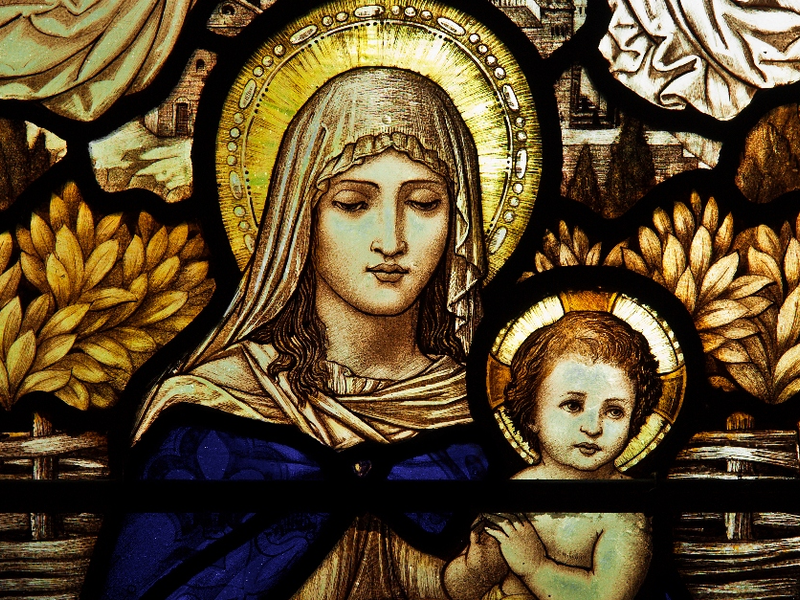
The Universality of Mary’s Wound

And Simeon blessed them and said to Mary his mother, “Behold, this child is set for the fall and rising of many in Israel, and for a sign that is spoken against and a sword will pierce through your own soul also, that thoughts out of many hearts may be…

by Garrett SoucyJanuary 4, 2022
heartierhymnals-stockimage
Music

An Argument for Heartier Hymnals

I was inspired to write this article after reading John Ahern’s The Case for Shorter Hymnals first published on Theopolis Institute’s website on November 16, 2021. Mr. Ahern and I are writing with different audiences and emphases in mind. I am thankful we both share a mutual desire to see…

by Jarrod RicheyDecember 30, 2021
tim-marshall-k2u71wv2ei4-unsplash-1
Biblical Studies

Image of God

If you’ve spent any time in the social-media galaxy of Christian cultural commentators, you have almost definitely run across the Latin phrase Imago Dei . It means image of God . Why they usually say it in Latin, I couldn’t tell you. We saw it in the wake of the…

by Daniel HoffmanDecember 28, 2021
annunciation
Advent

He Comes to Make His Blessings Known: "Son of David" and "Son of Abraham" in Matthew 1:1

The Gospel of Matthew—indeed, the New Testament—begins with a list of names, and that list of names is introduced by this heading: “The book of the generations of Jesus Christ, the son of David, the son of Abraham.” Why start like this? Why “the son of David” and “the son…

by Josh JensenDecember 23, 2021
49980-nicolas_poussin_-_the_judgment_of_solomon_-_wga18330-800w-tn
Biblical Studies

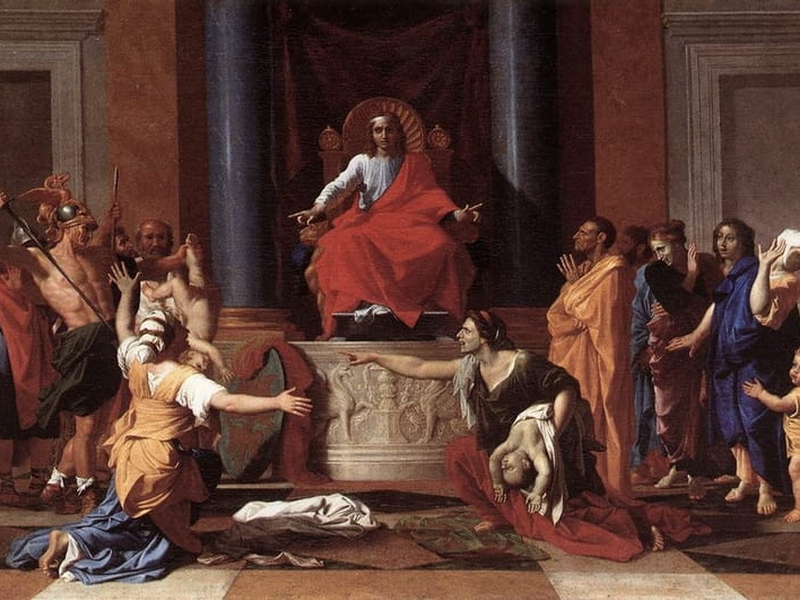
On Not Needing to Cut the Baby in Half

A blade is raised. A child wails. But the brow under the crown is untroubled. Solomon knows that the raising of the sword will reveal the true parent and the identity of the son. But how did he know this? Abraham’s willingness to sacrifice Isaac certainly bears some of the…

by Jonathan WhiteDecember 21, 2021

Showing page 48 of 309

See all
See all

Reconciling Reason and Faith

In Truth and Tolerance , Benedict XVI argues that the Western world is in a crisis that can only be solved if "reason and religion . . . come together again, without merging into each other" (144). He insists this isn't a matter of protecting the interests of religion, Rather,…

October 20, 2017

Future and the Christian Era

Dead time, Rosenstock-Huessy says, is entirely a product of the past, a result of a cause. That conception of time works for physics, but it fails to account for the reality of human time, which always involves surprise and a break with the past. Through speech, we initiate new times,…

October 19, 2017
timothy-eberly-djj49s6ud2o-unsplash

God Is Love

According to the doctrine of the Trinity, the ultimate source of all things, the God in whom we live, move and have our being, is both one and plural, one God in three persons. This has enormous implications for how we think of the world. In ancient philosophy, the highest…

October 19, 2017

God, Time, Eternity

Rosenstock-Huessy believes that God has a unique relationship to time that no human being has, but he describes this unique relationship in ways that are unusual for the Christian tradition. Instead of saying that God is “timeless,” he says that God is “pure time.” This suggestion is based on the…

October 18, 2017

Calendars and Cultural Memory

Modernity’s reduction of time to clock-time is not socially or psychically healthy. As Rosenstock-Huessy puts it: "We need the intersecting of many rhythms of time. Our stomach and our consciousness respond to a 24-hour rhythm. Our faith and our hopes respond to centuries. Our noble passions like the love of…

October 17, 2017

Freedom To Unfreedom

Enlightenment secularism is committed to “freedom” as its overarching value. In an address on “Freedom and Truth” (published in The Essential Pope Benedict XVI ), Benedict XVI describes the Enlightenment as a “will to emancipation” (citing Kant’s sapere aude ). Kant’s plea for philosophical freedom has political dimensions. According to…

October 17, 2017

Showing page 132 of 2212

Browse by Category

In Medias Res

Your weekly digest for all things Theopolis.

Donate

Theopolis is nearly 100% donor-supported. Consider joining us on our mission.