Theopolis News
Constantine the Pious
Trinity House President Peter Leithart will deliver a lecture on "Constantine the Pious" at Oregon State University, Wednesday, October 30, at 7:00 PM.
by Peter LeithartOctober 29, 2013
Explore our collection of theological essays, biblical studies, and reflections on faith and culture.
Trinity House President Peter Leithart will deliver a lecture on "Constantine the Pious" at Oregon State University, Wednesday, October 30, at 7:00 PM.

In his rich study, We Have Never Been Modern (Harvard 1993), Bruno Latour describes modernity in terms of a dual process of “purification” and “hybridization.” Purification involves the clean construction of a nature (and science) separated off from society and the self, while hybridization involves mixtures of nature and culture.…

In James K.A. Smith’s excellent book, Introducing Radical Orthodoxy: Mapping a Post-secular Theology , he explains recent developments in theology and philosophy among mostly post-liberal (some Catholic) theologians. As with everything Dr. Smith writes, his prose is accessible, and written with clarity and precision as he describes the contribution made…

This is the last of a three-part series. 1:14-19 – The Lights in the Firmament The fourth day is the first day where God sets out His mediators and rulers. In the celestial bodies, God sets out His mediators and rulers in the same single class of created beings. We…
Trinity House President Peter Leithart will be in Chicago this weekend lecturing on Revelation. Sign up here .
Only two more weeks to register for the Trinity House Advent class on the book of Genesis. Register before the late fees kick in!
Showing page 185 of 309
Showing page 4 of 43
In A World After Liberalism , Matthew Rose takes note of a generational change taking place in American conservatism. Younger conservatives associated with the alt right don’t read the same writers as their elders: “Instead of William Buckley it is Curtis Yarvin. Instead of Milton Friedman it is Peter Thiel.…
C olumbia Law School professor Philip Hamburger's The Administrative Threat makes a powerful case that the executive branch has assumed “absolute power,” albeit in a “soft” form. It is entirely unConstitutional. Through its administrative bureaucracy, the executive branch has taken on the power to create “legal obligation—the obligation to obey”…
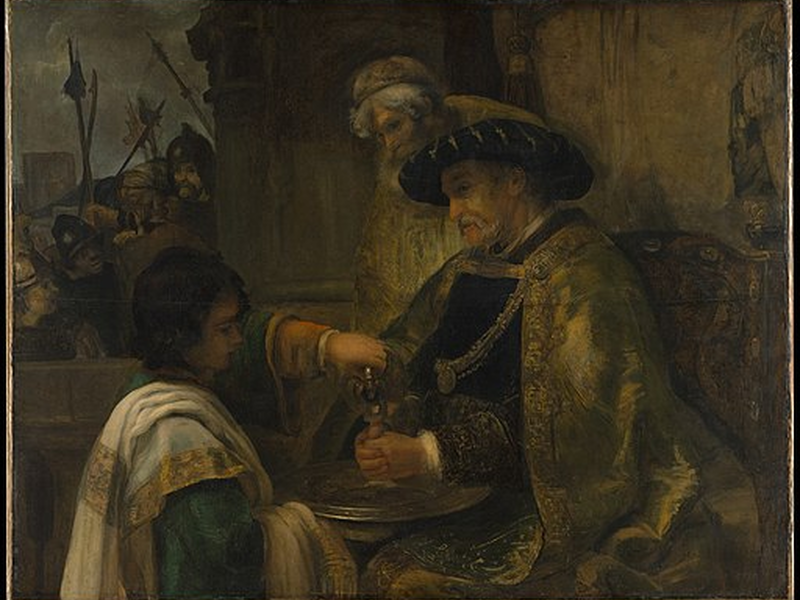
I recently reviewed David Dusenbury’s The Innocence of Pontius Pilate in my First Things column . It’s an enthralling book, a work of scholarly detection that maps out hidden pathways of European intellectual and legal history, the first book (so far as Dusenbury knows) to investigate debates about Pilate’s innocence…

Whether they intend to or not, parents are training their children by the way they respond to COVID. Pastors are training their churches. There are temptations on every side. Put aside debates about the efficacy of masks, lockdowns, distancing, vaccines, and do some self-diagnosis: Will your response to the pandemic…
Greg Anderson began thinking about the thesis of his Realness of Things Past while working on a book on the “state” in classical Greece. He discovered there was no such thing as an Athenian “state,” and that conclusion led him to question the way historians do history. Instead of running…
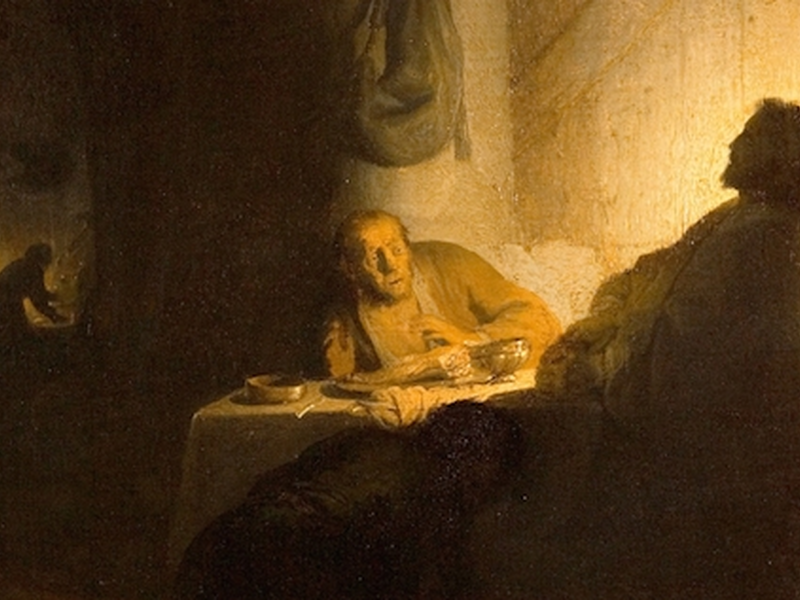
To some Christians, typology is at best ornamental, pretty and cute, but irrelevant to the serious business of the church, irrelevant to the church’s mission. Some Christians have similar views of the Lord’s Supper: Inspiring and helpful, but hardly essential. To such skeptics, I say: “Luke 24. Tolle lege .”…
Showing page 14 of 2212
Your weekly digest for all things Theopolis.