Theopolis Logo

Writing

Explore our collection of theological essays, biblical studies, and reflections on faith and culture.

See all
screen-shot-2021-06-03-at-8-49-15-am
Ezra

Ezra: The Aaronic Rest-Giver

If you’re a preacher looking for good commentaries on Ezra, you’ll struggle. Certainly to find ones that wrestle in good detail with the text. And certainly ones that don’t cost you an arm and a leg. There’s a good bit more for Nehemiah, which is odd, as the two are…

by Rhys LavertyJune 8, 2021

christian-lue-k1e6994p3t8-unsplash
1 John

1 John in Community

Quick thought experiment: try to pretend you’ve never read 1 John before. Read 1:1-6. Go ahead; I’ll wait. Now, on to v. 7: “But if we walk in the light as He is in the light, we have fellowship with ______….” What word would you expect in that blank, based…

by Tim NicholsJune 1, 2021
noahs-ark-genesis
Hermeneutics

Spending Time with Noah: Reflections on Prepositions in the Flood Narrative

In my work as a Bible translator, I was recently checking our translation team’s draft of Genesis 8:8, which says of Noah (translating the Hebrew quite literally): And he sent out the dove from with him to see: had the waters lessened from upon the face of the ground? Part…

by Josh JensenMay 25, 2021
86758
Philosophy

Steven Weinberg Destroyed My Faith

Just in case a reader may not know Weinberg, he is a theoretical physicist and the winner of the Nobel prize in physics in 1979, as well as countless other prizes for his research. He is also a prolific, lucid, and captivating writer. If you want to read something on…

by Ralph Allan SmithMay 18, 2021
screen-shot-2020-09-17-at-9-11-45-am
Colossians

Reconciliation in Colossians 1:20

Colossians 1:15-20 is a famous passage in Paul’s epistles because it is a succinct and powerful poem. It appears even to have been a hymn. Given the uniquely Pauline language — “reconciliation” is a term used only by Paul — it should not seem odd to attribute the poem/hymn to…

by Ralph Allan SmithMay 11, 2021
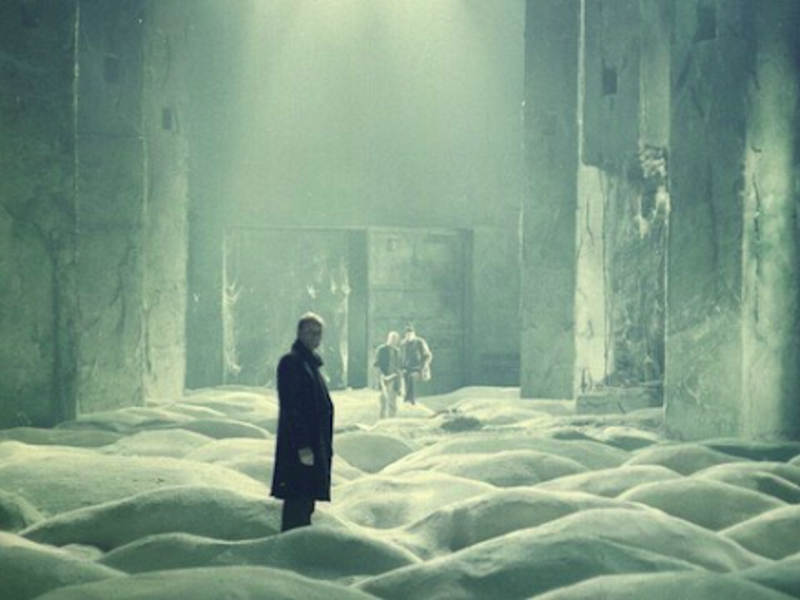
stalker_still
Movies

Terror of Knowing Myself

Stalker (1979) is a film by Andrei Tarkovsky based on Roadside Picnic by the Strugatsky brothers. It shows a day from the life of a stalker, a man who enters the so-called "Zone", an Alien landing site, where he leads people to a room that grants people’s innermost desires, which…

by Bogumil JarmulakMay 4, 2021

Showing page 55 of 309

See all
See all

Expression and content

Umberto Eco ( Limits of Interpretation ) criticizes Barthes’s notion that connotation occurs when “a sign function (Expression plus Content) becomes in turn the expression of a further content.” He argues that “in order to have a connotation, that is, a second meaning of a sign, the whole underlying first…

August 14, 2008

Fat Heart

Isaiah 6:10 says that Isaiah’s ministry will make the hearts of Israel “fat” and their ears “heavy” ( kabad ). The phrasing is unique to Isaiah 6, but the combination of heavy and fat conjures up Eli, who also was going blind. Isaiah 6 is a new Samuel, and like…

August 13, 2008
History

From Creator-creature to Subject-object

MH Abrams notes that at the heart of Romanticism was a transfer of Christian concepts into a new, subjectivist, context: “Much of what distinguishes writers I call ‘Romantic’ derives from the fact that they undertook, whatever their religious creed or lack of creed, to save traditional concepts, schemes, and values…

August 13, 2008

God-like Hirsch

Frank Lentricchia argues that there is “no unmediated historical knowledge,” and adds: “That is reserved for God, or for theorists like Hirsch who believe that objective knowledge can be acquired in a massive act of dispossessing ourselves of the only route to knowledge that we have: the historicized self. What…

August 13, 2008

Sacraments and texts

Roger Lundin notes that modern interpretation often seeks an unmediated encounter with the text, and then adds: “Both Keith Thomas and Charles Taylor trace it, in part, to the Reformation’s anti-sacramental impulses, which fed into the desacralizing of nature that seventeenth-century science and commerce eagerly promoted. The process accelerated through…

August 13, 2008

Another hermeneutical parable

For centuries, piano virtuosos had thrilled audiences with audacious performances of Liszt’s seventh Etude (in G minor, “Eroica”). Liszt scholars had written analyses of the music, and critics had compared various performances to one another and to what they believed was Liszt’s original intention for the music. An industrious Liszt…

August 13, 2008

Showing page 1482 of 2212

Browse by Category

In Medias Res

Your weekly digest for all things Theopolis.

Donate

Theopolis is nearly 100% donor-supported. Consider joining us on our mission.