Theopolis Logo

Writing

Explore our collection of theological essays, biblical studies, and reflections on faith and culture.

See all
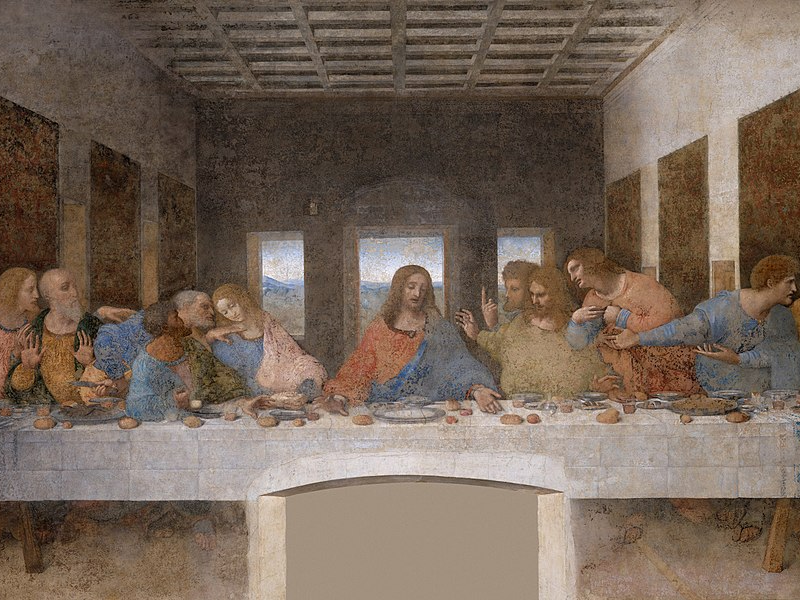
the_last_supper_-_leonardo_da_vinci_-_high_resolution_32x16-2
Biblical Horizons

Was the Last Supper a Passover?

Some readers of my essay, “ Strange and Glorious New Rites ,” have written to object that I have strained a gnat and swallowed a camel. I have strained out the gnat of a possible link to the memorial bread of the minchah (Lev. 2), while overlooking the camel that…

by James B. JordanMarch 22, 2011

screenshot-2023-09-19-at-10-48-12-am
Biblical Horizons

Planetary Judgments

In his lectures on Comparative Religion, Eugen Rosenstock-Huessy points to five fundamental gods that were over ancient man and still can dominate us today, and which must be respected. When we sin, we respect these gods more than we respect the Creator, disobeying the First Word: “You will have no…

by James B. JordanMarch 22, 2011

timothy-eberly-djj49s6ud2o-unsplash
Biblical Studies

Notes on the Book of Judges

A. Israel’s failure to hold land against the Canaanites. Progressive compromise, leading to judgment. 1:1–2:5. B. Israel’s idolatry, the cycle of judges, and war as God’s chastisement. 2:6–3:6. C. Northern Gentiles (Mesopotamia), and Othniel. 3:7-11. D. Lot: Moab, and Ehud. 3:12-13. E. Minor judge: Shamgar. 3:31. F. Canaanites opposed. Women…

by James B. JordanMarch 21, 2011
briana-tozour-mrfapsuyy8a-unsplash
Biblical Horizons

Principalities and Powers, (Part 2)

The great question for the emerging East, for Asia and other awakening third world areas, for an emerging nation like China is, “what fate awaits them?” They are now emerging from an analogous paganism that the West emerged from centuries ago. Here an amazing quotation from David Aikman, the Time…

by Richard BledsoeMarch 15, 2011
sinitta-leunen-dvibhmzsy8e-unsplash
Colossians

The Principalities and Powers, Part I

Paul contends that with the death of Christ on the Cross, there was an overcoming of the Principalities and the Powers (Col. 2:15). A great deal has been written on this subject over the last 60 years. What was for a long time either ignored, or regarded by liberal scholars…

by Richard BledsoeMarch 10, 2011
jimpreaching
Biblical Horizons

Eating and Drinking Together

One of the odd customs that has arisen in the 20th century is that many evangelical churches warp the rites of the Lord’s Supper by insisting that everyone wait so that they eat and drink together. Supposedly this is to emphasize the unity of the Church. This practice has no…

by James B. JordanMarch 3, 2011

Showing page 205 of 309

See all
See all
Theology

Barthes’s transcendental argument

That’s Barthes not Barth. As in Roland. Prickett suggests that Barthes’ proclamation of the death of the author, his manumission of interpretation from the obsession with the limited, final, “secret” meaning, and his hope for a liberated “anti-theological” and “revolutionary” reading that refuses “to fix meaning” in fact opens the…

August 5, 2008

Conservatism of Poststructuralism

Poststructuralism likes to think itself radical, but Stephen Prickett (Words and the Word) points out that it excludes the possibility of novelty. Barthes says that a text is “a tissue of quotations drawn from the unnumerable centres of culture.” And Kristeva’s notion of intertextuality, on Prickett’s reading, encloses a text…

August 5, 2008
Literature

Novelistic language

A few highlights from James Wood’s chapter on language in How Fiction Works . Early on, he mentions the “old modernist hope” that prose can be “as well written as poetry.” This will require readers and novelists to develop what Nietzsche called a “third ear”: “We have to read musically,…

August 4, 2008
Literature

Bad Books

Lewis remarks on the high difficulty of adverse criticism, noting that the difficulty lies partly in the fact that the defects of bad literature are found in good literature: “The novel before you is bad - a transparent compensatory fantasy projected by a poor, plain woman, erotically starving. Yes, but…

August 4, 2008

Terms of abuse

Lewis describes the process by which words that once expressed and aroused emotions by appealing to the imagination have been emptied of image-content and become purely emotional. “Damn you” used to be a real curse, because people believed in damnation. Now that fewer do, it’s a more or less purely…

August 4, 2008

Limits of language

In Lewis’s defense, he is trying to explain some of the limits of language, which are worth noting (this in the last chapter of Studies in Words ). One limitation has to do with language’s inability “to inform us about complex physical shapes and movements. Hence descriptions of such things…

August 4, 2008

Showing page 1485 of 2212

Browse by Category

In Medias Res

Your weekly digest for all things Theopolis.

Donate

Theopolis is nearly 100% donor-supported. Consider joining us on our mission.