Theopolis Logo

Writing

Explore our collection of theological essays, biblical studies, and reflections on faith and culture.

See all
screen-shot-2020-07-28-at-7-12-05-am
John

A Conversation at the Sheep Pool (John 5)

One evening at dusk two men met under a portico near the North wall in Jerusalem. They greeted one another cordially and sat down on a stone bench. They were both Pharisees. One of the men appeared to be uncomfortable and kept looking around nervously. The other said, “Don’t worry,…

by Jeff MeyersJuly 28, 2020
screen-shot-2020-07-21-at-10-29-59-am
Christology

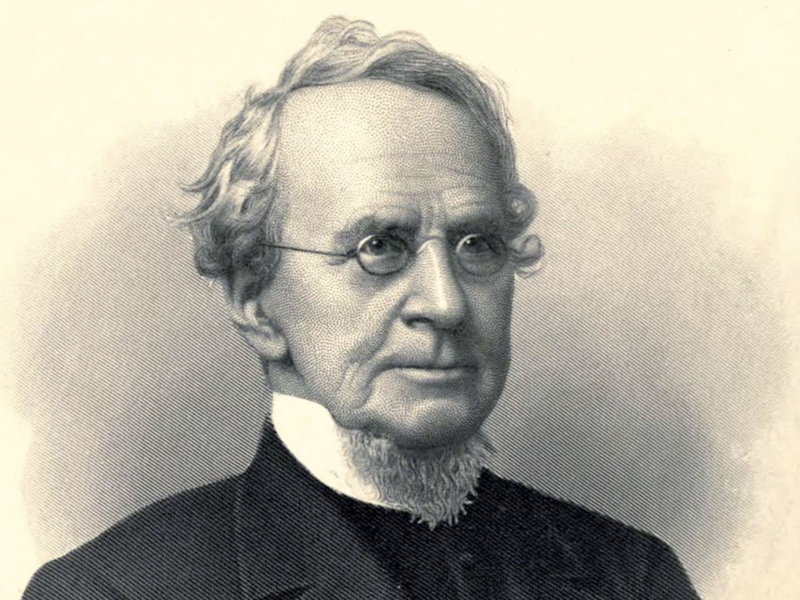
Real Union or Legal Fiction? | Nevin’s Controversy With Charles Hodge Over the Imputation of Adam’s Sin

John Williamson Nevin’s Controversy With Charles Hodge Over the Imputation of Adam’s Sin (with a Comparison to Robert L. Dabney) If one is blessed to discover George P. Hutchinsons’s monograph on Original Sin in nineteenth-century Reformed thought, 1 no student of American presbyterianism can fail to be fascinated. What once…

by Mark HorneJuly 21, 2020
thijs-van-diessen-ihhert2uh5y-unsplash-2
Biblical Theology

Fire on the Mountain

If you stop people on the street and ask them, “Where is God?” you’ll get a range of responses from a vague sense that He’s “up there somewhere” to a generic omnipresence (and it goes downhill from there!) What God does in Acts 2 challenges us to develop and apply…

by Tim NicholsJuly 14, 2020
jonah
Matthew

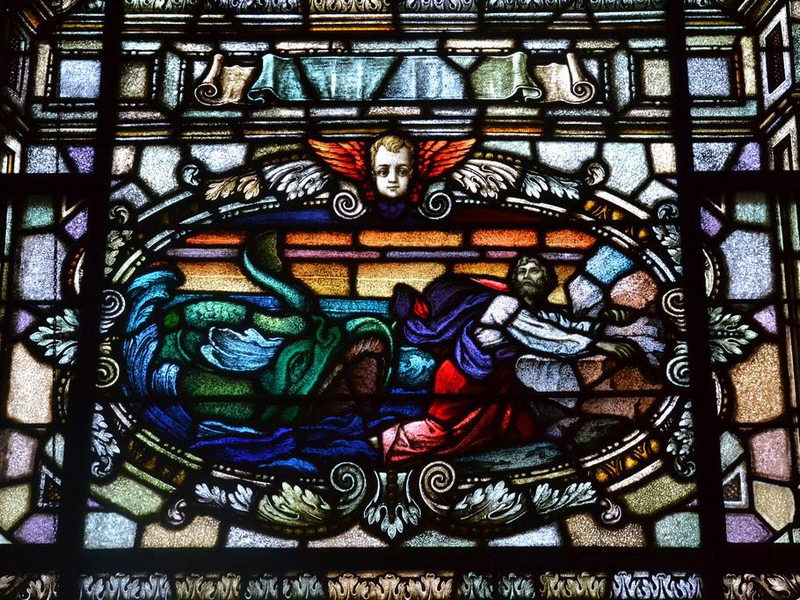
The Sign of Jonah

Then some of the scribes and Pharisees answered him, saying, “Teacher, we wish to see a sign from you.” But he answered them, “An evil and adulterous generation seeks for a sign, but no sign will be given to it except the sign of the prophet Jonah. For just as…

by Ken HicksJuly 7, 2020
tanner-mardis-xuxghzhibn4-unsplash-2
Genesis

Lost Worlds?

John Walton believes that modern Christians have lost multiple worlds: The Lost World of Genesis One; The Lost World of Adam and Eve; The Lost World of Scripture; The Lost World of the Israelite Conquest; The Lost World of the Flood; The Lost World of the Torah. I believe this…

by Ralph Allan SmithJuly 2, 2020
stephanie-leblanc-z4lxu7niii4-unsplash
Interview

N.T. Wright on How the Church Should Respond to the Pandemic

How should the church respond to the pandemic? N.T. Wright has written a book which searches the depths of Scripture to answer this question. Our challenge is that we do not yet understand the pandemic, at least not with any degree of consensus. We don't know whose fault it is,…

by Jerry Bowyer & N.T. WrightJune 30, 2020

Showing page 65 of 309

See all
See all
Science

Devil’s Delusion

Of all the people I’ve seen on film recently, the one I’d most want to be is David Berlinski, whom Ben Stein interviewed extensively in his Paris apartment that reeked with sophistication and culture. Berklinski, by his own definition a “secular Jew” with no memory of Hebrew, has just published…

May 21, 2008

Obama’s subtexts

In an intriguing piece in TNR , writer Cinque Henderson - who identifies himself as one of the few remaining Clinton supporters among African-Americans - explains Obama’s use of “hoodwinked” and “bamboozled” (not the first words to spring to Obama’s lips, one would think) in the South Carolina primary: “It…

May 21, 2008
Philosophy

Flat souls

Kristeva says that contemporary culture separates affects from language, which leads to a loss of soul. Souls are empty. To help, our culture offers drugs and entertainment. Drugs flatten experience to a drone; entertainment dazzles momentarily with two-dimensional images. So do our solutions increase the problem. Flat remedies for flat…

May 20, 2008

Body/Language

Kristeva’s distinction of semiotic and symbolic is intended to overcome the dualism of traditional linguistic theories, the dualism of body and language, or matter and language. For Kristeva, the “semiotic” is the way drives are organized or “discharged” in language, and thus includes everything that is meaningful in language but…

May 20, 2008

Langue without speakers

Julia Kristeva notes that Saussure’s linguistic theory permits “linguistics to claim a logical, mathematical formalization on the one hand, but on the other, it definitely prevents reducing a language or text to one law or one meaning.” This latter point is true because by splitting the sign into signified and…

May 20, 2008

Limits of Dialectic

Desmond thinks that dialectic makes some gains: It affirms the “complex sense of unity,” appreciates mediation, critiques dualism, defends the “interplay and community of immanence and transcendence.” But dialectic cannot be the final moment of metaphysics. Why? “The problem is that if we privilege self-mediation and erect this into the…

May 20, 2008

Showing page 1516 of 2212

Browse by Category

In Medias Res

Your weekly digest for all things Theopolis.

Donate

Theopolis is nearly 100% donor-supported. Consider joining us on our mission.