Theopolis Logo

Writing

Explore our collection of theological essays, biblical studies, and reflections on faith and culture.

See all
e99a9541
Abortion

To Kill or Not to Kill

It seems to be old news, but I was unaware of it until recently. Australian academics argued that mothers should be allowed to terminate the life of a newborn child. [i] Why would they promote such an idea? Because before the child is born it is not always possible to…

by Ralph Allan SmithSeptember 12, 2019
pascal
Philosophy

Is the Betting Rigged in Pascal's Wager?

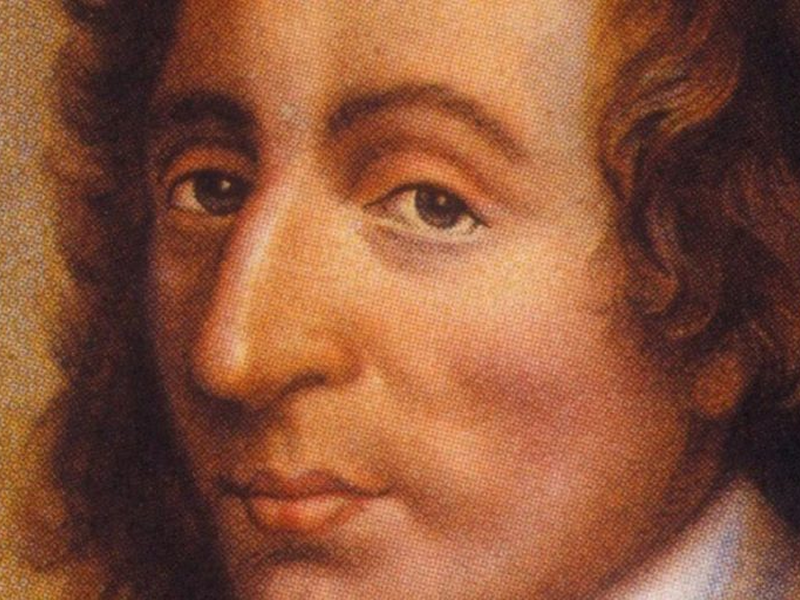
This is the second of two essays introducing Pascal’s Wager. Click HERE for Part 1. In “The Pop Star and the Mathematician” I gave an overview of the apologetic approach commonly called Pascal’s Wager. In that Wager, 17 th -century French mathematician Blaise Pascal argued that the choice between Christian…

by Alexander WhitakerSeptember 10, 2019
pascal
Philosophy

The Mathematician and the Pop Star: A Pascal's Wager Primer

This is the first of two essays aiming to introduce the reader to Pascal’s Wager. The second will address criticisms of the Wager. In the early 1990s, a perennially popular British pop star was interviewed on British television about his very public evangelical Christian faith. “What if,” the reporter asked…

by Alexander WhitakerSeptember 5, 2019
screen-shot-2019-09-03-at-7-00-44-am-2
Matthew

The Secret of the Middle of Matthew

Matthew 13 is about secrets. In this chapter, Jesus teaches eight parables and tells the disciples that they reveal the secrets of the kingdom (13:11). And much like Samson who both tells riddles and is himself a riddle that the reader must solve, so Jesus not only tells secrets but…

by John HigginsSeptember 3, 2019
david-with-goliaths-head-and-soldiers-crop
Biblical Theology

David, Goliath, and the Body of Moses, (Part 2)

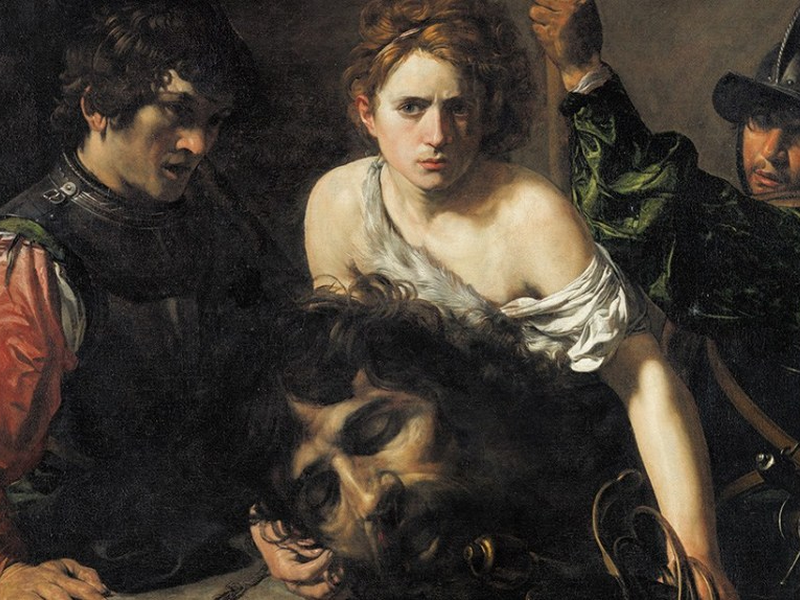
Click HERE for part One. THE TEXT AS TABERNACLE Creation – Initiation – Genesis (1 Samuel 17:1-11) The gathered armies not only remind the reader of Ebal and Gerizim, but also of the very reason that Israel was established (Creation) , set apart from the other nations by the circumcision…

by Mike BullAugust 29, 2019
job
Job

The Man in the Middle

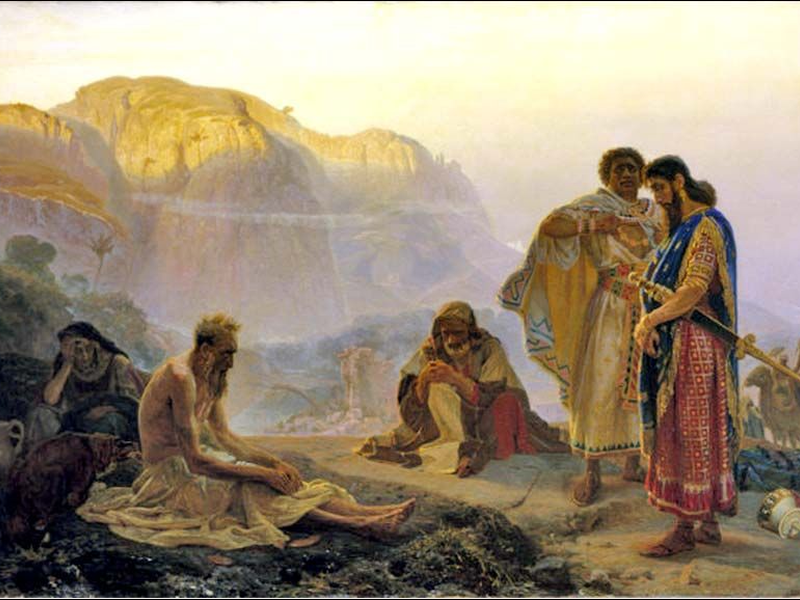
What to do with Job’s Final “Friend,” Elihu Elihu is a strange character, at least in the sense of how and where he appears in the book of Job. Why does he not appear with the other three “friends?” Does his argument differ from any of the first three who…

by Eric RobinsonAugust 27, 2019

Showing page 75 of 309

See all
See all
Literature

Sympathy for Bertram

Coleridge, on the other hand, stood up for Bertram: “I cannot agree with the solemn abuse which the critics have poured out upon Bertram in All’s Well that ends Well . He was a young nobleman in feudal times, just bursting into manhood, with all the feelings of pride of…

February 6, 2008
Literature

All’s Well?

Samuel Johnson said of Bertram in Shakespeare’s All’s Well that Ends Well : “I cannot reconcile my heart to Bertram, a man noble without generosity, and young without truth, who marries Helena as a coward and leaves her as a profligate; when she is dead by his unkindness, sneaks home…

February 6, 2008
Literature

Shakespeare the Christian

Belated help for a friend: Pastor Ralph Smith of the Mitaka Evangelical Church in Tokyo has produced an course entitled “Shakespeare the Christian.” The lectures cover Shakespeare’s debts to Christianity and his use of the Bible, and then analyze 10 of the plays in detail. Ralph has done his homework,…

February 6, 2008

Universal choir

Augustine on Psalm 149: “Chorus Christi jam totus mundus est.” Christ’s choir is now the whole world.

February 5, 2008
Theology

Augustine, postmodern cynic

Behind Varro’s classification of Roman religion into mythical, natural, and civic, Augustine discerns an interest, and a political one. Varro speaks harshly about the mythic or fabulous religions, for violating the dignity of immortal gods. Yet, the classification system serves to protect civic religion from similar condemnation. On Augustine’s reading,…

February 5, 2008
Politics

Musical city

Augustine quotes Cicero saying, “quae harmonia a musicis dicitur in cantu, eam esse in civitate concordiam.” That is, somewhat loosely, “what musicians call harmony in singing is concord in the city.”

February 5, 2008

Showing page 1572 of 2212

Browse by Category

In Medias Res

Your weekly digest for all things Theopolis.

Donate

Theopolis is nearly 100% donor-supported. Consider joining us on our mission.