Theopolis Logo

Writing

Explore our collection of theological essays, biblical studies, and reflections on faith and culture.

See all
screen-shot-2023-02-24-at-1-48-41-pm
Biblical Chronology

Chronologies and Kings: Part 3

The chronology of the Kings of Judah and Israel can be divided into three periods with clearly defined boundaries. The first period begins with the death of Solomon and the accessions of Rehoboam in the south (Judah) and Jeroboam in the north (Israel). It ends with the deaths of Ahaziah…

by James B. JordanSeptember 22, 1991

johann-walter-bantz-clv9dfjlwac-unsplash-1-5
Art

Arts & Play, Part 1

Most modern people regard the arts as essentially decorative. They are hardly very important, as compared to business, politics, or religion. Yet, from a Biblical point of view, the arts lie close to the heart of human life. The universe that God created is itself an artistic masterpiece by the…

by James B. JordanSeptember 22, 1991
6273e95e0f5ac766258d8cf3_joshuasconquestoftheland-2
Exodus

Chronologies and Kings, Part 2

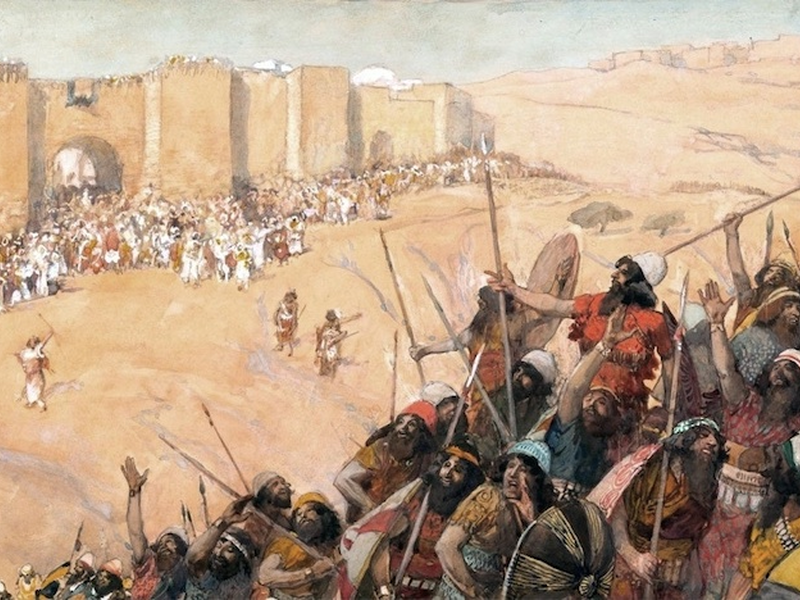
Before we move into a detailed survey of the history and chronology of the kings of Israel and Judah, let us review the chronological information that leads from creation to the kingdom. This will be helpful both to new readers of these essays, and a reminder for those who have…

by James B. JordanAugust 22, 1991
screen-shot-2023-02-24-at-1-48-41-pm
Biblical Chronology

Chronologies and Kings, Part 1

We have completed our overall survey of Biblical chronology, and now turn to a detailed examination of the Biblical information regarding the chronology of Israel’s kings. The first piece of chronological information we have regarding Israel’s kings is very cryptic, and it serves as an guide to the interpretation of…

by James B. JordanJuly 22, 1991
screenshot-2023-08-09-at-2-13-32-pm
Biblical Horizons

Book Review - To Take Place: Toward Theory in Ritual

Jonathan Z. Smith, To Take Place: Toward Theory in Ritual (Chicago: University of Chicago Press, 1987). Reviewed by Peter J. Leithart. The philosophes of the 18th century often attacked Christendom using the tools of anthropology and comparative religion. Rousseau contrasted the idyllic equality of primitive, natural peoples with the bondage…

by Peter LeithartJuly 6, 1991
screenshot-2023-08-09-at-1-47-41-pm
Biblical Horizons

Book Review: The Rise of Magic in Early Medieval Europe

Valerie I. J. Flint, The Rise of Magic in Early Medieval Europe (Princeton University Press, 1991). Reviewed by Peter J. Leithart. Valerie I. J. Flint, Professor of History at the University of Auckland, New Zealand, is refreshingly candid about her reasons for undertaking a study of The Rise of Magic…

by Peter LeithartJuly 6, 1991

Showing page 295 of 309

See all
See all

Christianity and the Sexual Abuse of Children

I n Destroyer of the Gods , Larry Hurtado reminds us that “in the Roman era the sexual use of children, including young adolescents and also younger children, was widely tolerated and even celebrated lyrically by some pagan writers of the day, such as Juvenal, Petronius, Horace, Strato, Lucian, and…

July 7, 2017

Dechristianization

“O riginally and properly,” writes John McManners ( Death and the Enlightenment ), the term “dechristianization” refers “to the anti-religious manifestations of the French Revolution,” which were “neither homogenous in character nor unambiguous in meaning.” Dechristianization refers in part to administrative, institutional changes: “The transfer to the secular authorities of…

July 7, 2017

Perfect Fear

M ichael Oakeshott ( Hobbes on Civil Association , 38-39) states Hobbes's solution to the dilemma of human violence in evangelical terms. Human existence is plagued by the fear of death, and for Hobbes the only salvation lies in greater fear. The saviour is not a visitor from another world,…

July 7, 2017

Democide

“D uring the first eighty-eight years of [the 20th] century,” writes R. J. Rummel ( Death by Government ) “almost 170 million men, women, and children have been shot, beaten, tortured, knifed, burned, starved, frozen, crushed, or worked to death; buried alive, drowned, hung, bombed, or killed in any other…

July 7, 2017

Microtime

J imena Canales has written a history of A Tenth of a Second . It seems an arbitrary cut-off. Why not 1/100 or 1/1000? After all, we've been able to measure in finer units than 1/10 of a second: “In 1878 Eadweard Muybridge famously photographed running horses galloping in a…

July 7, 2017

Reform of Humanism

W hen the Reformation and humanism are discussed together, the question is typically how the latter helped produce the former. Erika Rummel ( The Confessionalization of Humanism in Reformation Germany ) turns the question around: How did the Reformation change humanism? One effect was in education: Protestant school orders, drawn…

July 7, 2017

Showing page 165 of 2212

Browse by Category

In Medias Res

Your weekly digest for all things Theopolis.

Donate

Theopolis is nearly 100% donor-supported. Consider joining us on our mission.