Theopolis Logo

Writing

Explore our collection of theological essays, biblical studies, and reflections on faith and culture.

See all
31-03-0213
Hermeneutics

Apocalyptic Eyes

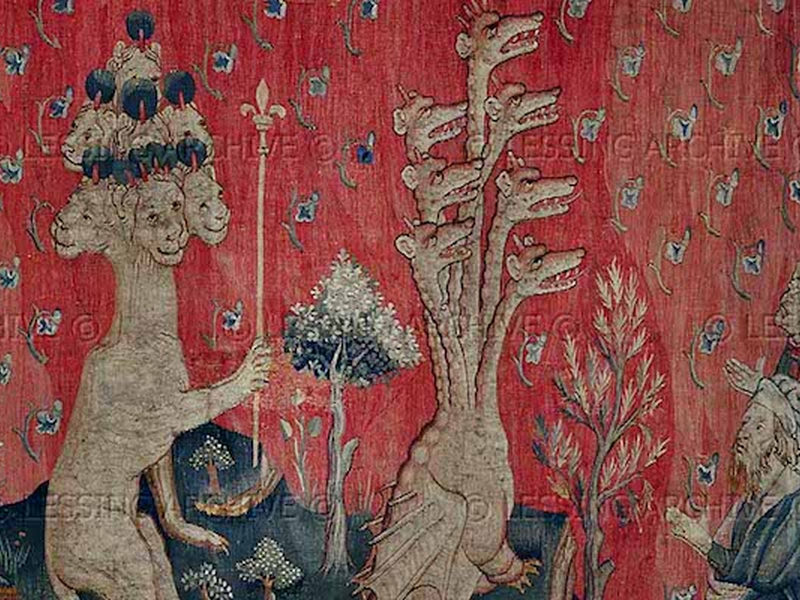
Flying scrolls. Red horses. Beasts coming out of the sea. Winged women. The list goes on. Apocalyptic literature in the Bible is like a cross between science fiction and Marvel comics. And the Bible has a fair bit of this sort of thing. Daniel sees visions in Babylon, Zechariah sees…

by Toby SumpterNovember 4, 2014

bhm-skyline-2
Theopolis News

New Name, New Look

Trinity House Institute has taken a new name, the Theopolis Institute. This striking new name expresses our unique vision and mission and captures the unified purpose behind all our specific programs and activities. We still have Bible, liturgy, and culture in our tagline. We still offer the same courses on…

by TheopolisNovember 4, 2014
istock_000012860926small
Atonement

Not Fearing the Devil

Adam Kotsko offers a socio-political variation on the Christus Victor atonement theory in his 2010 study, The Politics of Redemption: The Social Logic of Salvation . He does this by explaining "the devil" in terms of the Hegelian concept of "objective spirit," Geist . As Kotsko puts it, Geist "refers…

by Peter LeithartOctober 13, 2014
jez-timms-8muutamcwu4-unsplash
Leviticus

The Meaning of Sacrifice

Two factors keep Nahtali Meshel from discussing the meaning of sacrifice until late in his The "Grammar" of Sacrifice . The first has to do with the texts he draws from: "P says little about the meaning of its rituals" (174). The other has to do with the grammatical theory…

by Peter LeithartOctober 8, 2014
jez-timms-8muutamcwu4-unsplash
Leviticus

Praxemics

Chapter 5 of Naphtali Meshel's The "Grammar" of Sacrifice focuses on "praxemics," the physical actions of sacrificial ritual. Praxemes are constituted by six elements: an "atomact," an elementary physical act or gesture; an actor; an object that is acted up; a target for the action and often for the object…

by Peter LeithartOctober 6, 2014
markus-winkler-aid-xyrtlec-unsplash
Leviticus

Jugation and Hierarchy

Two chapters of Naphtali Meshel’s The “Grammar” of Sacrifice cover what he calls “jugation” and “hierarchies.” The first involves the addition of other materials to an animal offering. Jugates include wine, cereal, and oil that are added to the animals (zoemes) that are offered in sacrifice. Some jugates are coordinated…

by Peter LeithartOctober 1, 2014

Showing page 167 of 309

See all
See all
Biblical Studies

Critical Scholarship

One of the most annoying things about critical biblical scholarship is the way that every discussion has to contribute to questions of composition, authorship, historical setting, etc. Harrington gives a very intriguing paper on holiness in Ezra-Nehemiah, but the whole thing is part of a “larger” argument about the common…

November 19, 2006

Purity and holiness

Hannah Harrington gave a very fine presentation on the holiness and purity terminology in Ezra and Nehemiah. She showed that these post-exilic texts display an expansion of holy space to encompass the whole city as well as an expansion of the duties of Levites, a closing of the gap between…

November 19, 2006
Biblical Studies

Criterion of antiquity

John Milbank claims that the Wellhausen documentary hypothesis is shaped by what he calls the “liberal Protestant metanarrative,” the view that Christianity moved from a religion of inner simplicity to a religion of complex external ritual (JEDP traces this story). In his SBL presentation, Nick Perrin of Wheaton showed how…

November 18, 2006

Theopoiesis

Carl Mosser of Eastern College gave a superb presentation on deification at the ETS meeting. A large part of the presentation was a study of terminology. He noted that the Greek work THEOS (often thought to be equivalent to “God”) had a broader meaning, referring to powers that were immortal,…

November 18, 2006
History

More from Latour

A few further scattered comments from and on Latour. 1) He disputes the notion that the modern world is disenchanted, claiming that the claim of disenchantment is merely the reflex of the Constitution of modernity and its premise that We are completely different from Them. He also attributes the modern…

November 17, 2006

Remnant, Edom, AD 70

Some reflections based on an ETS talk by Edward Meadors on Romans 9-11. Meadors suggested that “Esau” in Romans 9 refers to Esau as the patriarch of Edom, well-known for its opposition to Israel throughout the centuries. That is Malachi’s focus in the passage Paul cites. And this is set…

November 17, 2006

Showing page 1761 of 2212

Browse by Category

In Medias Res

Your weekly digest for all things Theopolis.

Donate

Theopolis is nearly 100% donor-supported. Consider joining us on our mission.