Theopolis Logo

Writing

Explore our collection of theological essays, biblical studies, and reflections on faith and culture.

See all
31-03-0213
Hermeneutics

Apocalyptic Eyes

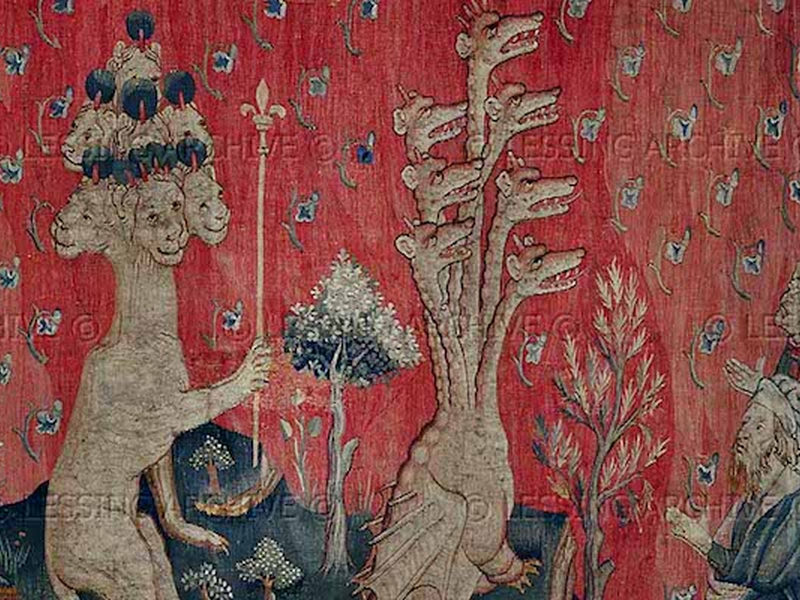
Flying scrolls. Red horses. Beasts coming out of the sea. Winged women. The list goes on. Apocalyptic literature in the Bible is like a cross between science fiction and Marvel comics. And the Bible has a fair bit of this sort of thing. Daniel sees visions in Babylon, Zechariah sees…

by Toby SumpterNovember 4, 2014

bhm-skyline-2
Theopolis News

New Name, New Look

Trinity House Institute has taken a new name, the Theopolis Institute. This striking new name expresses our unique vision and mission and captures the unified purpose behind all our specific programs and activities. We still have Bible, liturgy, and culture in our tagline. We still offer the same courses on…

by TheopolisNovember 4, 2014
istock_000012860926small
Atonement

Not Fearing the Devil

Adam Kotsko offers a socio-political variation on the Christus Victor atonement theory in his 2010 study, The Politics of Redemption: The Social Logic of Salvation . He does this by explaining "the devil" in terms of the Hegelian concept of "objective spirit," Geist . As Kotsko puts it, Geist "refers…

by Peter LeithartOctober 13, 2014
jez-timms-8muutamcwu4-unsplash
Leviticus

The Meaning of Sacrifice

Two factors keep Nahtali Meshel from discussing the meaning of sacrifice until late in his The "Grammar" of Sacrifice . The first has to do with the texts he draws from: "P says little about the meaning of its rituals" (174). The other has to do with the grammatical theory…

by Peter LeithartOctober 8, 2014
jez-timms-8muutamcwu4-unsplash
Leviticus

Praxemics

Chapter 5 of Naphtali Meshel's The "Grammar" of Sacrifice focuses on "praxemics," the physical actions of sacrificial ritual. Praxemes are constituted by six elements: an "atomact," an elementary physical act or gesture; an actor; an object that is acted up; a target for the action and often for the object…

by Peter LeithartOctober 6, 2014
markus-winkler-aid-xyrtlec-unsplash
Leviticus

Jugation and Hierarchy

Two chapters of Naphtali Meshel’s The “Grammar” of Sacrifice cover what he calls “jugation” and “hierarchies.” The first involves the addition of other materials to an animal offering. Jugates include wine, cereal, and oil that are added to the animals (zoemes) that are offered in sacrifice. Some jugates are coordinated…

by Peter LeithartOctober 1, 2014

Showing page 167 of 309

See all
See all
History

Foucault’s eschatology

Berman offers this very sharp summary of Foucault’s work, whom he says is “about the only writer of the past decade who has had anything substantial to say about modernity” (Berman is writing in 1982). Then: “what he has to say is an endless, excruciating series of variations on the…

November 5, 2006
History

Flattened modernity

In the introduction to his All That Is Solid Melts Into Air , Marshall Berman argues that nineteenth century critics of modernity had a much richer grasp of the costs and promise of modernity than do twentieth century observers. Modern life is, Rousseau said, a whirlwind ( le tourbillon social…

November 5, 2006
History

Religious Liberty and the Whig Interpretation

The following is a portion of a lecture at the NSA disputatio. WHIGGISH HISTORY The Whigs were of course a loose British political alliance, the predecessor of today’s Liberal Democrats. The term was first applied, interestingly, to the Scottish Covenanters who marched on Edinburgh in 1648, and then to the…

November 3, 2006
American Religion

Innocent abroad

In a recent issue of TNR , Alan Wolfe reviewed David Kuo’s book telling the story of his service in the current Bush administration. Kuo worked in the office of faith-based initiatives, and though he left the administration he still praises Bush because of his Christian testimony. What strikes Wolfe…

November 3, 2006
History

World Cities again

Thinking again about Mike Featherstone’s comments on the fact that multiculturalism developed first in Southern Hemisphere cities (quoted in a post from September 2006), it strikes me that one of the dynamics of the current global situation is a reversal of colonialism. That’s true in the sense that Featherstone notes…

November 2, 2006
History

Mass culture

The point of theories of “mass culture” is not so much the “mass” as the “culture.” Goods and services may be distributed to a large number of people in economies where what is called “mass culture” doesn’t exist. When theorists use the phrase, they want to emphasize the fact that…

November 2, 2006

Showing page 1771 of 2212

Browse by Category

In Medias Res

Your weekly digest for all things Theopolis.

Donate

Theopolis is nearly 100% donor-supported. Consider joining us on our mission.