Theopolis Logo

Writing

Explore our collection of theological essays, biblical studies, and reflections on faith and culture.

See all
screen-shot-2020-03-05-at-9-05-54-am
Motherhood

Home is the Place They Leave

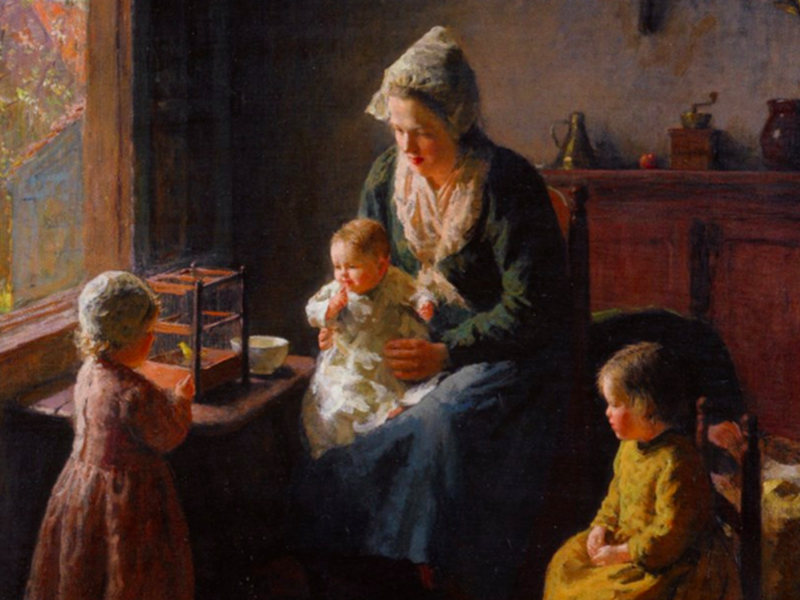
Your first born is a novelty. Everything seems special and unique. No one’s child is like yours. Then, over time, you begin to make mistakes. Some strategies don’t work on the additional personalities born into your family, or they simply don’t scale from a practical perspective. With maturity, you realize…

by Mandi GerthMay 17, 2022

screen-shot-2022-05-12-at-12-07-23-pm
John

Unionized Perfection

Could Jesus have sinned? Before answering the question, it's best to run through a couple of qualifiers. First, scripture clearly teaches He did not sin. Second, I realize the seeming futility when discussing hypothetical situations. The question of the peccability of Jesus, or Jesus's capacity to sin, is in reality,…

by Matthew CoreyMay 12, 2022
angola-prison-louisiana-usa
Grace

The Farm

The first time I saw the inside of a prison was in 1999; I was 16. I hadn’t knocked over a fruit stand or been caught stealing hubcaps, I was just an unsuspecting teenager playing piano for a Louisiana gospel group. One Wednesday evening in October, my pastor and leader…

by Brandon MeeksMay 10, 2022
mahdi-soheili-xncgiwy8f2m-unsplash
Biblical Studies

Its Lamp is the Lamb: The Diminishing Rule of the Celestial Bodies

The act of naming carries a lot of weight in the Bible. Naming denotes authority and possession; the namer signifying that he understands the thing named, and therefore possesses the requisite wisdom to rule over it. God set the stage for naming when he named the domains during the first…

by Daniel StanleyMay 3, 2022
dan-cristian-padure-h3kuhyuce9a-unsplash
Pastoral Ministry

The Algebra of Church Growth

This short essay makes an obvious point: Church growth is a matter of the rate of entry into a church relative to the rate of exit from that church. Perhaps church growth literature has long recognized that fact. Yet given the greater focus in church – at least in my…

by James R. RogersApril 26, 2022
bonifatius_donareiche-e1528229924369-1024x583
Boniface Option

An Arrow Has a Telos: Strategy in the Negative World

If you’ve not yet heard of Aaron Renn’s three worlds framework , here’s the quick version: once upon a time, being a Christian was a net social good in American society. Whatever was going on behind the scenes in elite institutions, the general rank-and-file perception of Christianity was positive. That…

by Tim NicholsApril 19, 2022

Showing page 44 of 309

See all
See all
Philosophy

Continental v. analytic

Continuing through Simon Critchley’s book on Continental philosophy, the following analogy seems to capture some aspects of the contrast of Continental and analytic: Continental is Catholic: conscious of tradition, respectful of saints, aware of historical contextualization. Philosophy is the history of philosophy. Analytic is Protestant: deals with de-contextualized philosophical problems,…

September 14, 2006
History

Modernist postmoderns

Postmodern critics of modernity sometimes treat the latter not only as the pursuit and ambition for totality; they treat it as a totality, as an undifferentiated whole. But if postmoderns are right, even modernity was fragmented and frayed at the edges, and the appearance of totality is a modernist ruse.…

September 13, 2006
History

Modernity and dirt

A subsidiary thesis: Modernity is motivated by a desire for purity, by dirt-avoidance - dirt being, as Mary Douglas says, “matter out of place.” Counter-modernity is dirt’s revenge, celebration of dirt.

September 13, 2006
History

Modernity as court culture

Featherstone once again. He points out that sometime in the 18th century, upper class culture divided from lower class culture: “in 1500 the educated strata despised the common people although they shared their culture. Yet by 1800 their descendants had ceased to join spontaneously in popular culture and were rediscovering…

September 13, 2006
History

Romantic ethic and Consumption

In his 1987 book, The Romantic Ethic and the Spirit of Modern Consumerism , C. Campbell attempts to explain the origins of contemporary obsession with novelty, pleasure in the new, self-expression through consumption of goods. He traces it to romanticism’s focus on “imagination, fantasy, mysticism, creativity and emotional exploration” (Featherstone’s…

September 13, 2006
History

Consumption, Body, and the Sacred

A couple of further notes from Featherstone’s very stimulating book. First, citing Pierre Bourdieu, he notes the limits of seeing consumption as an isolated marker of status. The signs “that betray a person’s origins and trajectory through life are manifest in body shape, size, weight, stance, walk, demeanour, tone of…

September 13, 2006

Showing page 1794 of 2212

Browse by Category

In Medias Res

Your weekly digest for all things Theopolis.

Donate

Theopolis is nearly 100% donor-supported. Consider joining us on our mission.