Theopolis Logo

Writing

Explore our collection of theological essays, biblical studies, and reflections on faith and culture.

See all
tim-marshall-k2u71wv2ei4-unsplash
Apostasy

Regeneration and Lettuce

My good friend, Jason Ewert, recently posted a review of Pastor Douglas Wilson’s book, Against the Church . Jason correctly notes that Pastor Wilson’s main pastoral motivation in writing this book is to combat dead orthodoxy. Dead orthodoxy is a real problem in Reformed churches that celebrate the primacy of…

by Garry VanderveenJuly 31, 2014
the_last_supper_-_leonardo_da_vinci_-_high_resolution_32x16-2
Eucharist

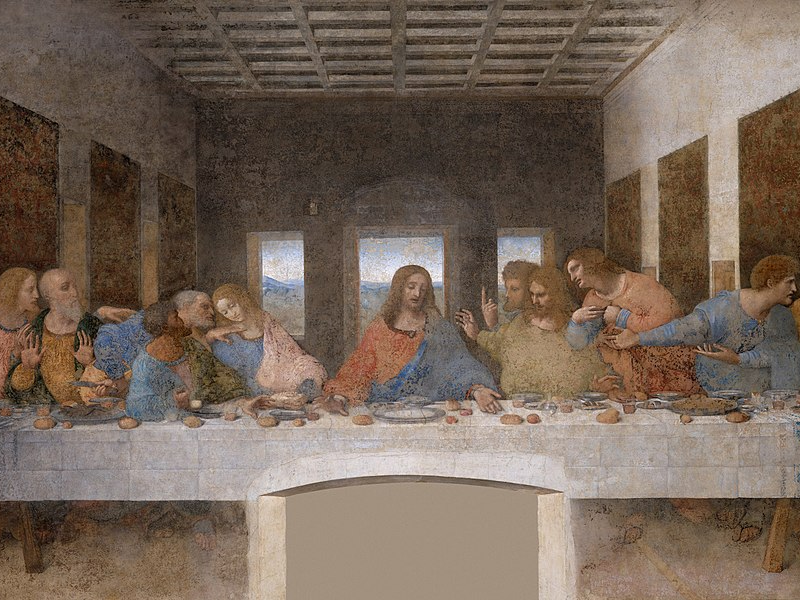
Jesus Eats First

At the church I pastor, we have four servers who distribute the communion elements to the congregation, and I distribute the elements to those in the foyer and nursery. The servers and I do not partake of the bread and wine until the congregation is served first. As this has…

by Burke ShadeJuly 28, 2014
markus-winkler-aid-xyrtlec-unsplash
Theopolis News

Church of the Present, Pastors of the Future

We at Trinity House believe that the church ought to raise and train her future pastors. Part of that training may be carried out by specialized institutions like Trinity House, but the church and her leaders are ultimately responsible for that training. To encourage churches to assume that responsibility, Trinity…

by Peter LeithartJuly 23, 2014
aaron-burden-1ebsmyrau-s-unsplash
Exodus

Mutilated Bodies

Sandra Jacobs's ​The Body as Property examines the role of physical disfigurement in the Hebrew Bible, with focus on the Torah, and more specifically on the (fictitious) Priestly document, P. After an introduction laying out a rationale for the comparative method that guides her research, she explores circumcision, the use…

by Peter LeithartJuly 23, 2014
Isaiah

Saving Judah

Yahweh saves. That’s what Isaiah’s name means, and that’s what Isaiah’s prophecy is about. Yah saves Judah when Aram and Israel pressure her. He saves Jerusalem from the Assyrian siege. He brings Judah back from the grave of Babylonian exile. But this triumphant message of Isaiah fizzles. The last few…

by Peter LeithartJuly 21, 2014
screen-shot-2019-11-12-at-5-58-16-pm
Apostasy

Apostasy and Assurance

Are apostasy and assurance mutually exclusive? Some seem to think so. But let’s consider this a bit: No Reformed man would ever say that a man who is “saved” today will be safe forever no matter what . Rather we say, “your sins are forgiven, now, walk faithfully, glorify the…

by Steve WilkinsJuly 16, 2014

Showing page 171 of 309

See all
See all
Philosophy

Hermeneutics v. Semiology

According to Michel Foucault, what Marx, Nietzsche, and Freud introduce is an age of interpretation. He develops one of the implications of this by suggesting there is a “fierce war” between semiology and hermeneutics, between treating words as signs and treating them as interpretations. Nietzsche in particular, Foucault claims, develops…

August 26, 2006
Literature

Shakespeare and Bible

Steven Marx’s Shakespeare and the Bible (Oxford, 2000), purports to be the “first book to explore the pattern and significance” of Shakespeare’s biblical allusions. Perhaps. The results are mixed. Each chapter of Marx’s book attempts to show structural, plot, and thematic parallels between a section of Scripture and a play…

August 26, 2006
Literature

Ubiquitous Shakespeare

Exploring Lake Superior in 1840, one Charles W Penny wrote, “We read the Bible I dare say much more than we would have done had we been in Detroit. Shakespeare was duly honoured, as he is every day when we travel. When on the water, some one of the party…

August 26, 2006

Divine Love

The Persons of the Trinity live out an eternal round of self-sacrificing love. If a proof text is needed, John 15 supplies it. 1) Jesus says, “as the Father loved Me, I have also loved you” (v. 9). Jesus’ love for the disciples is modeled on the Father’s for Him.…

August 26, 2006

Queen of the Sciences

John Stuart Mill declared at the beginning of his book on logic that “Logic is the common judge and arbiter of all particulars investigations. It does not undertake to find evidence, but to determine whether it has been found. Logic neither observes, nor invents, nor discovers; it judges.”

August 24, 2006
History

New

Hans Jonas writes in an essay on technological and scientific advance that one of the key cultural shifts in the sixteenth and seventeenth centuries was a, well, new understanding of “new,” and a corresponding revision of traditional ways of thinking about history: “A sign of this spreading mood is the…

August 24, 2006

Showing page 1804 of 2212

Browse by Category

In Medias Res

Your weekly digest for all things Theopolis.

Donate

Theopolis is nearly 100% donor-supported. Consider joining us on our mission.