Theopolis Logo

Writing

Explore our collection of theological essays, biblical studies, and reflections on faith and culture.

See all
screen-shot-2023-02-24-at-1-48-41-pm
Biblical Chronology

Chronologies and Kings: Part 3

The chronology of the Kings of Judah and Israel can be divided into three periods with clearly defined boundaries. The first period begins with the death of Solomon and the accessions of Rehoboam in the south (Judah) and Jeroboam in the north (Israel). It ends with the deaths of Ahaziah…

by James B. JordanSeptember 22, 1991

johann-walter-bantz-clv9dfjlwac-unsplash-1-5
Art

Arts & Play, Part 1

Most modern people regard the arts as essentially decorative. They are hardly very important, as compared to business, politics, or religion. Yet, from a Biblical point of view, the arts lie close to the heart of human life. The universe that God created is itself an artistic masterpiece by the…

by James B. JordanSeptember 22, 1991
6273e95e0f5ac766258d8cf3_joshuasconquestoftheland-2
Exodus

Chronologies and Kings, Part 2

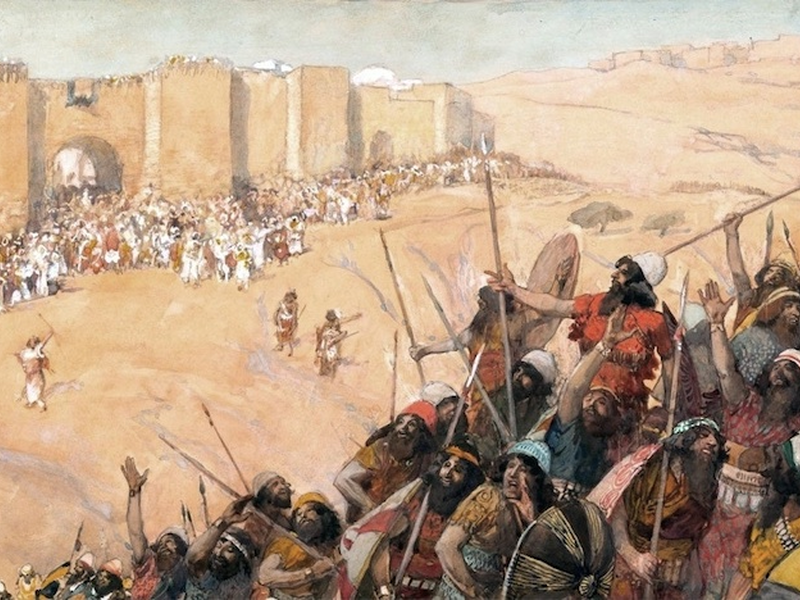
Before we move into a detailed survey of the history and chronology of the kings of Israel and Judah, let us review the chronological information that leads from creation to the kingdom. This will be helpful both to new readers of these essays, and a reminder for those who have…

by James B. JordanAugust 22, 1991
screen-shot-2023-02-24-at-1-48-41-pm
Biblical Chronology

Chronologies and Kings, Part 1

We have completed our overall survey of Biblical chronology, and now turn to a detailed examination of the Biblical information regarding the chronology of Israel’s kings. The first piece of chronological information we have regarding Israel’s kings is very cryptic, and it serves as an guide to the interpretation of…

by James B. JordanJuly 22, 1991
screenshot-2023-08-09-at-2-13-32-pm
Biblical Horizons

Book Review - To Take Place: Toward Theory in Ritual

Jonathan Z. Smith, To Take Place: Toward Theory in Ritual (Chicago: University of Chicago Press, 1987). Reviewed by Peter J. Leithart. The philosophes of the 18th century often attacked Christendom using the tools of anthropology and comparative religion. Rousseau contrasted the idyllic equality of primitive, natural peoples with the bondage…

by Peter LeithartJuly 6, 1991
screenshot-2023-08-09-at-1-47-41-pm
Biblical Horizons

Book Review: The Rise of Magic in Early Medieval Europe

Valerie I. J. Flint, The Rise of Magic in Early Medieval Europe (Princeton University Press, 1991). Reviewed by Peter J. Leithart. Valerie I. J. Flint, Professor of History at the University of Auckland, New Zealand, is refreshingly candid about her reasons for undertaking a study of The Rise of Magic…

by Peter LeithartJuly 6, 1991

Showing page 295 of 309

See all
See all

Natural gifts of Adam

A few quotations on Adam’s “natural” capacities culled from Heppe: Polanus: “The original wisdom in man’s soul was that excellence and perfection of knowledge, by which unimpaired man rightly knew God and God’s work and himself and wisely understood all things unifold, singular, and universal, and rightly compounded or divided…

May 23, 2006

Pactum Salutis

Barth (CD, 4.1) offers this challenging evaluation of the Protestant Orthodox notion of a Trinitarian covenant: “For God to be gracious to sinful man, was there any need of a special decree to establish the unity of righteousness and mercy of God in relation to man, of a special intertrinitarian…

May 23, 2006

Turretin and Pure Nature

Thanks to Joel Garver for pointing me to a couple of passages in Turretin’s Institutes where he explicitly discusses and rejects the idea of “pure nature.” A brief summary follows of Turretin’s discussion from the Fifth Topic, Question 9 follows: 1) Turretin offers several definitions of “natural,” and the relevant…

May 22, 2006

Echoes and Christology

Modern-day Arians have answers to the standard NT texts on the deity of Christ. They aren’t good answers, but they have answers. What they don’t have are answers to the many texts that demonstrate the deity of Christ through intertextual echoes. Paul says in Philippians 2 that Christ existed in…

May 22, 2006

Sermon Outline, Seventh Sunday of Easter

INTRODUCTION Hezekiah is a new David, Manasseh an idolatrous Solomon. Josiah reverses the sins of Jeroboam by bringing an end to Jeroboam’s liturgical experiments. Great as he is, he cannot save Judah from destruction. Huldah prophesies that Jerusalem, Judah, and the temple are doomed (22:16-20), and the narrator confirms that…

May 22, 2006

Eucharistic meditation, Sixth Sunday of Easter

Luke 2219: Jesus said, This is My body, which is given for you; do this as My memorial. We saw in the sermon this morning that the name “Manasseh” means “Forgetful” or even “Causing to forget.” Judah went into exile because of her forgetfulness, because King Forgetful made her forget…

May 21, 2006

Showing page 1839 of 2212

Browse by Category

In Medias Res

Your weekly digest for all things Theopolis.

Donate

Theopolis is nearly 100% donor-supported. Consider joining us on our mission.