Theopolis Logo

Writing

Explore our collection of theological essays, biblical studies, and reflections on faith and culture.

See all
e99a9334
Advent

Stretching Christmas

For many people Christmas comes on December 25 and is over December 26. The tree is taken down along with the lights and the other decorations, and everyone begins setting the house in order for the new year. No more Christmas hymns. No more celebrations (well, until New Year’s Eve).…

by Steve WilkinsDecember 24, 2016
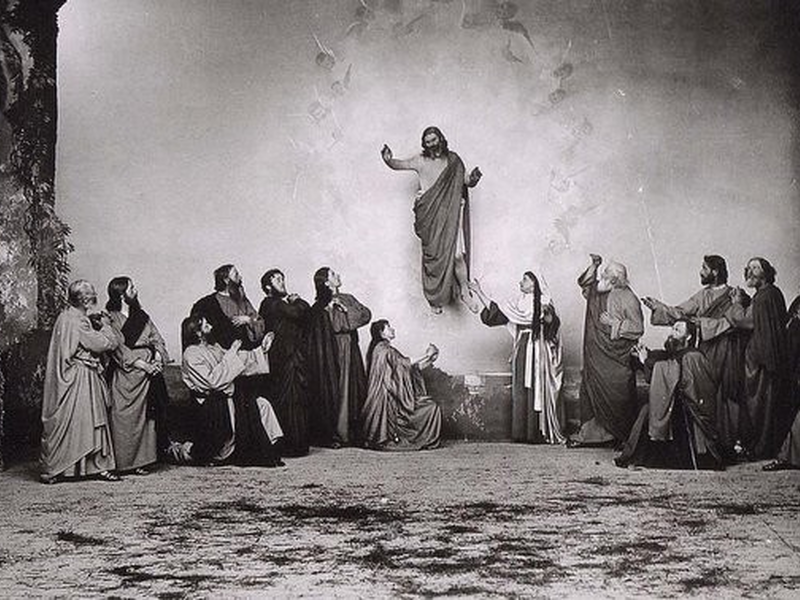
ascension
Advent

Ascension and Incarnation

The Ascension and the Incarnation should not be disconnected in our Christmas thinking or celebrations. As N.T. Wright notes, the ascension is "a central and vital feature without which all sorts of other things start to go demonstrably wrong. . . . where the ascension has been ignored or misunderstood,…

by Roy AtwoodDecember 23, 2016
nativity-rembrandt
Advent

Christmas Light

“In the Word was life, and the life was the light of men. And the light shines in the darkness.” Thus John describes the incarnation of the Son. He comes as the living and life-giving light of the world. That’s good news. In the beginning, God spoke and light shone…

by Peter LeithartDecember 23, 2016
nativity-chagall
Advent

The Spirit of Christmas

Christmas is all about Jesus. The angels announce Jesus’ birth, shepherds and wise men come to see Jesus, Herod wants to kill Jesus. We occasionally think of the Father who sent the Son, but we keep returning to the Son made flesh in Bethlehem’s manger. Meanwhile, as always, the Spirit…

by Peter LeithartDecember 22, 2016
nativity
Advent

The Humility of God

Christmas is about many things, but one of the chief things revealed in the gospel of Christmas is the humility of God. We don't often think of humility as an attribute of God. If God is glorious and exalted, we think, He must be haughty and proud and self-centered. We…

by Peter LeithartDecember 21, 2016
screenshot-2025-12-15-at-8-35-45-am
Advent

Advent of Unity

John famously begins his Gospel with a piece of theology: “In the beginning was the Word, and the Word was with God, and the Word was God.” Matthew starts with a genealogy. John celebrates Advent with a hymn, Matthew with a list. For John, Jesus is the Word of creation…

by Peter LeithartDecember 20, 2016

Showing page 120 of 309

See all
See all
Theology

Shoes

Explaining the first article of the creed, Luther’s small catechism says taht “I believe that God made me and all creatures; that He has given me my body and soul, eyes, ears, and all my members . . . also clothing and shoes . . . .” Is there a…

May 7, 2006
History

Promise, Justification, Sacrament

Oberman says that Luther moved toward his reformation insights by exploring what he described as the “theological grammar” of Scripture, which involved letting God define his own terms, on the assumption that nomina sunt ad pacitum Dei . Through this, he realized that the God of Scripture was the “bonding…

May 7, 2006

What Did Sennacherib Hear?

In response to Hezekiah’s query, Isaiah promises that the Lord will “put a spirit” in the Assyrian king and that Sennacherib will “hear a rumor and return to his own land” (2 Kings 19:7). The following verse tells us that Sennacherib had gone from Lachish to Libnah, perhaps upon hearing…

May 6, 2006

Hezekiah’s prayer, and ours

Because of Hezekiah’s prayer (2 Kings 19:14-19), the Lord delivers Jerusalem, kills 185,000 Assyrians, and sends Sennacherib packing back to Nineveh. That’s what one calls an effective prayer. What made it so effective? Among other things, it is firmly based on the promise and word of God. He makes explicit…

May 6, 2006
History

Sola scriptura

According to Oberman, Luther’s great discovery regarding Scripture was not that Scripture alone can be trusted without question and is the final judge of controversy: “the maxim of sola scriptura . . . was the fundamental principle of the entire scholastic disputation tradition.” What Luther discovered instead was that “the…

May 5, 2006

Showing page 1845 of 2212

Browse by Category

In Medias Res

Your weekly digest for all things Theopolis.

Donate

Theopolis is nearly 100% donor-supported. Consider joining us on our mission.