Theopolis Logo

Writing

Explore our collection of theological essays, biblical studies, and reflections on faith and culture.

See all
aaron-burson-yihqdpsk9ji-unsplash
City

The City of Cain

Not long ago, I heard these statistics about New York City: New York City is in $100 billion in debt. 20% of all NYC residents are on food stamps, which cost $250 million a month. 5% of NYC population are on disability, costing $252 million a month. Other assistance costs…

by Richard BledsoeJune 25, 2020

sebastiano-piazzi-ti_deyjwoky-unsplash
Empire

Twenty-Five Theses on Empire

1. All political power is ambivalent. Vertical violence of “the state” tends to limit horizontal and contested power between people and between tribes. “The State” brings new oppression, but also a measure of new peace and unity. 2. All political formations are ambiguous like this: a strong family conquers weaker…

by John MilbankJune 23, 2020
e99a2549
Coronavirus

Virtual Gnosticism and the Church – some disturbing thoughts about Covid19

Gnosticism by any other name would smell the same. But does the church have much of a theological sense of smell, these days, when it comes to the seductions of virtuality in our worshipping communities? Social isolation during a global pandemic makes good public health sense, but whether church should…

by Paul TysonJune 16, 2020
alex-radelich-evo4wmtrapi-unsplash
American Culture

The Priorities of Priests and Protests

It is a remarkable thing, you know, this thing called priority. Just a few weeks ago, religious leaders were boldly asserting in their high-dollar online videos that it was too dangerous to return to worship and that we needed to listen to our political and health leaders. "They are the…

by Uri BritoJune 15, 2020
roberts_siege_and_destruction_of_jerusalem-744x474-1
James

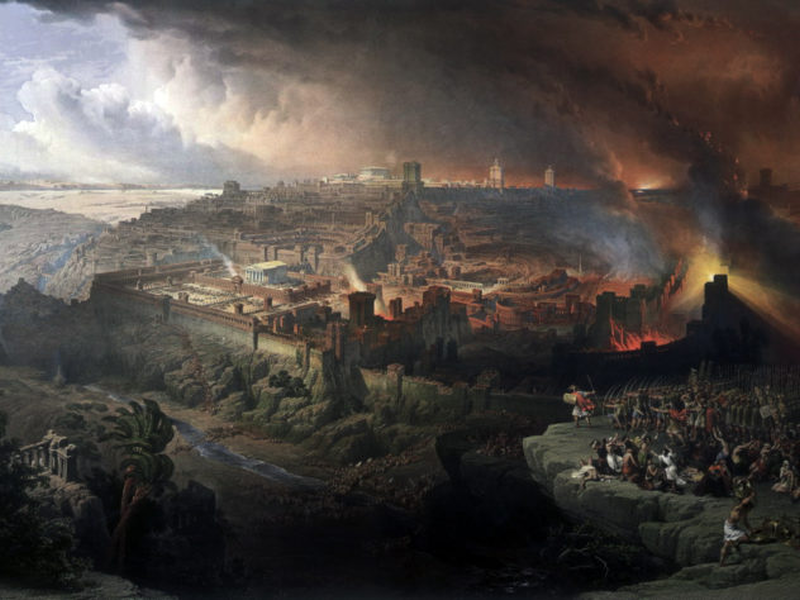
Anger, Riots, Violence, & Justice: How the Epistle of James Came to be Written

Somewhere in the city of Jerusalem on a rooftop just a few years after the ascension of Jesus and the outpouring of the Spirit on Pentecost. . . ". . . and just when are you guys going to live up to your ‘Sons of Thunder’ reputation? Huh? A lot…

by Jeff MeyersJune 9, 2020
adam-and-eve-in-the-garden-of-eden-wenzel-peter
Proverbs

Lady Wisdom Eve

In my book, Solomon Says: Directives for Young Men ( Amazon , Kindle ) I mention that Solomon portrays wisdom as a woman. But I don’t ask (or answer!) why he did so. Solomon uses the figure of Lady Wisdom without apology or explanation: Wisdom cries aloud in the street,…

by Mark HorneJune 2, 2020

Showing page 66 of 309

See all
See all

Objective/Subjective

McGrath notes that Augustine interpreted the genitive in the phrase “righteousness of God” in Rom 1 objectively, so that it was understood as the righteousness that God gives in saving sinners (in “making” them righteous). Ambrosiaster, as I pointed out in an earliet post, interpreted the genitive subjectively - the…

April 20, 2006

Old Perspective on Paul

Ambrosiaster writes, “Iustitia est Dei, quia quod promisit dedit, ideo credens hoc esse se consecutum quod promiserat Deus per prophetas suos, iustum Deum probat et testis est iustitiae eius” (PL, 17.56b). McGrath explains: “God, having promised to give salvation, subsequently gives it, and as a result is deemed to be…

April 20, 2006
History

Unfinished Reformation

Nevin wrote: “There is more a great deal in Christianity, I firmly believe, more in the idea of hte Holy Catholic Church, than has yet been attained, either in the way of knowledge or in the way of life, by the Protestant Reformation.”

April 20, 2006

Factitive Justification

There was a consensus among the theologians of Trent, McGrath argues, that justification was “factitive,” a view that excluded that “a sinner may be justified solely as a matter of reputation or imputation, while remaining a sinner in fact.” But of course that raises the question, What exactly is a…

April 20, 2006

True Lutherans

McGrath traces the odd development in Lutheran Orthodoxy of the notion that regeneration and faith precede justification in such a way that “where Luther had understood justification to concern the unbelieving sinner, orthodoxy revised this view, referring justification to the believing sinner.” This takes Lutheran Orthodoxy back in the direction…

April 20, 2006

Ontological change

McGrath notes, “While justification was universally understood to involve the regeneration of humanity, the opinion that an ontological change is thereby effected within humans is particularly associated with the period of High Scholasticism and the development of the concept of created grace. The earlier medieval theologians expressed the change effected…

April 20, 2006

Showing page 1854 of 2212

Browse by Category

In Medias Res

Your weekly digest for all things Theopolis.

Donate

Theopolis is nearly 100% donor-supported. Consider joining us on our mission.