Theopolis Logo

Writing

Explore our collection of theological essays, biblical studies, and reflections on faith and culture.

See all
sculptor
Art

The Artist's Litany

If we say that we have no sin, we deceive ourselves, and the truth is not in us. (1 John 1:8) O God the Father, creator of heaven and earth, Alpha and Omega, beginning and end, who inspired Creation with the breath of your nostrils, who placed Adam in the…

by Christian LeithartFebruary 2, 2016
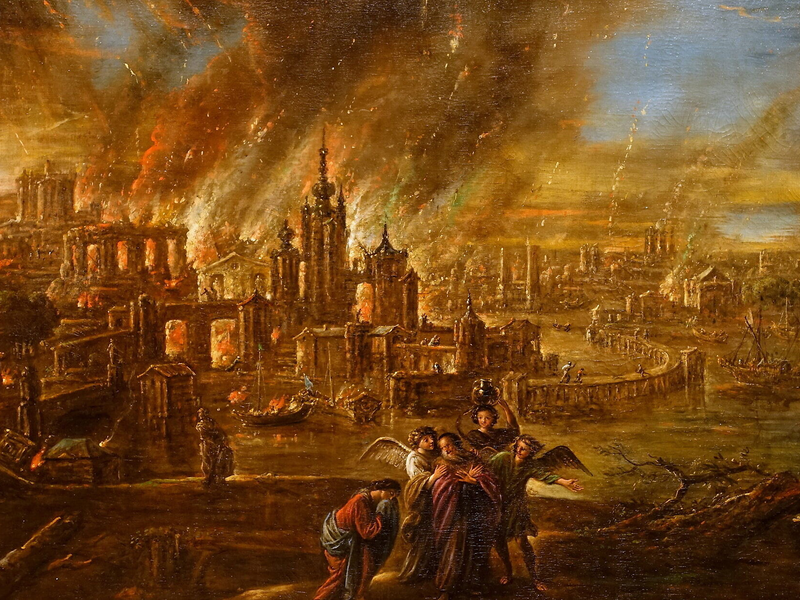
sodom_and_gomorrah_afire_by_jacob_jacobsz-_de_wet_d-_j-_probably_koln_c-_1680_oil_on_canvas_-_hessisches_landesmuseum_darmstadt_-_darmstadt_germany_-_dsc01149-e1632540497247
American Culture

American Sodom

For nearly a half-century, Sodom has been a key symbol in the American culture wars. On the one side, we have an aggressive movement among homosexuals that has first decriminalized homosexual conduct, then to force cultural and legal recognition of homosexuals as a minority and to normalize homosexual behaviors, finally…

by Peter LeithartJanuary 28, 2016
image-20150409-15244-1r08rsu
Biblical Theology

The Meaning of the Mount of Olives

Speaking of the Church, Romans 11:16-17 says, "And if the root be holy, the branches are also. But if some of the branches were broken off, and you, being a wild olive were grafted in among them and became partaker with them of the root of the fatness of the…

by James B. JordanJanuary 26, 2016
img_6134
Isaiah

No Sabbath for God

At the end of Isaiah 61, Yahweh's Servant rejoices because the Lord clothes Him with salvation and righteousness. He decks Him like a bridegroom with a garland on His head. He wears jewels like a bride. He is a new bridegroom in a new garden of Eden, a garden of…

by Peter LeithartJanuary 21, 2016
hebrew-manuscript-2
Biblical Law

Approaching the Torah

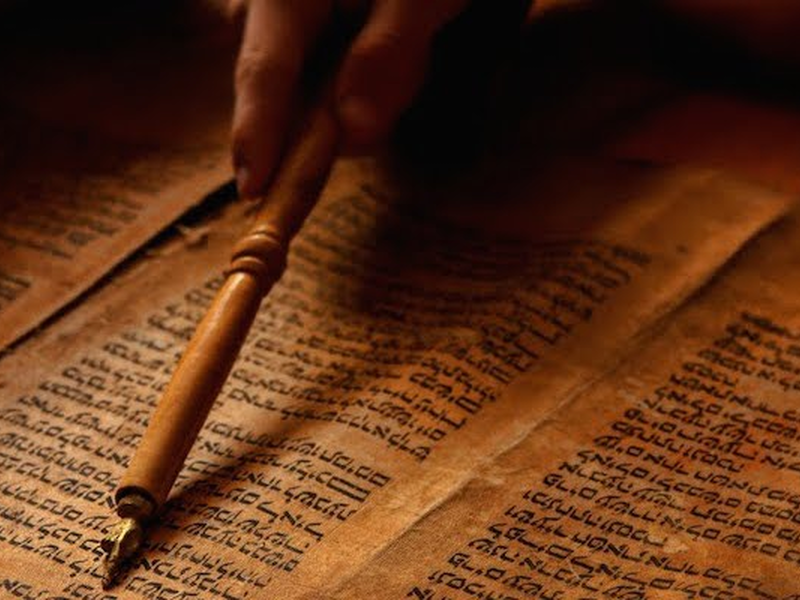
Before anything else, a word about “Torah” may be in order. I have been persuaded that “law” is a bad translation of “Torah,” even though it is evident that what is called “Torah” does have commandments, statutes, and ordinances in abundance. Why not “law?” “Law” as a translation for “Torah”…

by Ralph Allan SmithJanuary 19, 2016
jane-austen-2
Biblical Horizons

Jane Austen, Pundit

Few novelists seem as innocent of the temptation to punditry as Jane Austen. Though living through a period that witnessed the birth of an independent United States, the French Revolution and the Terror, the Napoleonic wars and the rise of revolutionary romanticism, and the upheavals of the Industrial Revolution, she…

by Peter LeithartJanuary 14, 2016

Showing page 137 of 309

See all
See all

Luther and Medieval Piety

T he great question haunting late medieval piety was that of the inadequacy of human piety. As Berndt Hamm puts it ( Reformation of Faith ), the “harrowing question” was that of the “spiritual inadequacy” of Christians (88). The late medieval answer was to reduce the requirements necessary to meet…

April 14, 2017

Politics of the Picturesque

I n his Landscape, Liberty and Authority , Tim Fulford examines the paradox of William Gilpin's travel writings and tour-leading in the picturesque wilds of Wales, England, and Scotland. Gilpin was aware that “the picturesque might be socially dangerous,” so much so that he apologizes to the noble landowners whose…

April 14, 2017

Separation and Incorporation

I n his contribution to Signifying Identities , Fredrik Barth suggests that our notion of political, economic and social boundaries is an extension of the feeling that a tool extends the body: When you hold a knife or a spoon in your hand and use it as an implement, the…

April 14, 2017

Early Christian Disenchantment

G uy G. Stroumsa writes in The Making of the Abrahamic Religions in Late Antiquity that “For Weber, as is well known, the most striking ‘disenchantment of the world' in history occurred with the rise of the ‘inner-worldly' asceticism ( innerweltliche Askese ) of the Calvinist Reformation. And yet, it…

April 14, 2017

From Reform to Revolution?

M ichel de Certeau ( The Writing of History , 126-7) quotes Alphonse Dupront on the post-Reformation situation of the church: “a first piece of raw material, as obvious as capital for the modern mind, is the progressive promotion of heresy in confession and of confession in church. . .…

April 14, 2017

The Unity of Christian Europe

In a 1971 essay, H.G. Koenigsberger challenged the notion that the Reformation broke up a unified Europe. He criticizes historians and social scientists for assuming a norm of unity: “We have assumed that the theological and ecclesiastical unity of Catholic Christendom was its natural condition and that, in consequence, the…

April 13, 2017

Showing page 186 of 2212

Browse by Category

In Medias Res

Your weekly digest for all things Theopolis.

Donate

Theopolis is nearly 100% donor-supported. Consider joining us on our mission.