
Theopolis Logo

Writing

Explore our collection of theological essays, biblical studies, and reflections on faith and culture.

See all
freysteinn-g-jonsson-2baa-syyptk-unsplash
American Religion

Protestantism's Lost Soul

D. G. Hart’s The Lost Soul of American Protestantism vividly clarifies the differences between evangelical and Confessional Protestantism. In part the book is a manifesto for historians of American religion. Hart argues that historians of American Protestantism have operated with a simplistic binary contrast of evangelical/conservative v. liberal/progressive. At best,…

by Peter LeithartAugust 18, 2015
dostoyevsky
Books

The Idiot and the Limits of Compassion

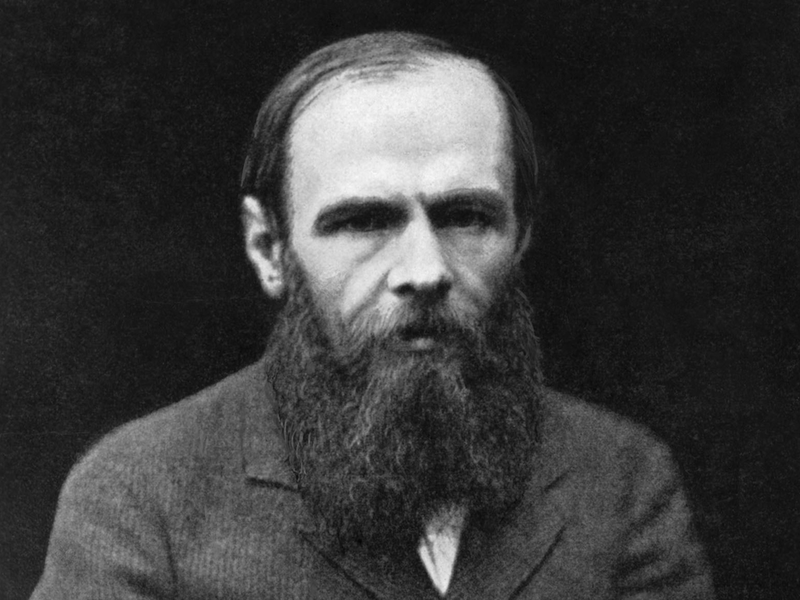
Dostoyevsky’s novel, The Idiot , like his other major works, is a complex evaluation of the human condition—a juxtaposition of the innate goodness and innate evil that resides within every human heart. There is much one can say about The Idiot . I am no specialist of Russian literature, or…

by Gerald HiestandAugust 13, 2015
same-sex-celebrations-2
Homosexuality

If There is “Natural Law” How Can People Believe in Same-Sex Marriage?

At risk of violating some secret handshake agreement on some important nuance to “natural law,” I will sum up what I understand in my own words. As far as I can tell natural law is supposed to be an area of knowledge that all people should be able to agree…

by Mark HorneAugust 11, 2015
falling-star
Biblical Studies

Cosmic Language, 2

The first installment of this article may be found here . The Image of Man This brings us to a substitutionary atonement which we do understand, the fulfilment of the cruciform Tabernacle in the cross of Christ. Although Jesus’ execution was Physical and Social, it was primarily Personal . Beginning…

by Mike BullAugust 6, 2015
branagh-macbeth
Genesis

Every Noise Appalls

The first two essays in this series drew attention to the structure of the first part of Macbeth and to the way Shakespeare incorporates the Garden of Eden into his story. Macbeth , we saw, is a temptation story in which, compared to the Biblical story, the temptation itself is…

by Ralph Allan SmithAugust 4, 2015
new-jerusalem
Revelation

The Warrior and the City: A Wedding Homily

Revelation 19:6-9 Then I heard something like the voice of a great multitude and like the sound of many waters and like the sound of mighty peals of thunder, saying, “Hallelujah! For theLord our God, the Almighty, reigns. Let us rejoice and be glad and give the glory to Him,…

by Peter LeithartAugust 3, 2015

Showing page 146 of 309

See all
See all
Theology

Time and the end of actions

Why should there be a final judgment when God judges in time? Aquinas answers: “Judgment on something changeable cannot be rendered fully before its consummation. Thus judgment cannot be rendered fully regarding the quality of any action before its completion, both in itself and its results, because many actions appear…

April 6, 2006

Observations on 2 Corinthians 1

1) Verse 4 moves from the affliction of the apostles (“our”) to the comfort of “those who are in any affliction.” This movement does not depend on any similarity or identity between the affliction of the apostles and the affliction of other sufferers (though cf. v. 6b). Members of the…

April 6, 2006
Philosophy

Descartes, Meditations

A few notes on Descartes, Meditations 1-2, with lots of help from Jean-Luc Marion. Descartes’s ego cogito, ergo sum is not, Marion points out, original, at least in its form. It has origins in Augustine, who offered this response to the skeptics: “I have no fear of the arguments of…

April 6, 2006

Copernican Revolution

Some scattered thoughts inspired by comments from Chris Schlect and Doug Wilson at a faculty discussion of de Lubac today: How is it that theologians (like Norman Shepherd, Steve Wilkins, Rich Lusk, and others) who want to expunge the notion of merit from theology get accused of being “neo-nomians” and…

April 5, 2006
Theology

Surnaturel and Protestantism

Milbank asks the intriguing question of whether de Lubac’s surnaturel thesis “rather deconstructs the terms of the Schleiermacher/Barth divide.” He appears to mean that the polarization of Schleiermacher’s “intrinicism” and Barth’s “extrinicisim” is dissolved by de Lubac’s Thomist understand of nature and grace. To adopt, for the moment, an idiom…

April 5, 2006

Against Yale

Milbank contrasts de Lubac’s advocacy of patristic and medieval hermeneutics, which insists that the allegorical fulfills and completes the literal, with the Yale school, which he sees as living in “the no-man’s land of ‘history-like narrative’ which at once abolishes real history and ignores the essential allegorical underpinning of Christian…

April 5, 2006

Showing page 1862 of 2212

Browse by Category

In Medias Res

Your weekly digest for all things Theopolis.

Donate

Theopolis is nearly 100% donor-supported. Consider joining us on our mission.