Theopolis Logo

Writing

Explore our collection of theological essays, biblical studies, and reflections on faith and culture.

See all
keith-hardy-pp8escz15d8-unsplash
Isaiah

The Desert of the Sea

Introduction Isaiah 21 can only be understood in the light of its placement in the architecture of the second “volume” of the prophecy (chapters 13–27). The contents are arranged in twin sevenfold “columns” that represent the great bronze pillars of Solomon’s Temple: Jachin and Boaz, priest and king. The priestly…

by Mike BullFebruary 20, 2025

andy-holmes-rcbdp8vcyhq-unsplash
Isaiah

Jesus Enthroned on the Zodiac

A Biblical Reflection on the Purpose of the Constellations The starry heavens hold a place of wonder in the hearts of men. Since man’s creation we have looked up into the heavens and have beheld its glory. This is particularly true of the night sky. The stars, in their shinning…

by Matthew DarbyFebruary 19, 2025
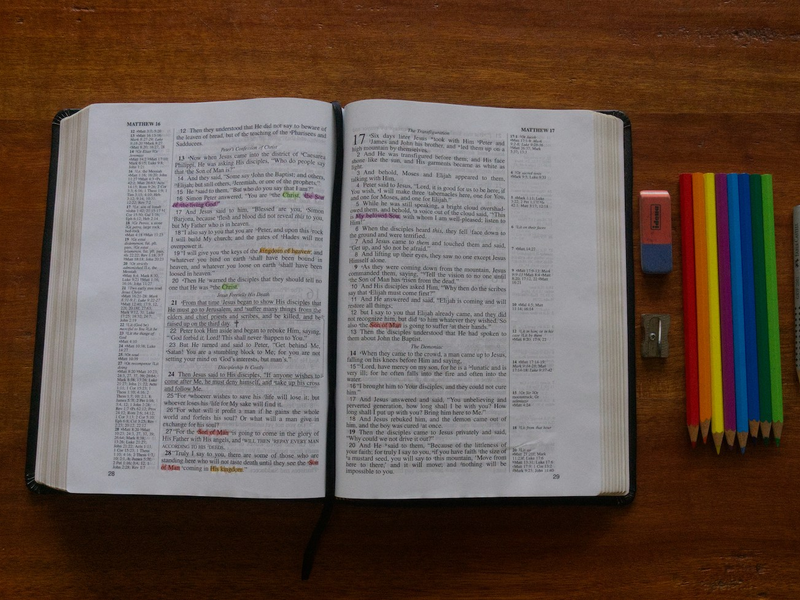
jonathan-gohner-7jdbapf48lc-unsplash
Matthew

An Overall Chiasm around Six Discourses in the Gospel According to Matthew  

The case for there being five discourses within the Gospel according to Matthew is a hard one to challenge: surely the closing formula “when Jesus finished these sayings” as found in 8:1, 11:1, 13:53, 19:1, and 26:1 settles it once and for all. And by the five instances of the…

by Benoit EngelFebruary 13, 2025
sixteen-miles-out-d40gdcd_-he-unsplash-2
Matthew

Exegesis of the Great Commission

The Long Commission The Great Commission of Matthew 28 has long been a cornerstone of American Evangelicalism. It has formed and fashioned the American church’s missional impulse. Yet when viewed from the wide lens of Scripture, from Genesis to Revelation, the Great Commission is revealed as one of the pillars…

by Ralph Allan SmithFebruary 11, 2025
david-weber-f_nj26i9wyo-unsplash-1
Lord's Supper

Genuine Paedocommunion

I am delighted to see that more and more churches in the Reformed tradition are now recognizing that all baptized children are members of the body of Christ and therefore ought to be communing with the rest of the body at the Lord’s Table. This has been decades in the…

by Jeff MeyersFebruary 6, 2025
kelly-sikkema-8i8xyo4jkp4-unsplash

Twitter and Emotional Sabotage

Good leaders have always been rare. In today’s world, they seem extinct. Joe Rigney’s recent book Leadership and Emotional Sabotage digs into the spiritual reasons for the leadership epidemic and recommends cures. Rigney starts with a summary of a book by Edwin Friedman called A Failure of Nerve . Friedman’s…

by Christian LeithartFebruary 4, 2025

Showing page 13 of 309

See all
See all
Theology

Grace and nature

According to Fergus Kerr, it was Bonaventure, not Thomas, who first employed the axiom “grace does not destroy nature, but perfects it,” in his commentary on Peter Lombard’s Sentences.

March 31, 2006
Politics

Neutral public space

Markus wants to distinguish between the fact that people who act in the public realm always act with ultimate ends in view, and that their actions are either moral or immoral from the notion that there is a neutral public space. The public sphere, he claims, shouldn’t be thought of…

March 30, 2006
History

Constantinianism and Protest

RA Markus (Christianity and the Secular) argues that as the church celebrated the triumph of Christianity in the fourth century, they also wanted to maintain their continuity with the church that gave them birth - the persecuted church of the martyrs: “The great need felt by Christians of the post-Constantinian…

March 30, 2006
Politics

Two Modes of Secularism

Charles Taylor has suggested that secularism was an “exit strategy” from religious conflict. There were two exit strategies. In the summary by RA Markus, “The first, ‘the common ground strategy,’ assumes a certain range of beliefs shared by all Christians (or all theists) and minimises or eliminates confessional differences that…

March 30, 2006
Politics

Locke on religion

John Locke drew up the basic contours of the modern conception of religion as internal and private in his “Letter Concerning Toleration.” He made a sharp distinction between religious and civil realms: “The end of a religious society, as has already been said, is the public worship of God, and,…

March 30, 2006
Theology

Aquinas on Gratitude

Comments primarily on Aquinas on Gratitude/Ingratitude (primarily ST, II-II, qs 106-7). Aquinas describes gratitude as a virtue “annexed” to justice, and so to understand his discussion of gratitude, we must get some handle on what he means by justice. In ST II-II, q. 58, he describes justice as a virtue.…

March 30, 2006

Showing page 1864 of 2212

Browse by Category

In Medias Res

Your weekly digest for all things Theopolis.

Donate

Theopolis is nearly 100% donor-supported. Consider joining us on our mission.