Theopolis Logo

Writing

Explore our collection of theological essays, biblical studies, and reflections on faith and culture.

See all
kelly-sikkema-gpoh17dxqdm-unsplash
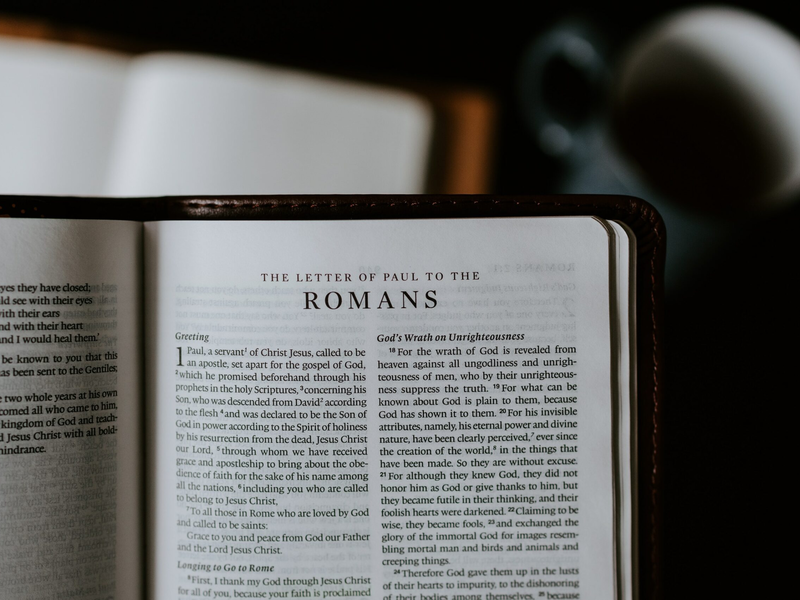
Romans

Paul’s Gospel & the Theme of Romans

Paul, a bond-servant of Christ Jesus, called as an apostle, set apart for the gospel of God, which He promised beforehand through His prophets in the holy Scriptures, concerning His Son, who was born of a descendant of David according to the flesh, who was declared the Son of God…

by Mark HorneJune 6, 2003

screenshot-2023-07-27-at-10-25-35-am
History

The Nelda Boswell Scroll: The Apostle Paul’s Town Hall Meeting in Iconium

With the surprising discovery of the Nelda Boswell scroll historians have deciphered its contents and concluded that the apostle Paul returned to the region of Galatia shortly after he wrote the letter that we call Galatians. The evidence suggests that a number of local pastors, elders, and deacons, along with…

by Jeff MeyersJune 6, 2003
aaron-burden-qjdzyt_k8xg-unsplash
Jonah

Jonah, the Judaizers, and the Gospel

Second Temple Judaism was a form of covenantal nomism, according to E. P. Sanders’ terminology. This means that Torah-observance was a way of expressing loyalty to the Lord of the covenant who had graciously elected Israel. I think Sanders’ view (taken up in bits and pieces and with some modifications…

by Rich LuskJune 6, 2003
Theologia

Gratitude or Faith?

We often hear that the key to Christian obedience is thankfulness for what God has done. But the Bible stresses faith and hope much more than gratitude. The Baptist pastor and author John Piper has written, “Nowhere in the Bible is gratitude connected explicitly with obedience as a motivation. We…

by Mark HorneJune 6, 2003
aaron-burden-qjdzyt_k8xg-unsplash
Federal Vision

God’s Righteousness & Our Justification

One of the questions that is commonly asked about Tom Wright regards his teaching about how Paul uses the term “the righteousness of God.” Since Wright’s interpretation of the term in Paul’s epistles is commonly mentioned in passing but rarely analyzed, it seems like a good idea to explicitly spell…

by Mark HorneJune 6, 2003
jordan-wozniak-xp_agmeea6s-unsplash
Genesis

Forever Means Forever: God’s Promises to the Jews

If God promised a certain land to the seed of Abraham, saying that it would be theirs “forever” (Gen. 13:15), why do Reformed churches teach that the Jews permanently lost their right to the land? What about all these Old Testament “forever” promises and prophesies made to the Jews? How…

by Jeff MeyersJune 6, 2003

Showing page 230 of 309

See all
See all

Language of deficit

After listing 22 descriptive terms for the self (including stressed, self-alienated, paranoid, bulimic), Kenneth Gergen notes that “they are all terms of mental deficit. They discredit the individual, drawing attention to problems, shortcomings, or incapacities. To put it more broadly, the vocabulary of human deficit has undergone enormous expansion within…

February 8, 2006

When to start philosophy

Montaigne wrote in his essay on the education of children, “The boy we would breed has a great deal less time to spare; he owes but the first fifteen or sixteen years of his life to education; the remainder is due to action. Let us, therefore, employ that short time…

February 8, 2006
History

Self-conscious modernity

Postmodernity is from one angle modernity coming to self-consciousness. Managerialism is as much at the heart of modernity as of postmodernity, but postmoderns know they are being managed. As a result, management is always shot through with irony. How can we take the wizard seriously after the curtain has been…

February 8, 2006
History

Postmodern society

David Lyon’s little book, Postmodernity, provides an excellent introduction to the sociological, technological, and political contexts in which postmodern thought has arisen. He is cautious about inflating claims about a “postmodern” condition or the coming of a “new society,” but attempts to isolate those features of contemporary life that have…

February 7, 2006
Literature

More on Hamlet

INTRODUCTION As many critics have pointed out, Act 2 of Hamlet focuses on the efforts of both the “mighty opposites” - Hamlet and Claudius - to spy out the intentions and plans of the other. Thus begins the process of inserting various mediators between the two, all of whom end…

February 7, 2006

Watts on Mark 1:1f

Rikki Watts offers some other dimensions to the quotation from Mark 1:1. He notes that Mark is quoting not only from Isaiah 40, but also from Exodus 23 and Malachi 3, and shows how these three texts overlay each other in Mark’s presentation. Exodus 23 is a warning to Israel…

February 7, 2006

Showing page 1888 of 2212

Browse by Category

In Medias Res

Your weekly digest for all things Theopolis.

Donate

Theopolis is nearly 100% donor-supported. Consider joining us on our mission.