Theopolis Logo

Writing

Explore our collection of theological essays, biblical studies, and reflections on faith and culture.

See all
timothy-eberly-djj49s6ud2o-unsplash
Biblical Studies

Whom Shall We Believe? Evangelicals and Scholarship

As we move into the Persian period of ancient history, and try to reconcile it with Daniel’s prophecies, we need to ask some hard questions about the interpretation of the data before us. One question concerns the reliability of the Biblical witness, and beyond that a second question concerns the…

by James B. JordanJanuary 30, 1991
a2-118606403-jpg
Biblical Horizons

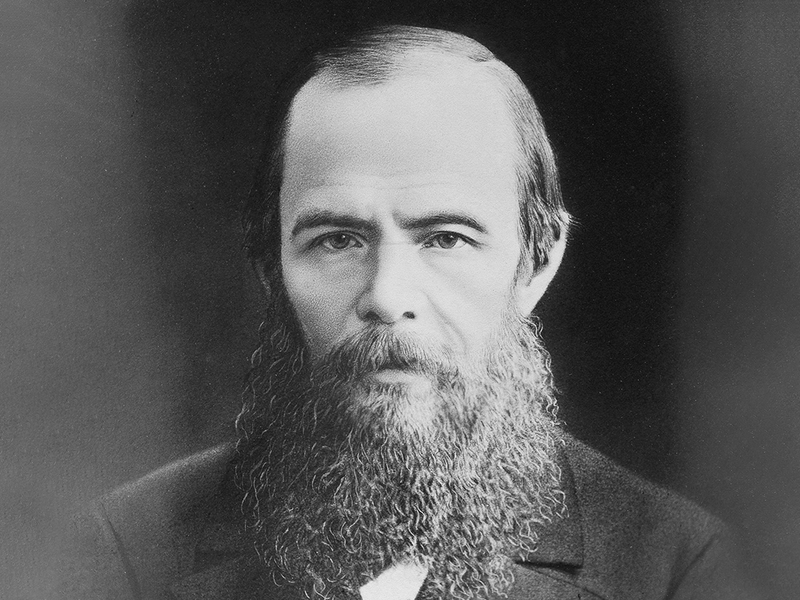
Understanding Russia

Ewa Majewska Thompson: Understanding Russia: The Holy Fool in Russian Culture Ewa M. Thompson is Professor and Chairman of the Department of German and Slavic Studies at Rice University. In this seminal study, she investigates the concept of the "holy fool" as it exists in Russian culture and civilization. While…

by James B. JordanJanuary 30, 1991
alfons-morales-ylswjsy7stw-unsplash-1
Biblical Studies

The Bible and Western Literature

The most cursory glance at the history of Western literature reveals that it has been deeply influenced by the Bible. Some of the greatest classics of Western literature draw their plots, characters, and ideas largely from Scripture; Dante’s Divine Comedy and Milton’s Paradise Lost are two of the most notable…

by Peter LeithartJanuary 23, 1991
screen-shot-2022-04-28-at-4-57-36-pm
Exodus

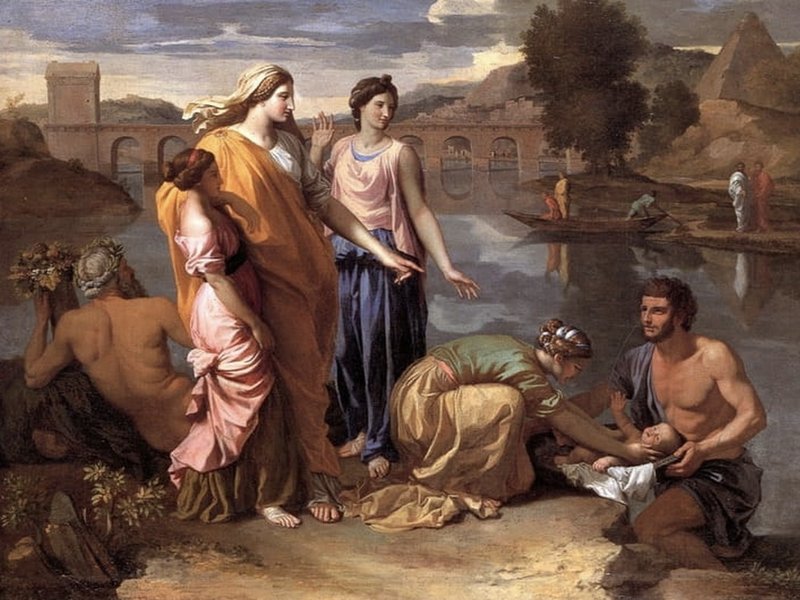
The Beautiful Child

Each time the Scriptures recount the story of Moses’ birth and deliverance from Pharaoh, reference is made to two facts about that event. First, each text points out that Moses was "beautiful." Second, each text points out that Amram and Jochebed, his parents, hid him for three months (cf. Ex.…

by Peter LeithartJanuary 23, 1991
501819ld-2
Romans

Who Rules the Land? The Meaning of the Noahic Covenant, Part 2

Click HERE for Part 1. The Message of the Covenant Can we really say that the saints presently rule the world, and always have since Noah? Look around and you can see that the wicked rule in virtually every country on earth. There are wicked civilizations that rise Babelically age…

by James B. JordanDecember 30, 1990
hebrew-manuscript-6
Hermeneutics

Daniel’s 70 Weeks

As we saw last time , we have come to the place in the study of Biblical chronology where it seems that we are forced to abandon the Bible itself as our primary source of information. If we assume that the seventy sevens of Daniel 9:24-27 are in fact weeks…

by James B. JordanDecember 23, 1990

Showing page 300 of 309

See all
See all

Times

Choon-Leong Seow has some helpful comments about the “time for this, time for that” poem in Ecclesiastes 3. He points out that the thrust of the section is about God’s control of times and portions. As evidence, he notes that the word “season” us normally used “of predetermined or appointed…

January 7, 2006
Philosophy

Objectivity and incarnation

In his early work on Husserl’s treatise on the origins of geometry, Derrida highlights the critical insight that the objectivity and universality of geometric axioms depends, paradoxically, on their embodiment in writing. On the one hand, geometry is “there for ‘everyone.’” Yet, “how does geometrical ideality (just like that of…

January 7, 2006
Philosophy

The Hebraism of Postmodernism

Postmodernism, as I’ve indicated in previous posts, is many things, some of which are quite inimical to Christian faith. But in important respects, postmodernism - especially the thought of Derrida - is a Hebraic protest against Hellenized philosophy. In his fine recent book on Derrida, James KA Smith suggests that…

January 7, 2006
History

Paradox of Community

Bauman suggests that postmodernity, which is the “age of contingency fur sich,” is also the age of community. Yet, the communities that are possible within postmodern culture are inherently unstable; they are “clouds of communities”: “Such communities will never be anything like Tonnies’s cosy and unreflective (cosy because unreflective) homes…

January 6, 2006
Philosophy

Skepticism

The arguments in favor of skepticism were summarized by Aenesidemus in the first century B.C. in his Pyrrhonian Principles . Aenesidemus brought together the arguments under “ten modes” or “ten tropes,” helpfully summarized at http://plato.stanford.edu/entries/skepticism-ancient/#LPA as they were stated by Sextus Empricus. The ten modes are reproduced below. (Mates refers…

January 6, 2006

Quenching Spirit

Reflecting further on the pastoral applications of Solomon’s phrase “shepherding wind”: Every believer is born of the Spirit, and blows where he wills, and a pastor is in the business of shepherding wind. In this context, “quenching the Spirit” might refer to poor shepherding that tries to suppress the wind.…

January 6, 2006

Showing page 1902 of 2212

Browse by Category

In Medias Res

Your weekly digest for all things Theopolis.

Donate

Theopolis is nearly 100% donor-supported. Consider joining us on our mission.